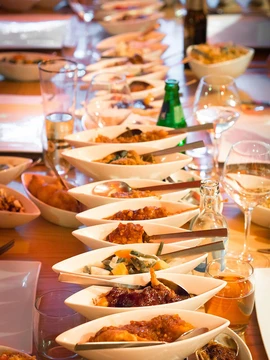
Nasi goreng
A Southeast Asian fried rice dish with regional variations.
Nasi goreng is a Southeast Asian fried rice dish, typically made from pre-cooked rice stir-fried with sweet soy sauce, shallots, garlic, shrimp paste, tamarind, and chili. It is widely consumed across Maritime Southeast Asia, particularly in Indonesia, Malaysia, Singapore, Brunei, and southern Thailand, and is regarded as a national dish of Indonesia.
Quick Facts
- Associated cuisine
- Indonesian
- Malaysian
- Bruneian and Singaporean
- Creator
- Peranakan Chinese in Maritime Southeast Asia
- Course
- Main course
- Place of origin
- China, Maritime Southeast Asia
- Main ingredients
- Fried rice with meats
- vegetables and spices
- usually seasoned with sweet soy sauce
- Variations
- Rich variations across the respective region
Facts from the source article.
Did You Know?
- The 1979 song 'Geef Mij Maar Nasi Goreng' by Tante Lien illustrates historical culinary ties between the Netherlands and Indonesia.
- In 2011, an online poll by CNN International ranked Indonesian-style nasi goreng number two on their 'World's 50 Most Delicious Foods' list.
- The 2016 Japanese comedy series 'Tokyo Metropolitan Police Department, Nasi Goreng Division' is named after the dish.
History
Fried rice is generally believed to have originated in China during the Sui dynasty, particularly in Yangzhou, as a way to use leftover rice. The stir-frying technique, known in Chinese as chǎo, was already central to Chinese cooking and became increasingly popular during the Ming dynasty. Malay and Indonesian-style nasi goreng likely trace their origins to Chinese fried rice, developed to avoid wasting rice. Chinese influences on Indonesian cuisine are also seen in mie goreng, which appeared with the introduction of stir-frying using a Chinese wok. Common soy sauce originated in 2nd-century China, but kecap manis (sweet soy sauce) was developed in Indonesia with the addition of local palm sugar. The expansion of Chinese maritime trade from the Tang dynasty established enduring connections between China and Southeast Asia, with ports across Java, Sumatra, the Malay Peninsula, Borneo, Indochina, and the Philippines becoming hubs of culinary exchange.
Culinary profile
Nasi goreng is distinguished from other Asian fried rice recipes by its aromatic, earthy, and smoky flavour. It is traditionally served at home for breakfast and made from leftover rice, as the texture of day-old rice is more suitable for frying than freshly cooked rice. The dish consists of at least three components: ingredients such as egg, shrimp, meat, and cooking oil; bumbu spice or seasoning including garlic, shallot, salt, and chili pepper; and condiments like bawang goreng, krupuk, acar pickles, and slices of cucumber and tomato. Typical seasonings include salt, chili pepper, spring onions, turmeric, palm sugar, bumbu paste, kecap manis, shrimp paste, black pepper, fish sauce, and powdered broth. Eggs may be scrambled into the rice or served as accompaniments such as sunny side up eggs, omelettes, or boiled eggs. Common garnishes include fried shallots, traditional crackers, cucumber and tomato slices, a fried egg, and chili paste.
By country
There is no single defined recipe for nasi goreng, as every fried rice dish with certain mixtures, additions, ingredients, and toppings can lead to another recipe. Innumerable varieties exist in Brunei, Indonesia, Malaysia, and Singapore. Some recipes share common elements such as the use of the term kampung, shrimp paste, chilli-based sambal relishes, salted fish, and wrapping fried rice in an omelette. According to an Indonesian culinary expert from Gadjah Mada University, there are 104 types of nasi goreng found throughout Indonesia, classified into three groups: 36 with clearly known origins, 59 developed variants without traceable origin, and 9 whose basic ingredients include additional mixtures such as noodles, barley, or corn. Java has 20 variants, including nasi goreng Betawi, Sunda, Jawa, Semarangan, and Jawa Timuran. In most of Indonesia, nasi goreng is cooked with ample kecap manis, creating a golden brown colour and mildly sweet flavour. In Eastern Indonesia, sweet soy sauce is often absent and replaced by bottled tomato and chili sauce, producing a reddish variant called nasi goreng merah or nasi goreng Makassar. Some variants, such as salted fish or teri Medan nasi goreng, use no kecap manis at all.
Availability
Nasi goreng can be eaten at any time of day, and many Indonesians, Malaysians, and Singaporeans eat it for breakfast at home or at dining establishments. As a main meal, it may be accompanied by a fried egg, ayam goreng, satay, vegetables, seafood dishes, and kerupuk crackers. It is a popular staple sold by street vendors, in warungs, and by travelling night hawkers with wheeled carts. When accompanied by a fried egg, it is sometimes called nasi goreng istimewa. The dish is usually cooked to order, with the cook asking the client about preferred spiciness and egg preparation. Some popular warungs may prepare it in bulk due to large demand. In many Indonesian warungs, nasi goreng is often sold together with bakmi goreng, kwetiau goreng, and mie rebus. Restaurant chains in Indonesia specialise in serving nasi goreng, and some seasoning brands offer instant nasi goreng seasoning paste. Convenience store outlets also offer prepackaged frozen microwave-heated nasi goreng takeaway.
More in Indonesian Rice Dishes
Spotted an error? Know more?
Reader corrections go straight into our review queue. Suggest an edit · How this site is sourced