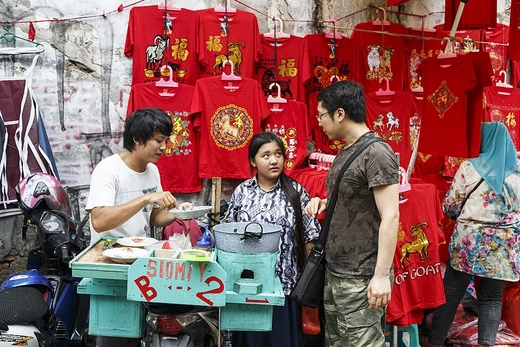
Stinky tofu
Fermented tofu with a pungent aroma and mild flavor.
Stinky tofu is a classic Chinese dish made from fermented tofu, famous for its sharp, strong smell. Despite the odor, its taste is surprisingly mild and savory. You will often find it as a snack at night markets or roadside stalls, or served as a side dish in casual restaurants.
Quick Facts
- Country
- China
- Region
- East Asia
- Main ingredients
- fermented tofu
Facts from the source article.
Did You Know?
- The odor of stinky tofu is said to resemble rotten garbage or smelly feet, and some compare its taste to blue cheese or limburger cheese.
- A 2012 chemical analysis found 39 volatile organic compounds in fermented stinky tofu, with indole as the main compound.
- Stinky tofu can be eaten cold, steamed, stewed, or deep-fried, and its color ranges from golden (Zhejiang-style) to black (Hunan-style).
Production
Unlike cheese, stinky tofu fermentation has no fixed formula for starter bacteria, with wide regional and individual variations. The traditional method uses a brine made from fermented milk, vegetables, and meat, which can also include dried shrimp, amaranth greens, mustard greens, bamboo shoots, and Chinese herbs; this brine ferments for several months. Modern factories often marinate fresh tofu in prepared brine for only a day or two, adding odor without full fermentation. Some stinky tofu, especially traditional home-cooked versions, can be linked to food poisoning outbreaks.
History
A Chinese legend states that a scholar named Wang Zhihe, from Huang Shan in Anhui Province, invented stinky tofu during the Qing dynasty. After failing the imperial examination, he stayed in Beijing and sold tofu. When he had unsold tofu, he cut it into cubes and placed them in an earthen jar. Wang Zhihe also wrote a poem titled 'Stinky Tofu, National Fragrance.' The dish gained popularity and was later served at the imperial Qing dynasty palace, and it has become extremely popular in Taiwan.
Health and odor issues
In China, some stinky tofu has been linked to food safety scandals involving ingredients like dead snails, feces, and spoiled meat used to intensify the smell, leading to hospitalizations. In Pingyao, local authorities have cracked down on selling and eating the dish after tourist complaints about its strong odor and risks of food poisoning from poorly made batches.
Around the world
Stinky tofu is made and consumed in different ways across China. In Changsha and Shaoxing, dried stinky tofu is made using different methods, resulting in very different flavors. Huo Gong Dian in Changsha uses yellow soybeans marinated in seasoning. In Tianjin, stinky tofu is mostly made in the Nanjing style with a mild aroma.
In Shanghai, it is fried and sold on the street, typically served with a spicy or sweet sauce, and also served as a condiment to congee for breakfast. In Chongqing, street stinky tofu is fried and dipped in a mixture of coriander, scallions, chili powder, Sichuan pepper, and oil, and sometimes dipped in Sichuan spicy hot pot. In Beijing, a form is sold in jars as a curd. In Hong Kong, it is a street food, deep-fried fresh at hawkers' stalls and dai pai dongs, eaten with hoisin sauce.
In Anhui, the perceived deliciousness depends mainly on spiciness. Changsha stinky tofu, also called chou ganzi, is a symbol of the city's street snacks, famous for its spicy flavor and black crackling; it is made from brine of winter bamboo shoots, koji, and shiitake mushrooms, and topped with chopped mustard, chili, and shallot. Along with Xiangtan lotus seeds and Yongfeng chili sauce, it is known as one of 'Hunan Sanbao' (Hunan's three treasures).
More in Indonesian Chinese Cuisine
Spotted an error? Know more?
Reader corrections go straight into our review queue. Suggest an edit · How this site is sourced