Frequently Asked Questions
The most-asked questions about indian states.
What exactly is this encyclopedia covering?
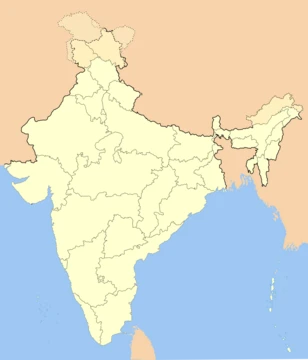
It profiles all 28 states and 8 union territories of India as distinct entities, each with its own capital, legislature, cultural identity, and economic profile. Think of it as a character guide for the 36 top-level administrative regions that make up the country.
How many 'characters' are in the cast?
There are 28 full states and 8 union territories, for a total of 36 regions. The states range from tiny Sikkim (about 7,000 sq km) to enormous Uttar Pradesh (over 240,000 sq km), so the ensemble spans a huge variety of scale.
Who are the 'lead characters' most people talk about?
Uttar Pradesh, Maharashtra, Tamil Nadu, West Bengal, and Gujarat tend to dominate discussions because of their large populations, economic weight, or political influence. They account for a significant share of India's GDP and its national news cycle.
Where should a newcomer begin reading?
Start with the linguistic reorganization of 1956, which is the 'origin episode' that drew most modern state borders along language lines. After that, picking one state from each major language family (Hindi, Dravidian, Indo-Aryan eastern, etc.) gives a well-rounded first pass.
What is the 'origin story' of the current state map?
The States Reorganisation Act of 1956 redrew boundaries so that, in most cases, people sharing a common language lived in the same state. A few later changes—most notably the creation of Telangana in 2014 and the reorganisation of Jammu & Kashmir in 2019—added or reshaped entries on the list.
What are the most-cited 'key facts' about the group as a whole?
Together the states span roughly 3.3 million square kilometres, host over 1.4 billion people, and use more than 100 languages as primary mother tongues. Each state has its own governor (appointed by the centre), chief minister (elected), and high court, creating a layered federal structure.
What counts as a 'notable moment' in the timeline?
The 2014 splitting of Andhra Pradesh to create Telangana, the 2019 revocation of Jammu & Kashmir's special status and its reorganisation into two union territories, and the 2020 elevation of Ladakh to a separate union territory are recent high-profile plot twists. Earlier, the 1956 reorganisation itself is the foundational event.
What 'conflicts' or tensions appear between the characters?
Inter-state water-sharing disputes (such as those over the Cauvery, Krishna, and Ganga rivers) and border disagreements (like the long-standing Karnataka–Kerala or West Bengal–Jharkhand tensions) are recurring friction points. These are typically mediated by the central government or the Supreme Court.
What makes each state 'unique' compared to the others?
Beyond language and cuisine, states differ in dominant industry (IT in Karnataka, textiles in Gujarat, agriculture in Punjab, tourism in Kerala), religious demographics, and even calendar systems used for public holidays. No two states share an identical combination of these traits.
Is there a 'season finale' or ongoing arc to watch?
The most active current thread is the gradual economic and infrastructural integration of the northeastern and central states, alongside debates over reservation policy, Panchayati Raj reform, and the evolving role of union territories in governance. The map is no longer static, so the 'series' is still in production.