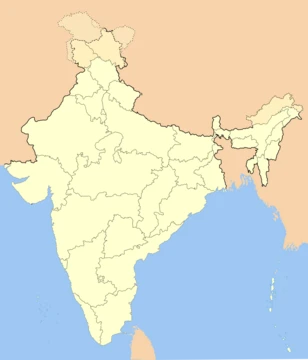
Odisha
The Land of Kalinga and Utkaḷa
Odisha, known as Orissa before 2011, is a state in eastern India. It ranks as the eighth-largest state by area and the eleventh-largest by population, home to over 41 million people. Odisha has the third-highest number of Scheduled Tribes in the country. Its neighbors are Jharkhand and West Bengal to the north, Chhattisgarh to the west, and Andhra Pradesh to the south. The state’s coastline stretches 485 kilometers along the Bay of Bengal. The region is also called Utkaḷa, a name that appears in India’s national anthem, Jana Gana Mana.
The ancient kingdom of Kalinga, invaded by Mauryan Emperor Ashoka in 261 BCE during the Kalinga War, matches the borders of present-day Odisha. The modern boundaries were set by the British Indian government, and the Orissa Province was created on 1 April 1936, made up of Odia-speaking districts from Bihar and Orissa Province, Madras Presidency, and the Central Provinces. This date is celebrated as Utkala Divas. Cuttack became the region’s capital under Anantavarman Chodaganga and remained so through many rulers and the British era until 1948, when Bhubaneswar took over as the capital.
The names Odisha and Orissa come from the ancient Prakrit term "Odda Visaya" (also "Udra Bibhasha" or "Odra Bibhasha"), found in a 1025 inscription of Rajendra Chola I. In the 15th century, poet Sarala Das referred to the area as 'Odra Rashtra' in his Odia translation of the Mahabharata. Inscriptions from Gajapati king Kapilendra Deva (1435–67) on Puri temple walls call it Odisha or Odisha Rajya. In 2011, the English spelling changed from "Orissa" to "Odisha," and the language name from "Oriya" to "Odia," through the Orissa (Alteration of Name) Bill and the Constitution (113th Amendment) Bill, passed by the Lok Sabha on 9 November 2010 and the Rajya Sabha on 24 March 2011. The change aimed to match Odia transliteration, though the Odia texts were still transliterated incorrectly under the official Hunterian system.
Prehistoric Acheulian tools from the Lower Paleolithic era have been found in the region, indicating early human settlement. Kalinga appears in ancient texts like the Mahabharata, Vayu Purana, and Mahagovinda Suttanta. Political scientist Sudama Misra believed the Kalinga janapada originally covered the Puri and Ganjam districts. The Sabar people of Odisha are also mentioned in the Mahabharata. Baudhayana noted that Kalinga was not yet influenced by Vedic traditions, suggesting it followed mostly tribal customs. Ashoka conquered Kalinga in the bloody Kalinga War of 261 BCE, his eighth year of rule. His edicts record about 100,000 killed, 150,000 captured, and many more affected. The war’s bloodshed deeply affected Ashoka, turning him into a pacifist and leading him to convert to Buddhism. Around 150 BCE, Emperor Kharavela, a Jain ruler possibly contemporary with Demetrius I of Bactria, conquered much of the Indian subcontinent and built a monastery on Udayagiri hill. Later, the region was ruled by monarchs like Samudragupta and Shashanka and was part of Harsha’s empire. The city of Brahmapur served as the capital of the Pauravas near the end of the 4th century CE, after they had been annexed by the Yaudheya Republic and later submitted to the Mauryans. The Somavamsi dynasty began uniting the region, and by the reign of Yayati II around 1025 CE, they had formed a single kingdom. Yayati II is credited with building the Lingaraj temple at Bhubaneswar. The Eastern Ganga dynasty followed, with notable rulers including Anantavarman Chodaganga, who started rebuilding the Shri Jagannath Temple in Puri around 1135, and Narasimhadeva I, who built the Konark temple around 1250. The Gajapati Kingdom came next. The region resisted Mughal integration until 1568, when it was conquered by the Sultanate of Bengal. Mukunda Deva, the last independent king of Kalinga, was defeated and killed by rebel Ramachandra Bhanja, who was then killed by Bayazid Khan Karrani. In 1591, Man Singh I, governor of Bihar, led an army to take Odisha from the Karranis of Bengal. They initially agreed to a treaty after their leader Qutlu Khan Lohani died, but broke it by attacking Puri. Man Singh returned in 1592 and pacified the area. In 1751, Nawab Alivardi Khan of Bengal ceded the region to the Maratha Empire. The British occupied the Northern Circars, including Odisha’s southern coast, after the Second Carnatic War by 1760 and incorporated them into their territories.
Quick Facts
- Official name
- State of Odisha
- Etymology
- "Land of the Odias"
- Nickname
- Soul of India; India’s Best Kept Secret
- Motto
- Satyameva Jayate (Sanskrit); "Truth alone triumphs"
- Anthem
- Bande Utkala Janani (Odia); "I Adore Thee, O Mother Utkala"
- Region
- East India
- Before was
- Orissa Province
- Capital
- Bhubaneswar
Facts from the source article.
Lore & Background
The ancient kingdom of Kalinga, which was invaded by the Mauryan Emperor Ashoka in 261 BCE resulting in the Kalinga War, coincides with the borders of modern-day Odisha. The modern boundaries of Odisha were demarcated by the British Indian government; the Orissa Province was established on 1 April 1936, consisting of the Odia-speaking districts of Bihar and Orissa Province, Madras Presidency and Central Provinces. Cuttack was made the capital of the region by Anantavarman Chodaganga, after which the city was used as the capital by many rulers, through the British era until 1948. Thereafter, Bhubaneswar became the capital of Odisha.
Reader's Guide
Odisha lies between the latitudes 17.780N and 22.730N, and between longitudes 81.37E and 87.53E. The state has an area of 155,707 km², which is 4.87% of total area of India, and a coastline of 450 km. In the eastern part of the state lies the coastal plain. It extends from the Subarnarekha River in the north to the Rushikulya River in the south. The lake Chilika is part of the coastal plains. Three-quarters of the state is covered in mountain ranges. The highest point in the state is Deomali at 1,672 metres in Koraput district. The state experiences four meteorological seasons: winter (January to February), pre-monsoon season (March to May), south-west monsoon season (June to September) and north east monsoon season (October–December).
More in Indian States
Spotted an error? Know more?
Reader corrections go straight into our review queue. Suggest an edit · How this site is sourced