Cashiering
A ritual stripping of military rank and honor.
Last updated
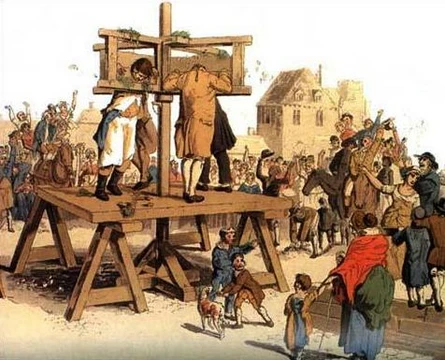
Cashiering, also known as a degradation ceremony, is a ritual dismissal from a position of responsibility for a breach of discipline, most commonly associated with military forces. It is notable for its public and symbolic stripping of rank and honor.
Quick Facts
- Associated with
- Military forces
- Also known as
- Degradation ceremony
- Cultural references
- Mary Poppins (1964 film), Fresh Hare (1942 Bugs Bunny short)
Facts from the source article.
Military
Cashiering is most closely linked to the public humiliation of dishonored military officers. In the British Army, where commissions were purchased, a cashiered officer forfeited the money paid, as he could not later sell his commission.
Notable examples
Cashiering, the formal act of stripping a person of military rank and honors, has been inflicted on a number of notable figures. Among them are Francis Mitchell in 1621; Thomas Cochrane, the 10th Earl of Dundonald, following the Great Stock Exchange Fraud of 1814; Justus McKinstry; Alfred Dreyfus in 1894; and Philippe Pétain in 1945, who lost all ranks and honors except the title Marshal of France. William Calley, the only person convicted for the My Lai Massacre, was cashiered rather than given a punitive discharge. After the failed 1935 Greek coup d'état, Lieutenant Colonel Christodoulos Tsigantes, his brother Captain Ioannis Tsigantes, Colonel Stefanos Sarafis, and other participants were publicly cashiered in a ceremony.
Though the ritual is most famously tied to Captain Dreyfus, the French military under the Third Republic performed formal degradation several times. At least one other army officer and a naval officer underwent the ceremony, which involved breaking their swords and publicly tearing insignia, braid, and buttons from their uniforms after treason convictions. More often, non-commissioned officers and privates received similar punishments for serious offenses before execution or imprisonment.
The physical tearing and breaking could be simplified with advance preparation. A contemporary account of Dreyfus’s 1894 cashiering noted that the prison tailor had removed all buttons and stripes from his tunic, the red stripes from his trousers, and the regimental number and braid from his collar and cap, replacing them with a single stitch for easy removal. His sword was also filed nearly in two, so the adjutant’s apparent effort in breaking it was largely a pretense.
In popular culture, cashiering appears in the 1964 film Mary Poppins, where Mr. Banks is fired from the bank by having his carnation torn from his lapel, his umbrella turned inside out, and his bowler hat punched through. In the 1942 Bugs Bunny short Fresh Hare, Bugs cashiers Elmer Fudd as a disgrace to the Mounties by tearing away not just his uniform and insignias, but also his undershorts.
More in Humiliation
Sources
Compiled from Wikipedia and the sources listed below. Text from Wikipedia is available under CC BY-SA 4.0; this entry is adapted from it.
- Wikipedia: Cashiering (CC BY-SA 4.0).
Spotted an error? Know more?
Reader corrections go straight into our review queue. Suggest an edit · How this site is sourced