Frequently Asked Questions
The most-asked questions about hockey hall of fame builders and executives.
What exactly is a 'hockey Hall of Fame builder'?
A builder is a non-playing individual—typically an owner, general manager, commissioner, or league administrator—who is recognized by the Hockey Hall of Fame for shaping the sport's structure, business, or culture over a sustained career. The category sits alongside the player and coach divisions as one of the three official inductee types.
How does the builder category differ from the player or coach categories?
Players and coaches are inducted primarily on on-ice performance and competitive achievement, while builders are judged on organizational, administrative, and institutional contributions such as league governance, team construction, or rule-making. A builder's 'stats' are measured in the stability and growth of the sport rather than goals or wins.
Who are some of the most frequently cited names in this category?
Long-serving NHL presidents and commissioners, landmark general managers who restructured franchises, and pioneering owners who expanded the league into new markets all appear in the inductee list. Figures who helped negotiate landmark collective-bargaining agreements or steer the league through financial crises are also commonly highlighted by fans.
What criteria must a candidate meet to be inducted as a builder?
The Hall of Fame's selection committee looks for a career of sustained, high-level influence on the sport—usually spanning a decade or more—combined with a measurable positive impact on the game's integrity, competitiveness, or global reach. There is no fixed numerical threshold the way there is for players; the bar is qualitative and legacy-based.
Where is the Hockey Hall of Fame located and when was it founded?
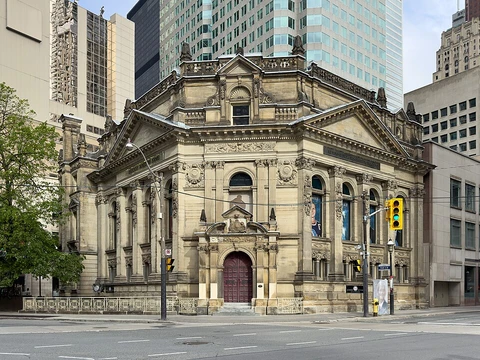
The institution is housed in a purpose-built building in downtown Toronto, Ontario, Canada, and it opened to the public in 1960 after being chartered in 1943. It serves as both a museum and the administrative home for the inductee selection process.
How often are new builders added to the Hall of Fame?
The selection committee typically inducts one or two builders per annual class, though some years see no builder inductee at all if no candidate meets the threshold. The pace is deliberately slow because the committee favors waiting until a career's full arc and long-term impact are clear.
What makes a hockey executive's legacy 'Hall of Fame worthy' in the eyes of the committee?
Committee members tend to look for transformative decisions—such as saving a franchise from collapse, designing a competitive balance framework, or expanding the sport into new territories—rather than routine management. The emphasis is on whether the individual changed the trajectory of the game in a way that outlasted their tenure.
Are there recurring debates or controversies around builder inductees?
Fans and journalists occasionally question whether a short tenure or a single high-profile decision justifies induction, or whether certain executives should have been recognized earlier. There is also periodic discussion about whether the category adequately represents women's hockey administrators and international league leaders.
Where should a newcomer start if they want to learn about this category?
The Hall of Fame's official inductee database lets you filter by the builder division and read a short biography for each name. Pairing that with a few long-form profiles in major sports publications gives context on the specific decisions and eras each inductee shaped.
How does this recognition compare to similar honors in other major sports?
The NBA has a 'Contributor' category, Major League Baseball honors executives through the 'Executive' wing, and the NFL recognizes builders through its Hall of Fame's 'Contributor' class. Hockey's builder category is comparable in scope but tends to receive less mainstream media coverage than the player classes, which is why a dedicated fan resource can be especially useful.