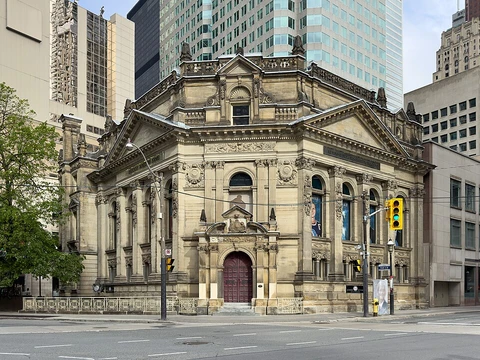
T. Franklin Ahearn
Owner of the original Ottawa Senators NHL club.
Last updated
Thomas Franklin 'Frank' Ahearn (May 10, 1886 – November 7, 1962) was a Canadian businessman, politician, and owner of the original Ottawa Senators National Hockey League (NHL) hockey club. He is best known for his ownership during the Senators' Stanley Cup victory in 1926-27 and for his subsequent financial losses that led to the franchise's relocation and suspension. Ahearn was elected to the Hockey Hall of Fame in 1962 as a builder.
Lore & Background
Ahearn became involved with the Ottawa Senators in the period when they won three Stanley Cups in four years between 1920 and 1923. In 1924, he bought out majority owner Tommy Gorman. In 1926-27, the Senators won the Cup with an imposing roster including Jack Adams, King Clancy, Alec Connell, Cy Denneny, Frank Finnigan, Hec Kilrea, Frank Nighbor, and Hooley Smith.
Winning the Stanley Cup was the last hurrah for the franchise. Due to a combination of the Great Depression and the smaller population of Ottawa, the club lost money every year after, leading the club to suspend operations for one year, move home games to other cities, and finally move to Missouri to operate as the St. Louis Eagles. After one season in St. Louis, the Ottawa owners sought to suspend operations again and were turned down by the league.
On October 15, 1935, the Eagles and their players were bought out by the NHL, dispersing the players to other NHL teams and suspending the franchise. In the years of his owning the Ottawa Senators, his losses were over $200,000, a loss he said he never regretted. At the time of the dissolution of the NHL franchise, Ahearn was a minority owner of the consortium which owned the Ottawa Auditorium arena and the Senators.
Reader's Guide
Ahearn's significance lies in his ownership of the original Ottawa Senators during their final Stanley Cup victory in 1926-27, after which the franchise declined due to the Great Depression and Ottawa's small population. Despite losing over $200,000, he stated he never regretted the loss. His ownership ended with the franchise's relocation to St. Louis as the Eagles and its eventual suspension by the NHL in 1935.
Ahearn was elected to the Hockey Hall of Fame in 1962 as a builder, recognizing his contributions as an owner. He was also inducted into the Ottawa Sports Hall of Fame in 1966. His legacy is tied to the original Senators' championship era and the financial challenges that led to the franchise's demise.
Did You Know?
- He was elected to the House of Commons of Canada in 1930 and 1935.
Frequently Asked Questions
Who is T. Franklin Ahearn?
Thomas Franklin "Frank" Ahearn (1886–1962) was a Canadian businessman and politician from Ottawa, Ontario, best remembered as the owner of the original Ottawa Senators NHL franchise. He is enshrined in the Hockey Hall of Fame as a Builder.
How did T. Franklin Ahearn earn his Hockey Hall of Fame induction?
He was inducted as a Builder in 1962, the same year he died, in recognition of his foundational contribution to professional hockey through his ownership of the Senators. The Hall of Fame honored his role in helping establish and sustain one of the league's earliest franchises.
More in Hockey Hall of Fame Builders and Executives
Test yourself
Three questions drawn from this entry’s sources. Pick an answer to check it.
Answers checked against the source article
Sources
Compiled from Wikipedia and the sources listed below. Text from Wikipedia is available under CC BY-SA 4.0; this entry is adapted from it.
- Wikipedia: T. Franklin Ahearn (CC BY-SA 4.0).
Spotted an error? Know more?
Reader corrections go straight into our review queue. Suggest an edit · How this site is sourced