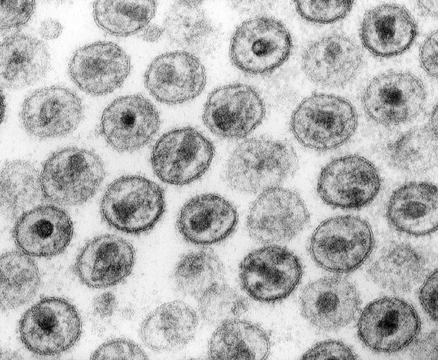
Project SIDA
Joint Zaire-US-Belgium project studying AIDS in Central Africa.
Project SIDA (1984–1991), also known as Projet SIDA, was a collaborative scientific project between Zaire, the United States, and Belgium that studied AIDS in Central Africa. Headquartered in Kinshasa at Mama Yemo Hospital, it was one of the first projects to confirm the presence of AIDS outside the United States and to establish heterosexual transmission of the disease.
Quick Facts
- Founded
- 1984
- Terminated
- 1991
- Headquarters
- Kinshasa, Zaire (DRC)
- Founding director
- Jonathan Mann
- Initial budget
- $300,000 per year
- Initial staff
- 7 employees
- Key publication
- July 1984 article in The Lancet
Facts from the source article.
Background
Dr. Bila Kapita, a cardiologist and head of internal medicine at Mama Yemo, first noticed the beginnings of the AIDS epidemic in Zaire. In the 1970s a condition called "slim" or "wasting disease" appeared in Central and Eastern Africa. By 1975 Kapita observed an increased number of patients with Kaposi's sarcoma, a rare tumor linked to AIDS. Meanwhile, doctors in the U.S. and Western Europe noted heterosexual patients with travel histories to Central Africa suffering from Pneumocystis carinii pneumonia. Kapita introduced them to 38 patients and provided blood samples. Many patients displayed cryptococcal meningitis, often linked to AIDS. Kapita, McCormick, Piot, and Sheila Mitchell identified loss of T cells in these patients. This work, along with research in Rwanda, established the connection between North American AIDS and the disease in Central Africa.
Operations
Project SIDA officially opened on August 29, 1984. Its three main objectives were to identify risk factors of HIV transmission, identify modes of transmission, and generate hypotheses for future research. After equipping Mama Yemo for serological surveys, the project collected samples from 2500 hospital personnel and 800 University of Kinshasa staff, responding to Zairian concerns about hospital transmission. In July 1984 preliminary findings from the 1983 Mama Yemo study were published in The Lancet, demonstrating heterosexual transmission of AIDS; the New England Journal of Medicine had rejected the findings on grounds that heterosexual transmission could not exist. In April 1985 Project SIDA members attended the First International Conference on AIDS in Atlanta, where American scientists made racist links between African sexuality and HIV transmission. Subsequently, the 1985 WHO Workshop on AIDS in Africa in Bangui established a clinical definition of AIDS partly through Project SIDA's findings.
Research
Projet SIDA was designed to counter the "safari research" approach common among Western scientists who were not deeply involved in local conditions. While many U.S. and European projects in the mid-to-late 1980s focused on proving that HIV-1 could be transmitted through heterosexual sex, Projet SIDA instead aimed to understand how AIDS spread specifically within Central Africa. Its early work addressed local worries about infection rates among staff at Mama Yemo Hospital, identified risk groups in Kinshasa, and looked at transmission within households. The project produced over a thousand scientific abstracts and 120 publications, and its directors worked to give Zairian researchers lead roles. Notably, it was the first to confirm heterosexual transmission of AIDS and to document AIDS outside the Global North. It found that 6–7% of expectant mothers at Mama Yemo and 7–8% of Kinshasa’s general population were HIV-positive. Studies identified mother-to-child, blood infusion, and sexual intercourse as transmission routes. Research led by Bob Colebunders linked tuberculosis to AIDS cases and showed that existing tuberculosis treatments at Mama Yemo were ineffective for HIV-positive patients, at a time when tuberculosis was the leading cause of death among AIDS patients.
Legacy
Project SIDA shuttered between 1991 and 1993 due to civil unrest and the end of Mobutu's government. Before closure, HIV prevalence in Kinshasa stabilized at 4–8%, but rose to 10% by 1992 after operations ceased; prevalence was down to 4–6% by 1998. Some former staff coordinated to sponsor Zairian staff's move to the U.S., while others continued working in the DRC. By 1987 Zairian staff had critiqued the project's focus on documentation over prevention. Bila Kapita felt too much money went to epidemiological research, leaving little for treatment or prevention, and noted that funds for securing Kinshasa's blood bank came from Germany, not the U.S. or Belgium. By the project's end, much of the Zairian population associated the AIDS crisis with Mobutu's economic policies, despite Project SIDA's efforts and government interventions such as condom distribution.
More in HIV/AIDS Organizations
Spotted an error? Know more?
Reader corrections go straight into our review queue. Suggest an edit · How this site is sourced