Giro d'Italia automobilistico
Italian automobile race inspired by the Tour de France Automobile.
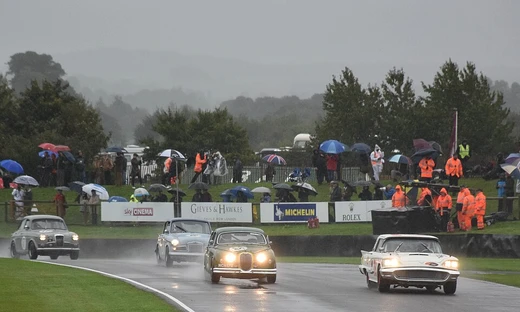
The Giro d'Italia automobilistico was an automobile race around Italy, first held in 1901. The event was reinstituted as an annual competition between 1973 and 1980, with further revivals in 1988, 1989, and 2011.
Quick Facts
- Category
- Sports cars
- Country
- Italy
- Classes
- 1973–1980: Group 5
- Group 4
- Group 3
- Group 2
- Group 1
- Inaugural
- 1901
Facts from the source article.
History
The first Giro d'Italia was put together by the Automobile Club of Turin, backed by the Milanese paper Il Corriere della Sera. Seventy-two crews signed up. The race began on 27 April 1901 in Turin, but only 32 of those 72 cars showed up at the start. Among them were nine Fiats, four Panhards, four Peugeots, three Renaults, two Rossellis, two Morses, and single entries from Benz, Ceirano, Delahaye, Marchand, Daimler, De Dion, Isotta Fraschini, and Darracq.
The 1934 edition ran over three days and covered 5687 km, following a circular route from Rome down to Calabria and back, with a stop in Messina on Sicily. Carlo Pintacuda and Mario Nardilli took the win in a Lancia Astura. The 1954 edition stretched over ten days and seven stages, totaling 5763 km. It started and ended at the Monza Circuit, with stops in Sanremo, Naples, Bari, Rimini, Merano, and Turin. Luigi Taramazzo and Gerino Gerini won that one in an Alfa Romeo 1900 SS.
The first Giro d'Italia automobilistico ran from 24 to 28 October and counted toward the Italian Group 4 Championship. The second edition ran from 14 to 20 October, also part of the Group 4 Championship. The works Fiat Rally team entered four cars: two Fiat Abarth X1/9 prototypes (one driven by Ferrari F1 driver Clay Regazzoni), a mysterious Abarth SE 030 prototype based on the then-unreleased Lancia Montecarlo that managed a surprising second place on its debut, and a Group 4 124 Abarth Rally. Lancia’s only entry was the winning Lancia Stratos Turbo driven by Andruet and Biche. Another notable competitor was Arturo Merzario, whose poorly prepared Jolly Club Group 5 Stratos suffered an engine seizure on the first day at Casale. Of 85 starters, 52 finished.
The third Giro took place from 11 to 18 October. For 1975, the coefficient for hillclimb times was increased to 3:1, which gave rally drivers an advantage over circuit racers less used to closed public roads; no Formula One drivers entered the third Giro. Autodelta fielded an Alfa Romeo 33/3 in Group 5. The favored duo of Munari and Maiga finished sixth, but only after watching their Alitalia Stratos Turbo burn to the ground following the last race. The winners were Pianta and Scabini in a 3.5-litre Abarth SE 031, a prototype built on a heavily modified Fiat 131. The fourth Giro ran from 17 to 20 October.
More in Historic Motorsport Events
Spotted an error? Know more?
Reader corrections go straight into our review queue. Suggest an edit · How this site is sourced