
Meiji Shrine
Last updated
Where it is
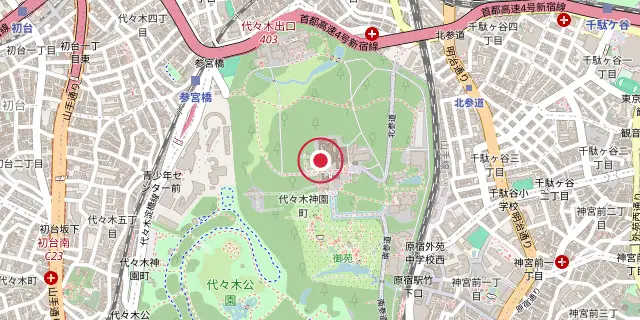
Coordinates: 35°40′34″N 139°41′56″E (35.6760, 139.6990) · Open in OpenStreetMap
Coordinates and connected clubs: the infobox of Wikipedia: Meiji Shrine (CC BY-SA 4.0). Map: drawn by Codexery from OpenStreetMap tiles.
Meiji Shrine is a Shinto shrine in Shibuya, Tokyo, dedicated to Emperor Meiji and Empress Shōken, though their graves are at Fushimi-momoyama south of Kyoto.[1] The shrine was completed and dedicated in 1920, eight years after the emperor's death and six years after the empress's death.[2]
What happened
Youth groups and civic associations from across Japan contributed labor and funding as a national project.[3] The main timbers came from Kiso in Nagano and Alishan in Taiwan, with materials from every Japanese prefecture.[3] The original building was destroyed during the Tokyo air raids of World War II.[4] The site selected for the shrine was an iris garden that Emperor Meiji and Empress Shōken had frequented.[3]
By 1920, the projected expense for the construction was ¥5,219,000, which represented roughly one-fourth of the real expenditure because materials and labor were donated.[5]
What the cited sources add
ICOMOS issued a heritage alert warning of "irreversible destruction of cultural heritage" from the loss of approximately 3,000 trees.[6] The real estate firm Mitsui Fudosan stated it would elaborate on conservation efforts and plant new trees.[6] After World War II, the American occupation controlled the site until Meiji Jingu's religious leaders took responsibility on condition it remain open to the public.[6] Landscape architect Shinji Isoya argued the project is essential for the shrine to generate income, as religious corporations cannot receive government funds under Japan's post-war constitution.[6]
Rental and lease income from the baseball stadium, cafes, and Meiji Memorial Hall generate roughly 90% of the organization's revenue.[6]
References
- Wikipedia, "Meiji Shrine" (CC BY-SA 4.0), which cites: "Meiji Shrine"; "Introduction", Meiji Jingu (we also read that source) en.wikipedia.org
- "Meiji Shrine". facts only, no text reused. japan-guide.com
- Wikipedia, "Meiji Shrine" (CC BY-SA 4.0), which cites: Hardacre, "Modern Japan: An Encyclopedia of History, Culture, and Nationalism", Routledge, 2013, p. 151 (we also read that source) en.wikipedia.org
- Wikipedia, "Meiji Shrine" (CC BY-SA 4.0), which cites: "Shrine Building" (original not read by us) en.wikipedia.org
- Wikipedia, "Meiji Shrine" (CC BY-SA 4.0), which cites: Rea, "The Great Meiji Shrine", Far Eastern Review, December 1920, p. 649 (original not read by us) en.wikipedia.org
- Emiko Jozuka, Francesca Annio, Saki Toi and Daniel Campisi, "'Like building skyscrapers in Central Park': Tokyo redevelopment plan sparks protests", CNN, October 3, 2023. facts only, no text reused. edition.cnn.com
Each numbered sentence above was checked against the source it cites before publication. Sentences citing Wikipedia adapt text from the English Wikipedia article Meiji Shrine (contributors), used under CC BY-SA 4.0; this entry is available under the same licence. Other sources were used for facts only; no text or images are copied from them.
More in Historic And Sacred Architecture
Sources
Compiled from Wikipedia and the sources listed below. Text from Wikipedia is available under CC BY-SA 4.0; this entry is adapted from it.
- Wikipedia: Meiji Shrine (CC BY-SA 4.0).
Spotted an error? Know more?
Reader corrections go straight into our review queue. Suggest an edit · How this site is sourced