Frequently Asked Questions
The most-asked questions about hidden object games.
What is a hidden object game?
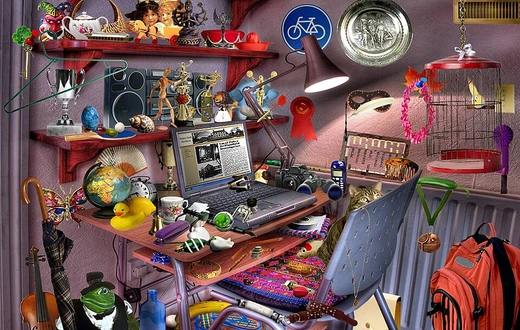
A hidden object game is a puzzle genre in which players examine a densely illustrated scene and locate every item on a provided checklist. Between scenes, most titles layer in a secondary mechanic—such as a sequence puzzle, a logic challenge, or a story choice—to keep the experience from feeling repetitive.
Which studios and figures are most associated with the genre?
The Game Bakers, known for the long-running Mystery Case Files franchise, is arguably the most recognizable developer name in the space. On the distribution side, Big Fish Games and Alawar Entertainment (later rebranded as Gamesmile) were the two dominant storefronts for PC hidden object titles during the genre's peak in the 2000s and 2010s.
Where should a complete beginner start?
A good entry point is any of the early Mystery Case Files installments, since they introduce the timed-search format alongside a branching narrative. Alternatively, the free-to-play mobile titles in the Hidden City or Gardens of Time series let new players learn the mechanics without paying upfront.
What are the standard mechanics every HOG shares?
At minimum, each round presents a static scene, a list of targets to find, a countdown timer, and a limited number of hints the player can spend. Many titles also include a meta-puzzle between scenes—often a small logic or ordering challenge—that the player must solve to unlock the next location.
What are the most well-known hidden object franchises?
Mystery Case Files, Gardens of Time, Hidden City, and Da Vinci's Code are the names that come up most often in fan discussions. Each spans multiple installments and has built a dedicated following through recurring characters and serialized storylines.
How did the genre come about?
Hidden object games emerged in the early-to-mid 2000s as a simplified, more accessible offshoot of point-and-click adventure games like The 7th Guest and Myst. The format stripped away complex inventory systems and dialogue, focusing instead on visual scanning and pattern recognition, which suited the casual PC gaming market well.
What's the difference between timed and untimed hidden object games?
Timed HOGs impose a countdown on each scene, creating pressure and a score-based replay incentive. Untimed or relaxed variants remove the clock entirely, letting players take as long as they need; these are often marketed toward younger audiences or players who prefer a stress-free experience.
On which platforms can hidden object games be played?
The genre originated on PC (Windows and Mac) and later expanded to web browsers, iOS, Android, and a handful of console ports. Mobile is now the largest market by download volume, though many newer PC titles still offer more elaborate scenes and longer narratives.
Are there reliable strategies for spotting hard-to-find objects?
Viewing the scene at full zoom and then pulling back to see the whole picture at once is the most commonly recommended technique. Other tips include scanning in a consistent top-left-to-bottom-right pattern, checking behind or inside objects that look like they could conceal something, and using hints early rather than burning minutes on a single item.
What are some standout moments in hidden object game history?
The 2008 release of Mystery Case Files: Ravenhearst is often cited by fans as the title that elevated the genre from a simple time-killer to a narrative-driven experience with genuine character depth. More recently, the shift of major franchises to free-to-play mobile models in the mid-2010s reshaped the business model and sparked long-running community debates about monetization versus content quality.