Frequently Asked Questions
The most-asked questions about headphones and audio gear, part 2.
What does Part 2 of the fan encyclopedia cover that Part 1 doesn't?
Part 1 handles the absolute basics like what a headphone is and how sound reaches your ears. Part 2 dives into driver technologies, sound signatures, the amplifier/DAC ecosystem, and the subcultures around IEMs, planars, and cable swapping.
Who are the most frequently discussed brands and designers in the community?
Sennheiser, Focal, Audeze, and HiFiMAN dominate over-ear conversations, while Shure, Moondrop, KZ, and Truthear see heavy traffic in the IEM space. Individual engineers like Focal's Jean-Marc Vercauteren and Audeze's Matt Flanagan are often cited as key creative forces behind their respective designs.
Where should a total newcomer start reading in Part 2?
Begin with the 'Sound Signatures Explained' entry, since nearly every product review and forum thread assumes you already know what warm, neutral, or V-shaped means. After that, the 'Do You Actually Need an Amp?' guide saves most beginners from overspending on gear they don't need yet.
What is the open-back versus closed-back distinction and why do fans argue about it?
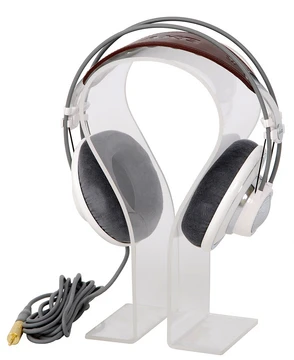
Open-back cups let air flow through the driver, producing a wider, more 'natural' stage but leaking sound outward; closed-backs seal the enclosure for isolation and tighter bass at the cost of a slightly narrower soundstage. The debate usually flares up in shared-workspace or commuting contexts where one type is impractical.
What is a 'sound signature' and how do fans describe theirs?
It is the overall tonal balance of a set of headphones—how much bass, midrange, and treble energy is emphasized relative to a flat reference. Fans typically label a set as warm (bass-boosted), neutral (flat), bright (treble-forward), or V-shaped (elevated bass and treble with recessed mids).
How do IEMs differ from over-ear headphones in both design and community culture?
IEMs (in-ear monitors) sit inside the ear canal, use smaller drivers, and are far more portable, but they rely on a tight seal for bass response. The IEM community tends to be more price-sensitive and cable-swap-obsessed, with frequent 'best under $50' threads, whereas over-ear fans often gravitate toward larger, more expensive flagship models.
What is a DAC/amp and do I really need one for my headphones?
A DAC converts digital audio to analog, and an amp boosts the signal to drive the drivers; many phones and laptops now include both in a basic form. You only need a dedicated unit if your headphones have high impedance (above ~150 ohms), poor sensitivity, or if you want to improve sound quality beyond what a built-in chip can deliver.
What is the planar-magnetic versus dynamic-driver debate?
Dynamic drivers use a single moving diaphragm, while planar-magnetic designs sandwich a thin film between two magnet arrays, which fans claim yields faster transient response and lower distortion. In practice both can sound excellent, and the argument often comes down to personal taste, price point, and whether you prefer the detailed 'textbook' sound of planars or the punchy slam of a good dynamic set.
What are the most common beginner mistakes the encyclopedia warns about?
Buying a $500 pair of headphones without an amp, judging a set by a single YouTube review, and ignoring fit and comfort in favor of spec sheets are the three most repeated pitfalls. The encyclopedia also flags 'upgradeitis'—endlessly swapping gear before settling on a pair you actually enjoy daily.
What is 'headphone bleed' and how does the community handle it?
Bleed is the audible leakage from open-back headphones into the surrounding room, which can annoy roommates, coworkers, or recording microphones. The standard advice is to switch to closed-backs in shared spaces, use a noise-isolating IEM for phone calls, or simply accept that open-backs are a 'your room, your rules' format.