Fostex
OEM manufacturer turned pro audio brand for multitrack recorders and headphones.

Fostex is a brand established in June 1973 by Foster Denki, an electronics company founded in 1948 that manufactures loudspeakers and audio equipment. Foster Denki supplies audio equipment as an OEM to companies including Sennheiser, Sony, Yamaha, Denon, Nokia, Beats, Apple, Toshiba, Clarion, and various automakers. Fostex became well known in both consumer hi-fi and professional fields, particularly for its small powered monitor speaker, the Fostex 6301B, and for pioneering affordable multitrack recording equipment alongside TASCAM.
Quick Facts
- Traded As
- 6794
- Founded
- 1948-06-01 (as Foster Electric Company, Ltd.) / 1973 (as Fostex)
- Founders
- Shigeaki Nishimura · Hiroaki Hagiwara
- Hq Location City
- Akishima City, Tokyo
- Hq Location Country
- Japan
- Key People
- Hirozo Yoshizawa (President and CEO)
- Industry
- Electrical equipment
- Products
- Multitrack tape recorders · Digital multitrack recorders · Loudspeakers · Speaker components
- Num Employees
- 50,000 (2019)
- Parent
- Foster Electric Company
Facts from the source article.
Lore & Background
Foster Denki was founded in 1948 and became one of the largest OEM manufacturers of loudspeakers and transducer products worldwide. The Fostex brand was established in June 1973 to brand components manufactured by Foster Electric. In 1978, Fostex began developing speakers for professional use. From 1981, Fostex and TASCAM pioneered affordable multitrack recording equipment, producing the A-2 and A-4 reel-to-reel recorders; the A-8 was the first eight-track recorder using affordable ¼ inch tape. Fostex also produced cassette multitrackers, including the popular four-track Fostex 250, which used standard cassettes at double speed (3¾ ips) and Dolby C noise reduction. In 1983, Fostex released the X-15, a portable battery-powered four-track cassette recorder, and the B-16, a compact 16-track recorder on ½ inch tape. The B-16 was followed by the E-16 in 1986 and the G-16S in 1990, the first recorder implementing Dolby S noise reduction. The G-24S was the last analogue multitrack machine, fitting 24 tracks onto 1 inch tape. As digital technology progressed, Fostex moved to digital drive-based recorders, releasing the DMT-8 in 1995, the first portable affordable digital recorder with eight tracks of 16-bit, 44.1 kHz audio to hard disk. The FD-4 and FD-8 added support for Zip and SyQuest removable drives.
Reader's Guide
Fostex's significance lies in its dual role as a major OEM supplier and a brand that democratized multitrack recording. Through its partnership with TASCAM starting in 1981, Fostex made affordable multitrack equipment accessible to freelance and home recording enthusiasts, with the A-8 eight-track recorder on ¼ inch tape becoming a popular choice. The cassette-based Fostex 250 and portable X-15 further lowered barriers to multitrack recording. In the digital era, the DMT-8 (1995) was the first portable and affordable digital recorder, offering non-destructive editing and MIDI synchronization. Fostex also expanded into high-end headphones (TH-series), digital audio converters (HP series), and portable listening devices. The T50RP model became popular in headphone modification circles. In professional motion picture production, Fostex's Field Memory Recorders (FR-series and PD-series) are used by some production sound mixers for recording sync sound as WAV files. The company's current product range includes digital multitrack recording equipment, loudspeaker drivers, studio monitors, microphones, and headphones.
Did You Know?
- Foster Denki supplies OEM speakers and headphones for Sennheiser, Sony, Yamaha, Denon, Nokia, and Beats.
- The Fostex 250 cassette multitracker used all four tracks in one direction at double speed (3¾ ips) with Dolby C noise reduction.
- The Fostex G-16S (1990) was the first recorder to implement the Dolby S noise reduction system.
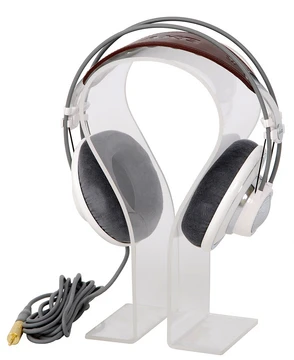
- The Fostex T50RP headphone model has become popular in headphone modification circles.
Fostex Among the Stand-Alone HDR Makers
Fostex is recognized as one of the notable manufacturers of stand-alone hard disk recorders, a category of equipment that captures audio or video directly to high-capacity storage without requiring a connected computer. It shares this distinction with a roster of well-known names in the professional audio and video space, including Alesis, Akai Professional, Korg, Mackie, TASCAM, Roland Corporation, Yamaha Pro Audio, RADAR, and Zoom with its HD8 and HD16 models. These stand-alone units represent a specific design philosophy: they deliver the full recording function as a self-contained appliance, distinct from the computer-based approach where a personal computer and appropriate software fulfill the same role. Fostex's inclusion in this lineup places it squarely within the professional and semi-professional studio equipment market, where engineers and producers seek dedicated hardware for capturing and managing digital audio and video material.
The Tapeless Paradigm Fostex Embraces
The hard disk recorder category in which Fostex operates represents a fundamental departure from the reel-to-reel audio tape and video tape recorder systems that dominated studios before the 1980s. By writing digital audio or video to a high-capacity hard disk, these systems unlock non-linear editing capabilities that simply cannot be achieved with linear tape media. Data on a disk can be accessed at random, meaning an engineer can jump to any point in a recording without physically rewinding a tape. This random-access property also enables non-destructive editing, where the original recorded material remains untouched while edits are applied as separate instructions. Fostex's stand-alone recorders participate in this paradigm, offering users the ability to record, review, and manipulate digital audio or video without the mechanical constraints and physical wear associated with magnetic tape.
The Market Evolution That Shaped Fostex's Niche
The market for hard disk recording did not appear overnight. Before the 1980s, most recording studios relied on analog multitrack machines built around reel-to-reel tape. The first commercial hard disk recording system emerged in 1982 as a 16-bit, 50 kHz digital option for the New England Digital Synclavier II, though stereo audio was not yet practical due to the limited data throughput of drives of that era. The high cost and restricted capacity of early solutions confined them to large professional studios, often reserved for niche tasks like film post-production. The introduction of the compact disc in 1982 accelerated digital recording development, and by the late 1980s and early 1990s, several more affordable solutions appeared, many still incorporating tape in reel or videocassette form. In 1993, iZ Technology's RADAR system, distributed by Otari, was designed explicitly to replace 24-track tape machines. By the mid-1990s, falling hard disk prices and rising capacities brought recording systems within reach of even small studios, and hard disk recording became the preferred method. Fostex's stand-alone recorders entered a market that had already completed this transition from tape to disk.
Operational Principles and the DAW Ecosystem
Hard disk recorders like those Fostex produces are frequently paired with a digital mixing console, forming an integral component of what is known as a digital audio workstation. In this configuration, complex mixing and processing tasks can be automated, relieving the audio engineer from the pressure of executing a final mix in real time. The degree of non-linear editing capability, however, varies from one manufacturer to another; it is not a universal feature inherent to every disk-based system. The principal technical constraints governing any such recorder are storage capacity, data transfer rate, and processor speed. Some systems have historically relied on lossy audio compression to ease the first two demands, though this approach is growing rarer as disk capacities expand rapidly. Meanwhile, the personal computer has emerged as an increasingly popular alternative platform, offering a more flexible interface through software, with many studio-grade setups still providing external hardware for the analog-to-digital conversion stages. Fostex's stand-alone approach positions it as a dedicated-hardware option within this broader ecosystem.
Frequently Asked Questions
What is Fostex and when did it start?
Fostex is the audio brand name used by Foster Denki, a Japanese electronics company that has been building loudspeakers and audio hardware since 1948. The Fostex brand itself was formally launched in June 1973 to market their consumer hi-fi and professional recording products.
What is the Fostex T50RP?
The T50RP is a closed-back over-ear headphone that became one of Fostex's most recognized models, especially popular with podcasters and home-studio musicians. It's praised for its warm, detailed sound signature and solid build at a budget-friendly price.
What is the Fostex 6301B?
The 6301B is a compact powered monitor speaker that became a go-to nearfield reference in both home studios and professional recording rooms. It is widely credited with putting Fostex on the map in the hi-fi and pro-audio communities.
What multitrack recording gear is Fostex famous for?
Fostex was a pioneer in bringing affordable multitrack recording to everyday musicians, beginning with the A-8, an eight-track recorder that used quarter-inch tape. They followed up with the DMT-8 in 1995, which they positioned as the first portable digital multitrack recorder.
Who does Fostex supply audio components to?
Beyond its own branded gear, Foster Denki works as an OEM manufacturer, providing drivers and audio components to companies such as Sennheiser, Sony, Apple, Beats, Yamaha, Denon, and several automakers. This behind-the-scenes role means Fostex technology is inside products far more people own than they realize.
More in Headphones and Audio Gear, Part 2 1-24
Spotted an error? Know more?
Reader corrections go straight into our review queue. Suggest an edit · How this site is sourced