2010: The Year We Make Contact
Sequel to 2001: A Space Odyssey, adapting Clarke's novel.

2010: The Year We Make Contact, often shortened to 2010, is an American science fiction film from 1984. Peter Hyams wrote, produced, shot, and directed it. The movie continues the story from Stanley Kubrick's 1968 film 2001: A Space Odyssey, based on Arthur C. Clarke's 1982 novel 2010: Odyssey Two. In the film, a combined American and Soviet team travels to Jupiter to find out what went wrong with the Discovery One mission. The cast includes Roy Scheider, Helen Mirren, Bob Balaban, and John Lithgow, with Keir Dullea and Douglas Rain returning to their roles from the earlier film.
Released in the United States on December 7, 1984, the film got mixed reviews. Critics liked the special effects but thought it wasn't as good as its predecessor. It made $40.4 million at the domestic box office, against a $28 million budget.
The plot picks up nine years after the failed Discovery mission to Jupiter, where commander David Bowman and his crew were lost. With tensions rising between the United States and the Soviet Union, both countries prepare separate trips to Jupiter. The Soviet spacecraft Leonov will be ready a year before the American Discovery Two, but only the Americans can restart the ship's intelligent computer, HAL 9000, which is believed to have caused the disaster. Since Discovery will crash into Jupiter's moon Io before the Americans can get there, the Soviets agree to bring along former NCA Director Heywood Floyd, Discovery engineer Walter Curnow, and HAL's creator, Dr. Chandra.
When Leonov reaches Jupiter, the crew finds chlorophyll on the icy moon Europa. A probe sent to investigate is destroyed by an energy burst at the source of the chlorophyll. Floyd thinks this is a warning to stay away from Europa. After using Jupiter's atmosphere to slow down, Leonov orbits Io and finds Discovery. Curnow and cosmonaut Max Brailovsky spacewalk to the abandoned ship. Both men have panic attacks for different reasons, but they bond over the experience and become friends. Curnow gets Discovery's power and propulsion working again, and Chandra reactivates HAL. The ships then head to investigate a giant monolith at the Lagrange point between Jupiter and Io. Brailovsky approaches it in an EVA pod but is killed when the pod is destroyed by an energy burst.
Quick Facts
- Director
- Peter Hyams
- Based On
- 2010: Odyssey Two · Arthur C. Clarke
- Starring
- Roy Scheider / John Lithgow / Helen Mirren / Bob Balaban / Keir Dullea / Douglas Rain
- Editing
- James Mitchell / Mia Goldman
- Music
- David Shire
- Studio
- Metro-Goldwyn-Mayer
- Distributor
- MGM/UA Entertainment Co.
- Released
- 7 December 1984
- Runtime
- 116 minutes
- Country
- United States
- Language
- English
- Budget
- US$28 million
Facts from the source article.
Lore & Background
The film was released in the United States on December 7, 1984. It received mixed reviews from critics, who praised the special effects but considered the film inferior to its predecessor. It earned $40.4 million at the domestic box office against a budget of $28 million. The plot follows a joint American-Soviet mission to Jupiter nine years after the Discovery mission failure, involving the reactivation of the HAL 9000 computer and encounters with a giant monolith.
Reader's Guide
2010: The Year We Make Contact is significant as the direct sequel to Stanley Kubrick's landmark 2001: A Space Odyssey, adapting Arthur C. Clarke's novel with Peter Hyams at the helm. The film was notable for its use of early e-mail communication between Hyams and Clarke during screenwriting, documented in The Odyssey File. It also marked the first work of visual effects company VIFX, which later became 20th Century Fox's in-house studio. The soundtrack, composed by David Shire, was primarily created using digital synthesizers, a departure from many film scores of the time. The film's legacy includes its depiction of international cooperation and the transformation of Jupiter into a star, themes that resonated with Cold War audiences.
Did You Know?
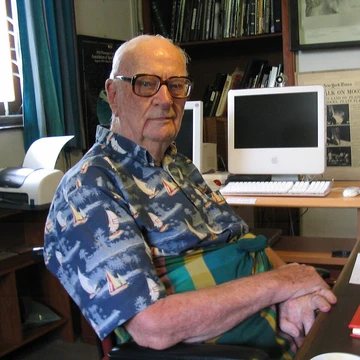
- Arthur C. Clarke appears as a man on a park bench feeding pigeons outside the White House.
- The film's soundtrack was composed mainly using digital synthesizers.
- Peter Hyams and Arthur C. Clarke communicated daily via e-mail using Kaypro II computers during screenwriting.
- The visual effects company VIFX did its first work on this film, designing video screen graphics.
The Shadow of Kubrick
The film exists in the long shadow of 2001: A Space Odyssey. When Arthur C. Clarke published his 1982 novel 2010: Odyssey Two, he jokingly called Stanley Kubrick to tell him his job was to prevent anyone from adapting it into a movie. MGM eventually secured the adaptation rights, but Kubrick showed no desire to helm the sequel himself. Peter Hyams, who went on to write, produce, shoot, and direct the 1984 film, made it a condition of his involvement that he receive Kubrick's personal approval. He described their conversation as a long one, stating he would not proceed without the blessing of what he called one of his greatest idols. This dynamic shaped the film's reception: critics consistently measured it against its predecessor, praising the special effects while deeming it inferior to the 1968 original. The result was a project carrying the weight of a legendary franchise while needing to establish its own narrative and visual identity.
A Cold War Odyssey
The narrative is set against the backdrop of American-Soviet tensions, with both superpowers preparing separate missions to Jupiter to investigate the lost Discovery One crew. The Soviet spacecraft Leonov reaches the destination a year before the American Discovery Two, but only the American team possesses the capability to reactivate HAL 9000, the sentient computer suspected of causing the original disaster. This technological asymmetry forces an uneasy alliance: the Soviets agree to carry former NCA Director Heywood Floyd, engineer Walter Curnow, and HAL's creator Dr. Chandra aboard their vessel. The political stakes escalate when a crisis on Earth brings the two nations to the brink of war, and the Americans are ordered to abandon Leonov for Discovery. The resolution, however, transcends geopolitics—Floyd convinces Soviet captain Tanya Kirbuk to execute a desperate escape plan using Discovery as a booster rocket, uniting both crews in survival.
Jupiter Ignites
The film's most spectacular sequence involves the transformation of Jupiter into a new star. HAL 9000 identifies a vast, exponentially multiplying cluster of monoliths within Jupiter's atmosphere, altering the planet's mass and chemical composition. The computer recommends halting the escape countdown to study the phenomenon, but Chandra persuades HAL that the human crews face annihilation. HAL, acknowledging the truth, proceeds with the plan. As Discovery's fuel is exhausted and Leonov separates to fire its own engines, the monoliths engulf Jupiter, triggering nuclear fusion. Before Discovery is destroyed, HAL transmits a final message to Earth. The aftermath is equally remarkable: the new star's light transforms Europa from an icy moon into a humid, life-filled jungle, watched over by a monolith. Floyd narrates that this miraculous event, combined with the alien message, inspires both American and Soviet leaders to pursue peace.
Cast, Cameos & Continuity
The ensemble blends new talent with returning voices from the 1968 original. Roy Scheider, Helen Mirren, Bob Balaban, and John Lithgow anchor the principal cast, while Keir Dullea and Douglas Rain reprise their iconic roles as Bowman and HAL 9000. The film also features a remarkable layer of behind-the-scenes appearances: Arthur C. Clarke, author of both source novels, appears as a man feeding pigeons on a park bench outside the White House. In a brief shot of a Time magazine cover depicting American-Soviet tensions, the President is portrayed by Clarke and the Soviet Premier by Stanley Kubrick himself. Candice Bergen lends her voice to SAL 9000 under the credit "Olga Mallsnerd," and Herta Ware makes a small appearance as Bowman's mother. These touches weave the film's real-world creators into its fictional world, creating a meta-textual thread connecting the 1984 sequel to its 1968 predecessor.
Frequently Asked Questions
What is 2010: The Year We Make Contact?
It is a 1984 American science fiction film that picks up the narrative where Stanley Kubrick's 2001: A Space Odyssey left off. Peter Hyams handled the writing, producing, cinematography, and direction, adapting Arthur C. Clarke's 1982 novel 2010: Odyssey Two.
What is the plot of 2010: The Year We Make Contact?
A joint American and Soviet crew is dispatched to Jupiter to investigate the fate of the Discovery One mission and its crew. Their investigation leads them to the monolith and the enigmatic intelligence responsible for the events of 2001, culminating in a dramatic confrontation aboard the Soviet vessel.
Who directed 2010: The Year We Make Contact?
Peter Hyams served as writer, producer, cinematographer, and director simultaneously. He took on the task of extending Kubrick's original vision while remaining faithful to Clarke's source novel.
Who are the main actors in 2010: The Year We Make Contact?
The leading cast includes Roy Scheider, Helen Mirren, Bob Balaban, and John Lithgow. Keir Dullea and Douglas Rain also reprise their roles as Bowman and Poole from the 1968 original.
Why is 2010: The Year We Make Contact significant to hard sci-fi fans?
It is one of the few sequels to a landmark science fiction film that preserves the original's scientific and philosophical tone rather than retconning its mythology. Its Cold War setting, with a genuine US-Soviet crew working together, also gave it a distinctive cultural resonance that no later space-opera sequel has replicated.
More in Hard science fiction films 1-24
Spotted an error? Know more?
Reader corrections go straight into our review queue. Suggest an edit · How this site is sourced