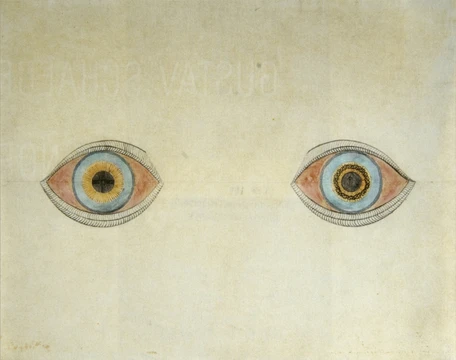
Hallucinations
33 entries in the Hallucinations compendium.
Flying ointmentA hallucinogenic ointment believed to enable witches to fly.Form constantRecurring geometric patterns in hallucinations and altered states.FormicationThe sensation of crawling insects on the skin without real insects.Frey effectHuman perception of sounds from pulsed microwaves without electronic devices.Ganzfeld effectHallucinations from uniform sensory fields.Hallucinogen persisting perception disorderA non-psychotic disorder with lasting visual distortions after drug use.Hallucinogen-induced psychotic disorderA rare psychotic disorder triggered by hallucinogen use.Hallucinogenic fishFish consumption can cause hallucinogenic inebriation known as ichthyoallyeinotoxism.Hallucinogenic plants in Chinese herbalsChinese herbals record hallucinogenic plants for over two millennia.Imaginary friendImaginary friends are a normative part of childhood and adulthood.Microwave auditory effectPulsed microwaves induce sound directly inside the human head.Musical ear syndromeAuditory hallucinations linked to hearing loss.Musical hallucinationsHearing songs that aren't there, without psychosis.Phantom eye syndromePhantom pain and hallucinations after eye removal.Phantom limbPerception of an amputated limb, often with pain or sensation.Phantom senseVirtual reality users perceive touch without physical stimuli.Phantom vibration syndromePerception of a phone vibrating when it is not.PhantosmiaPhantosmia is smelling an odor that is not actually present.PhospheneSeeing light without light entering the eye.PhotopsiaPerceived flashes of light in the field of vision.Prisoner's cinemaColored lights and figures seen in prolonged darkness.Private revelationDivine communication to individuals, distinct from public revelation.ProsopometamorphopsiaA neurological disorder causing distorted perception of faces.PseudohallucinationA vivid sensory experience recognized as subjective and not real.Psychedelic drugClassic hallucinogens that alter perception and cognition via serotonin receptors.Psychedelic experienceA temporary altered state from classic psychedelics.Psychochemical warfareUse of hallucinogenic drugs to incapacitate adversaries in warfare.Psychotic depressionDepression with psychotic features, often involving delusions or hallucinations.Scintillating scotomaA visual aura often linked to migraine.Sensory deprivationReducing sensory input can trigger hallucinations and altered states.Tactile hallucinationFalse perception of touch from faulty brain signal integration.Visual hallucinationVisual hallucinations are vivid perceptions without external stimuli, seen in many disorders.Visual release hallucinationsVisual hallucinations in vision loss, first described in 1760.
Browse Hallucinations in the interactive codex →