The Archko Volume
A 19th-century collection of purportedly ancient Jesus-era documents, deemed fraudulent.
Last updated
The Archko Volume is a 19th-century compilation that claims to present reports from Jewish and pagan sources contemporary with Jesus, relating to biblical accounts of his life. It has remained in print through various versions, though it is regarded as fraudulent by some religious scholars. The work's author was convicted by an ecclesiastical court of falsehood and plagiarism.
Quick Facts
- First publication year
- 1879
- Original author
- Rev. William Dennes Mahan
- Author's location
- Boonville, Missouri
- Initial title
- A Correct Transcript of Pilate's Court
- First full volume year
- 1884
- Church court verdict
- Convicted and suspended from the ministry for one year
Facts from the source article.
Contents
The 1884 volume included an expanded version of the earlier Pilate's Court pamphlet along with several other texts Mahan claimed to have obtained during a visit to Rome and Constantinople. These purported texts include interviews with the shepherds, Gamaliel's interview with Joseph and Mary, Caiaphas's reports to the Sanhedrin, Eli's story of the Magi, Herod Antipater's defense before the Roman Senate for the Massacre of the Innocents, and Herod Antipas's defense before the Senate.
Mahan stated that they were copied from ancient manuscripts and translated into English with the aid of M. McIntosh of Scotland and Twyman of England, individuals otherwise unknown. The texts are otherwise unknown to scholarship and contain various inconsistencies, such as quoting an unknown Greek philosopher named Meeleesen and including references to Josephus that do not exist. Large portions of Eli's Story of the Magi were copied verbatim from the 1880 novel Ben-Hur: A Tale of the Christ, with a single line of the printed text accidentally omitted during copying.
Legacy
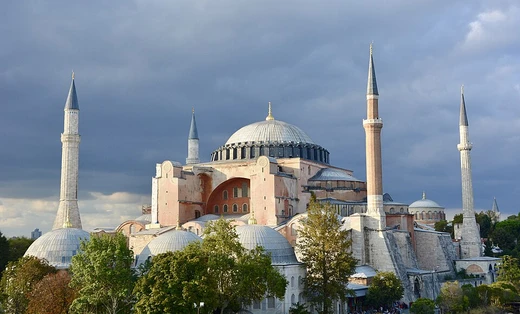
In September 1885, church authorities charged Mahan with lying and plagiarism. Lew Wallace, the U.S. minister to Turkey and author of Ben-Hur, stated that no evidence existed of Mahan ever visiting Turkey or the Hagia Sophia library, and that the ancient sources Mahan claimed to use were unrecognized. Mahan was found guilty, suspended from ministry for a year, and agreed to stop selling his book. But because U.S. copyright laws were weak, various publishers reprinted it many times starting in 1887.
During this period, the title Archko Volume appeared, along with a “Second edition” note. This version dropped “Eli and the Story of the Magi” and assembled a preface from earlier introductions, adding nothing new—so a publisher’s clerk likely produced it. The omission of the Eli text hints that the reviser knew about the court’s verdict. As late as 2016, modern reprints were still sold on Amazon.com and other sites.
More in Hagia Sophia
Sources
Compiled from Wikipedia and the sources listed below. Text from Wikipedia is available under CC BY-SA 4.0; this entry is adapted from it.
- Wikipedia: The Archko Volume (CC BY-SA 4.0).
Spotted an error? Know more?
Reader corrections go straight into our review queue. Suggest an edit · How this site is sourced