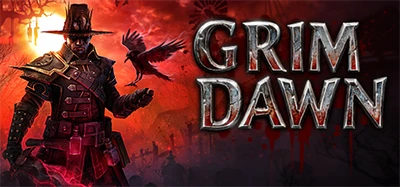
Trickster
A mythological archetype that crosses boundaries, plays tricks, and defies conventional behavior.

In mythology and the study of folklore and religion, a trickster is a character in a story who exhibits a great degree of intellect or secret knowledge and uses it to play tricks or otherwise disobey normal rules and defy conventional behavior. Such a character may be a god, goddess, spirit, human or anthropomorphisation.
- Class
- Trickster
- Game
- Grim Dawn
- Developer
- Crate Entertainment
- Primary Attribute
- Agility
- Ascendancy
- Shadow
- Combat Style
- Hybrid (ranged / melee / traps)
- Genre
- Action RPG (ARPG)
Lore & Background
Tricksters, as archetypal characters, appear in the myths of many different cultures. Lewis Hyde describes the trickster as a 'boundary-crosser'. The trickster crosses and often breaks both physical and societal rules: Tricksters 'violate principles of social and natural order, playfully disrupting normal life and then re-establishing it on a new basis.' Often, this bending and breaking of rules takes the form of tricks and thievery. Tricksters can be cunning or foolish or both. The trickster openly questions, disrupts and mocks authority. Many cultures have tales of the trickster, a crafty being who uses tricks to get food, steal precious possessions, or simply cause mischief. In some Greek myths Hermes plays the trickster. He is the patron of thieves and the inventor of lying, a gift he passed on to Autolycus, who in turn passed it on to Odysseus. In Slavic folktales, the trickster and the culture hero are often combined. Frequently the trickster figure exhibits gender and form variability. In Norse mythology the mischief-maker is Loki, who is also a shapeshifter. Loki also exhibits sex variability, in one case even becoming pregnant. According to 'The Song of Hyndla' in The Poetic Edda, Loki becomes a mare who later gives birth to Odin's eight-legged horse Sleipnir. In African-American folklore, a personified rabbit, known as Brer Rabbit, is the main trickster figure. In West Africa (and thence into the Caribbean via the slave trade), the spider (see Anansi) is often the trickster. In southern African folklore, the entity known as Kaggen often takes the role of a trickster, usually taking the form of a praying mantis. Many native traditions held clowns and tricksters as essential to any contact with the sacred. People could not pray until they had laughed, because laughter opens and frees from rigid preconception. Humans had to have tricksters within the most sacred ceremonies for fear that they forget the sacred comes through upset, reversal, surprise. The trickster in most native traditions is essential to creation, to birth. Native American tricksters should not be confused with the European fictional picaro. One of the most important distinctions is that 'we can see in the Native American trickster an openness to life's multiplicity and paradoxes largely missing in the modern Euro-American moral tradition'. In some stories, the Native American trickst
In Their Own Story
The corridor smelled of old blood and wet stone. Kael pressed her back against the wall, listening. Three guards. Two on the left, one patrolling the far end. She had already dropped the caltrops behind the second door—small, unremarkable, the kind of thing a boot would crush without a second thought. But boots don't always walk where you want them to.
She let the first guard pass. Let the second pause, frown at the dark. Then the third turned, and she was already moving—dagger out, a feint that drew the blade wide, a step into the gap that opened. One breath. Two. The corridor was quiet again, and the caltrops behind the door were still waiting, patient as a held breath, for whoever came next.
Reader's Guide
The source article does not provide a guide.
Did You Know?
- The trickster figure Reynard the Fox was depicted in an 1869 children's book by Michel Rodange.
- In Norse mythology, Loki becomes a mare and gives birth to Odin's eight-legged horse Sleipnir.
- In many Native American traditions, the trickster is essential to creation and to birth.
- Coyote is a trickster figure who appears in many western Native American cultures, often as a culture hero or a clown.
More in Classes & Ascendancies
Elsewhere in the Grim Dawn universe
Spotted an error? Know more?
This is a living reference — every entry is fact-audited, and reader corrections feed straight into our audit queue. Suggest an edit · See this site's audit record