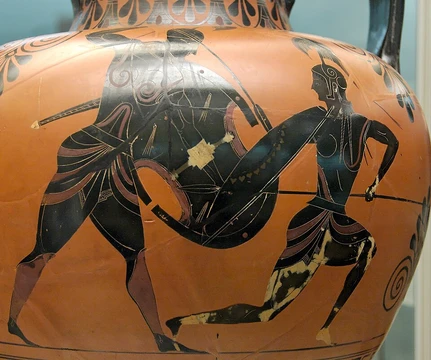
Leto
Mother of Apollo and Artemis, persecuted by Hera.
Leto is a goddess in ancient Greek mythology and religion, best known as the mother of the twin deities Apollo and Artemis. She is the child of the Titans Coeus and Phoebe, and the sister of Asteria. Zeus, the king of the gods, fathered her twins after being struck by her hidden beauty. Hera, Zeus’s wife, grew jealous and forced all lands to refuse Leto shelter, also sending the serpent Python and the giant Tityos to hunt her. Leto eventually found refuge on Delos, an island not attached to the mainland or ocean floor, so it counted as neither land nor island. In some versions, Hera prolonged Leto’s labor, leaving her in agony for days before the twins were born and killed her attackers.
Beyond the birth myth, Leto appears in stories where she punishes mortals for arrogance. When Lycian peasants stopped her and her infants from drinking at a fountain, she turned them into frogs living there. After Niobe boasted of being a better mother and mocked Leto’s twins, Leto asked Apollo and Artemis to avenge her, and they shot all of Niobe’s children dead. Leto usually resides on Olympus among the gods, seated near Zeus, or helps her children in their tasks. She was worshipped alongside them, especially on Delos, as a kourotrophic goddess of motherhood, and in Lycia as a mother goddess. Her Roman equivalent is Latona.
The name “Leto” is Attic Greek; in Doric Greek it was spelled “Lato.” Older theories linked it to the Greek words for oblivion or lotus, meaning “the hidden one.” In the 20th century, scholars often derived it from the Lycian word *lada*, meaning “wife,” since her earliest cult was in Lycia. This Lycian term may also be the origin of the Greek name Leda. Other scholars suggest a pre-Greek origin. In Mycenaean Greek, her name appears as *Latios* (meaning “son of Leto”) and *Lato*, attested in Linear B.
From the fourth century onward, Leto was identified as the main mother goddess of Anatolian Lycia, where her children were called the “national gods.” Her sanctuary, the Letoon near Xanthos, predated Greek influence and united the Lycian city-states. The people of Kos also claimed her, and another sanctuary was at Oenoanda in northern Lycia, with a further one on Delos. Leto is unique among Zeus’s divine lovers in being tormented by Hera, who usually only targeted mortal women and nymphs.
Quick Facts
- Abode
- Delos, Olympus
- Animals
- Rooster, Ichneumon
- Birth Place
- Kos or Hyperborea
- Consort
- Zeus
- Parents
- Coeus and Phoebe
- Siblings
- Asteria
- Offspring
- Apollo and Artemis
- Roman Equivalent
- Latona
Facts from the source article.
Contexto e história
Leto is the daughter of the Titans Coeus and Phoebe, and the sister of Asteria. She is one of Zeus's divine lovers and the only one tormented by Hera, who otherwise only directed her anger toward mortal women. During her pregnancy, Hera ordered all lands to shun Leto and sent the serpent Python and the giant Tityos to pursue her. Leto eventually found the island of Delos, which was not joined to the mainland or attached to the ocean floor, and there she gave birth to Apollo and Artemis. In some stories, Hera delayed her labor, leaving Leto in agony for days before the twins were born and slew her assailants.
Guia do leitor
Leto's significance lies in her role as the mother of two major Olympian deities, Apollo and Artemis, and as a symbol of maternal endurance against divine persecution. She was worshipped as a kourotrophic deity, the goddess of motherhood, particularly on the sacred island of Delos and in Lycia, where she was a mother goddess. Her mythology highlights themes of hubris and punishment, as seen in the stories of the Lycian peasants turned into frogs and the destruction of Niobe's children. Leto's cult in Lycia, centered at the Letoon near Xanthos, predated Hellenic influence and united the Lycian confederacy. She is exceptional among Zeus's lovers for being treated like a mortal woman in myth, suffering Hera's jealousy, which parallels the stories of Alcmene and Semele. Her name's etymology is debated, with possible connections to Greek 'lethe' (oblivion), Lycian 'lada' (wife), or a pre-Greek origin.
Você sabia?
- Leto is the only one of Zeus's divine lovers who was tormented by Hera; Hera otherwise only directed her anger toward mortal women and nymphs.
- In some stories, Hera delayed Leto's labor by preventing Eileithyia, the goddess of childbirth, from helping her, leaving Leto in agony for days.
- Leto transformed Lycian peasants into frogs after they prevented her and her infants from drinking from a fountain.
- Her name in Mycenaean Greek is attested as 'Latios' (meaning 'son of Leto') and 'Lato' in Linear B script.
Viu um erro? Sabe mais?
Correções de leitores vão direto para nossa fila de revisão. Sugerir uma correção · Como este site é referenciado