Frequently Asked Questions
The most-asked questions about great lakes of the world.
What does the phrase 'great lakes of the world' actually refer to?
It is a broad, informal label for the largest and most ecologically significant lakes on Earth, commonly including the five North American Great Lakes, Lake Baikal, Lake Victoria, Lake Tanganyika, and Lake Malawi. There is no single authoritative list, so different sources group them slightly differently.
Which lake on Earth is the deepest?
Lake Baikal in southern Siberia holds the record at roughly 1,642 meters (5,387 feet) at its deepest point. It also stores about 20 percent of all unfrozen surface freshwater on the planet.
What is the largest lake by surface area?
The Caspian Sea tops the list at roughly 371,000 square kilometers if it is counted as a lake. Among strictly freshwater bodies, Lake Superior in North America is the largest at about 82,100 square kilometers.
Where should a newcomer begin exploring the world's great lakes?
A practical starting point is comparing the top five lakes by volume—Baikal, Tanganyika, Superior, Victoria, and Michigan—since they span different continents and basin types. Once you understand one region's geology and ecology, the others become easier to place in context.
How were the North American Great Lakes formed?
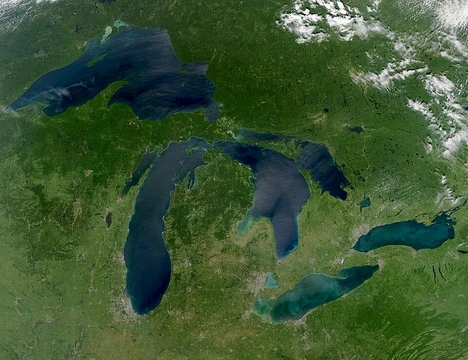
They were sculpted by successive glacial advances and retreats during the Pleistocene, with the final shaping occurring over roughly the last 10,000 years. The five lakes—Superior, Michigan, Huron, Erie, and Ontario—are linked by rivers and navigable channels such as the St. Lawrence Seaway.
What makes Lake Tanganyika stand out ecologically?
Roughly two-thirds of its fish species are endemic, meaning they exist nowhere else on Earth. Its extreme depth (over 1,470 m) and great age, estimated at 7 to 20 million years, created isolated conditions that drove extraordinary speciation.
What are the biggest environmental threats to the world's great lakes?
Common pressures include invasive species, agricultural runoff triggering algal blooms, overfishing, and climate-driven shifts in water level and temperature. The North American Great Lakes have recovered considerably since the 1970s Clean Water Act, yet microplastics and phosphorus loading remain persistent concerns.
Are the North American Great Lakes the only ones called 'great lakes'?
No; the label is applied loosely across continents. Lake Baikal, Lake Victoria, Lake Malawi, and Lake Titicaca are all frequently called great lakes in their own regions, each carrying distinct cultural and ecological weight.
What is a surprising 'wow' fact that fans often share?
Lake Baikal alone holds more freshwater than all five North American Great Lakes combined, despite being a single body of water. In its clearest bays, swimmers can see the lake bottom at depths exceeding 40 meters.
How do the world's great lakes compare in economic importance?
The North American Great Lakes anchor a major inland shipping network, commercial fishing industry, and tourism sector. Lake Victoria and Lake Tanganyika are vital to the daily livelihoods of tens of millions in East Africa, while Baikal's surrounding region depends on tourism and treats its water as a protected national resource.