The Plague of Justinian
First historically recorded epidemic of Yersinia pestis.
Last updated

Procopius of Caesarea · Public domain
The Plague of Justinian was a pandemic of bubonic plague that struck the Mediterranean world from 541 to 549 CE.[1] The disease was caused by the bacterium Yersinia pestis, the same pathogen responsible for the later Black Death.[2] Its severity and demographic impact remain heavily debated among modern scholars.[3]
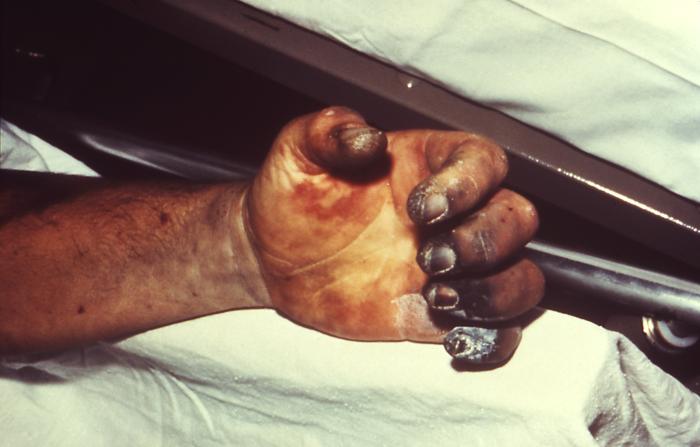
Key facts and history
The contagion arrived in Constantinople in 542 CE, about a year after its first appearance in the outer provinces.[4] Procopius recorded that at its peak the plague was killing 10,000 people daily in Constantinople, though the accuracy of this figure is questioned.[5] Emperor Justinian I contracted the disease in 542 but recovered.[1] The plague weakened the Byzantine Empire at a critical point when its armies had nearly retaken all of Italy.[6]
Archaeological evidence from Greek-language epitaphs in Byzantine Palestine supports the traditional dating of the first outbreak to 541 CE.[7] Contemporaneous sources indicate that the Constantinople outbreak was believed to have arrived via grain ships from Egypt, with infected rats being the vector.[8] Mass fatalities and the interruption of farming and commerce led to a drop in tax income for the empire.[9] To manage the large number of inheritance cases resulting from people who died without a will, Justinian quickly created new legal measures.[9]
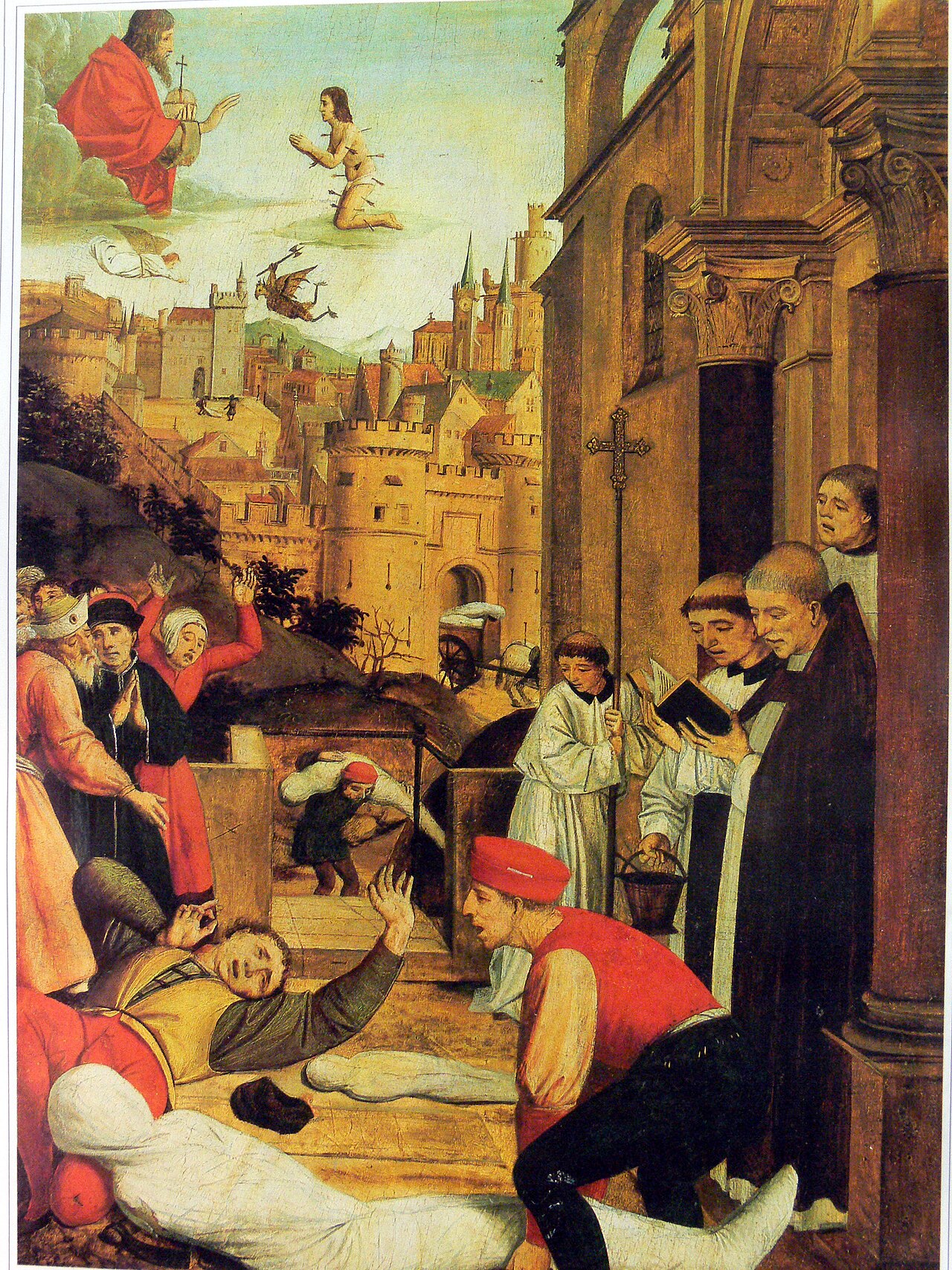
In Jerash, Jordan, archaeologists discovered a burial pit containing victims of the pandemic.[7]
What the cited sources add
John of Ephesus, an eyewitness, wrote the longest known account of the plague.[10] John of Ephesus reported that the plague affected not only humans but also domesticated and wild animals.[10] The plague strain responsible for the Justinian outbreak was an evolutionary "dead end" that did not survive to the modern day.[11] The plague episode contributed to a weakening of the Byzantine Empire in political and economic ways.[4]
References
- Wikipedia, "Plague of Justinian" (CC BY-SA 4.0), which cites: Stathakopoulos, "The Oxford Dictionary of Late Antiquity", Oxford University Press, 2018; Arrizabalaga, "The Oxford Dictionary of the Middle Ages", Oxford University Press, 2010; Floor, "Studies in the History of Medicine in Iran", Mazda Publishers, 2018, p. 3; Stathakopoulos, "The Oxford Dictionary of Late Antiquity", Oxford University Press, 2018; Arrizabalaga, "The Oxford Dictionary of the Middle Ages", Oxford University Press, 2010 (we also read that source) en.wikipedia.org
- Wikipedia, "Plague of Justinian" (CC BY-SA 4.0), which cites: Retief, "The epidemic of Justinian (AD 542: a prelude to the Middle Ages.", Acta Theologica, 2005, p. 115–127; Maria Cheng, "Plague DNA found in ancient teeth shows medieval Black Death, 1,500-year pandemic caused by same disease", National Post, January 28, 2014; Eroshenko, "Yersinia pestis strains of ancient phylogenetic branch 0.ANT are widely spread in the high-mountain plague foci of Kyrgyzstan", PLOS ONE, October 26, 2017; Damgaard, "137 ancient human genomes from across the Eurasian steppes", Nature, May 9, 2018, p. 369–374; en.wikipedia.org
- Wikipedia, "Plague of Justinian" (CC BY-SA 4.0), which cites: Sarris, "New Approaches to the 'Plague of Justinian'.", Past & Present, 2022, p. 315–346; Gârdan, ""The Justinianic Plague": The Effects of a Pandemic in Late Antiquity and the Early Middle Ages.", Romanian Journal of Artistic Creativity, 2020, p. 3–18; Mordechai, "Rejecting Catastrophe: The Case of the Justinianic Plague", Past & Present, 2019, p. 3–50; Sarris, "Viewpoint New Approaches to the 'Plague of Justinian'", Past & Present, November 13, 2021, p. 315–346 (original not read by us) en.wikipedia.org
- Horgan, "Justinian's Plague (541-542 CE)", World History Encyclopedia, 26 December 2014. facts only, no text reused. worldhistory.org
- Wikipedia, "Plague of Justinian" (CC BY-SA 4.0), which cites: Procopius, Persian War II.22–23. (original not read by us) en.wikipedia.org
- Wikipedia, "Plague of Justinian" (CC BY-SA 4.0), which cites: Wade, "Europe's Plagues Came From China, Study Finds", The New York Times, October 31, 2010; Rosen, "Justinian's Flea: Plague, Empire, and the Birth of Europe", Viking Adult, 2007, p. 321–322 (original not read by us) en.wikipedia.org
- Wikipedia, "Plague of Justinian" (CC BY-SA 4.0), which cites: Benovitz, "The Justinianic plague: evidence from the dated Greek epitaphs of Byzantine Palestine and Arabia", Journal of Roman Archaeology, 2014, p. 498; Hendrix, "Bioarchaeological signatures during the Plague of Justinian (541–750 CE) in Jerash (ancient Gerasa), Jordan", Journal of Archaeological Science, 2026-02-01; Haldon, "A Sixth-Century CE Drought in Arabia New Palaeoclimate Data and Some Historical Implications", Journal of Late Antique, Islamic and Byzantine Studies, 2024, p. 41–42 (original not read by us) en.wikipedia.org
- Wikipedia, "Plague of Justinian" (CC BY-SA 4.0), which cites: Wade, "Europe's Plagues Came From China, Study Finds", The New York Times, October 31, 2010; Eiland, "Networks of Rome, Byzantium, and China", Antiqvvs, 2022, p. 44; McCormick, "Rats, Communications, and Plague: Toward an Ecological History", Journal of Interdisciplinary History, 2003, p. 1–25 (original not read by us) en.wikipedia.org
- Wikipedia, "Plague of Justinian" (CC BY-SA 4.0), which cites: Justinian, Edict IX.3; J. Moorhead 1994; Averil Cameron, The Mediterranean World in Late Antiquity, AD 395–600, 1993:111. (original not read by us) en.wikipedia.org
- John of Ephesus, Ecclesiastical History, part 2. Translation of relevant portions here.. facts only, no text reused. roger-pearse.com
- "Two of History's Deadliest Plagues Were Linked, With Implications for Another Outbreak", Animals, 2014-01-31. facts only, no text reused. nationalgeographic.com
Each numbered sentence above was checked against the source it cites before publication. Sentences citing Wikipedia adapt text from the English Wikipedia article Plague of Justinian (contributors), used under CC BY-SA 4.0; this entry is available under the same licence. Other sources were used for facts only; no text or images are copied from them.
More in Great Collapses
Sources
Compiled from Wikipedia and the sources listed below. Text from Wikipedia is available under CC BY-SA 4.0; this entry is adapted from it.
- Wikipedia: Plague of Justinian (CC BY-SA 4.0).
Spotted an error? Know more?
Reader corrections go straight into our review queue. Suggest an edit · How this site is sourced