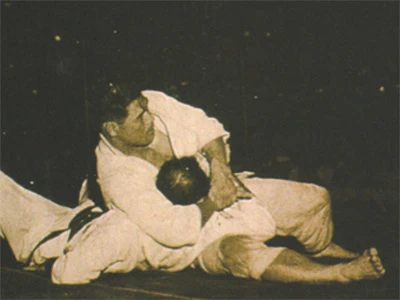
German ju-jutsu
A modern self-defense system taught to German police.
German Ju-Jutsu, also known as German Jiu-Jitsu or Deutsches Ju-Jutsu, is a martial art developed in West Germany in the 1960s. It draws techniques from traditional Japanese Jujutsu, Judo, Karate, and various other martial arts. The system is notable for being taught to the German police forces.
Quick Facts
- Focus
- Hybrid
- Country
- Germany West Germany
- Parenthood
- Jujutsu
- Judo
- Aikido
- Karate
- Muay Thai
- Wing Chun
- Sambo
- Arnis
- Also known as
- JJ, Hybrid Combat Ju-Jutsu
Facts from the source article.
Did You Know?
- German ju-jutsu includes armed techniques and defense against multiple opponents.
- Training is performed in a dojo, and practitioners wear a jujutsugi or judogi.
- A Kyū/dan ranking system is used.
Terminology
In Germany, Ju-Jutsu and Jiu-Jitsu are two separate fighting arts. The national governing body, the Deutscher Ju-Jutsu-Verband, oversees both: Ju-Jutsu is a modern self-defense system developed in Germany, while Jiu-Jitsu refers to traditional Japanese jujutsu. This difference is well known among German practitioners, but outside the country the names are often mixed up. In English, jujutsu, ju-jitsu, and jiu-jitsu are generally used interchangeably.
History
In 1967, members of the Deutsche Dan-Kollegium began developing a new self-defense system based mainly on Judo, Karate, and Aikido. Emphasis was placed on techniques applicable in real-life situations. Over time, police experience and techniques from other arts influenced the system. In 2000, techniques from Arnis, Sambo, Wing Chun, Muay Thai, and others were officially incorporated.
Combat sport
Several competition systems exist for German ju-jutsu. The German Ju-Jutsu Association was one of three founding members of the Ju-Jitsu International Federation, originally the European Ju-Jitsu Federation, which focuses on the sport aspect of Western jujutsu styles. The JJIF now has national associations in over 70 countries. At the world level, there are two competition systems: the duo (kata) system, where a pair demonstrates self-defense techniques against randomly called attacks, and the fighting system, which involves one-on-one combat. The fighting system has three phases: distance fighting, a grappling phase after a grab, and a ground phase when practitioners are down on the mat. Switching between phases is possible if a practitioner stands up again.
More in Grappling
Spotted an error? Know more?
Reader corrections go straight into our review queue. Suggest an edit · How this site is sourced