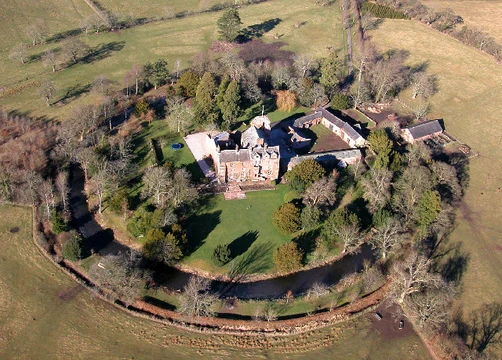
Barden Tower
Ruined medieval tower and former hunting lodge in Wharfedale.

via Wikipedia: Barden Tower · see source
Barden Tower is a ruined medieval fortified tower in the Parish of Barden, Wharfedale, North Yorkshire. Originally a hunting lodge in the 15th and 16th centuries, it was renovated in the 1650s but fell into disrepair in the 18th century. The tower is part of the Bolton Estate and serves as a way marker on the 100-mile Lady Anne's Way long distance path.
Quick Facts
- Location
- Barden, North Yorkshire
- Nearest city
- Bradford, West Yorkshire
- Elevation
- 150 m / 492 ft
- Founded
- 1485-1490
- Founder
- Henry Clifford
- Restored
- 1678
- Restored by
- Anne Clifford
- Current use
- Tower derelict; House used as cafe
Facts from the source article.
History
The tower stands midway between Bolton Bridge on the A59 road and the village of Burnsall, each 4 miles away. A lodge had existed in the Forest of Barden since early Plantagenet times, but it was rebuilt in stone around 1485–1490 by Henry Clifford, known as the Lord Shepherd. Clifford chose Barden as his main residence over his castle at Skipton. Barden Tower was one of six forest lodges held by the Clifford family between the 14th and 17th centuries; the others were at Drebley, Gamsworth, Howgill, Laund, and a sixth at a site called Ungaine that has not been identified.
The tower became a de facto village centre for the scattered hamlets and farmhouses in the area. During the Civil War the tower was de-roofed; its roof was believed to have been thatch, as a 15th-century request mentions 'soddes for the towre toppe'. Lady Anne Clifford renovated and rebuilt the tower, along with the adjacent chapel and Skipton Castle, in the 1650s. The outbuildings of a farmhouse and chapel were added in the 16th and 17th centuries.
A priesthouse, tentatively dated to 1513, was reportedly built by Henry Clifford for his private chaplain when the Clifford household was in residence. After Lady Anne's death in 1676, the estates and tower passed to the Earls of Cork and fell into disrepair in the 18th century. During the Jacobite rising of 1745, a militia of 150 men with pikes, staffs, halberts and drums was garrisoned at the tower to defend against the Scots army, though no skirmishes are recorded there.
A second roof of lead was removed around 1800. The site remained a focal point, aided by the opening of Barden Bridge in 1659. A school and chapel operated there well into the 20th century; the chapel was last used for Anglican worship in the 1960s. Marriages were conducted at the chapel, but baptisms and burials were not permitted.
More in Grade I Listed Castles
Spotted an error? Know more?
Reader corrections go straight into our review queue. Suggest an edit · How this site is sourced