Frequently Asked Questions
The most-asked questions about gobies.
What exactly are gobies in the broadest sense?
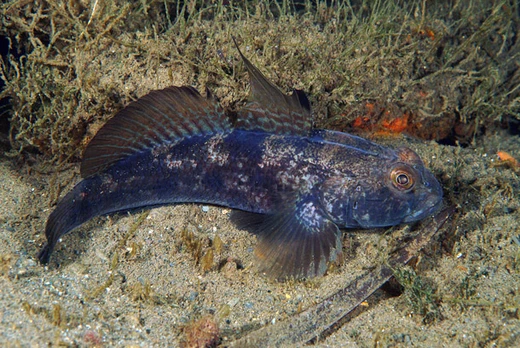
Gobies are a diverse assemblage of small, often bottom-hugging fish spanning the order Gobiiformes, which includes the family Gobiidae and several close relatives. They are recognized by features like fused pelvic fins forming a disc, large heads, and a generally compact body shape. They represent one of the most speciose fish groups on Earth.
How many goby species have been described so far?
Taxonomists have described well over 2,000 species within Gobiiformes, and new ones are still being named each year, particularly from deep-water and cryptic reef habitats. Many experts suspect the true number is significantly higher because of how easy it is to miss tiny, camouflaged individuals in the field.
Where in the world can gobies be found?
They inhabit nearly every marine environment on the planet, from rocky intertidal zones to deep-sea benthic plains, and several lineages have adapted to brackish and even fully freshwater rivers. Tropical reef systems host the greatest concentration of diversity, but temperate and polar waters also support goby communities.
Which species do fans and hobbyists talk about most?
The cleaner goby (Labroides dimidiatus) is arguably the most famous for its symbiotic cleaning-station behavior, while the mandarinfish (Synchiropus splendidus) is a perennial favorite in the aquarium trade for its vivid coloration. The dwarf goby, neon goby, and various grunt-adjacent gobies also have large followings in the keeping community.
Where should a total newcomer start learning about gobies?
A good first step is picking up a field guide or an online species database focused on Gobiiformes to get comfortable with basic morphology and family-level differences. Joining a local aquarium society or a dedicated goby forum gives you access to experienced keepers who can answer practical questions about water parameters and tank setup.
What single anatomical feature sets gobies apart from most other fish?
Their pelvic fins are fused into a single suction-disc structure that lets them anchor themselves to rocks, coral, or sandy substrate in strong currents. This adaptation is a defining trait of the order and is one of the first things a beginner learns to look for when identifying a goby in the wild or in a store.
What is a notable 'discovery moment' in goby research?
The 2019 description of a new deep-sea goby species from the western Pacific demonstrated that even well-studied reef-adjacent environments still hide undescribed lineages. More broadly, the ongoing use of environmental DNA sampling in coral-reef surveys keeps turning up goby species that were previously unknown to science.
Is it true that all gobies are tiny, harmless fish?
No—while many gobies are only a few centimeters long, the family includes species that grow past 30 cm, and some, like certain grunt gobies, are quite aggressive toward tank-mates. Size and temperament vary enormously across the order, so generalizing from one species to all gobies is a common beginner mistake.
Can gobies realistically be kept in a home aquarium?
Many species, including the neon goby, mandarinfish, and several dwarf gobies, are popular and doable in well-established reef or planted tanks. Success usually depends on matching the species' specific substrate, flow, and feeding requirements rather than treating 'goby' as a one-size-fits-all label.
What makes the goby fan community distinct from other fish-keeping groups?
Because gobies are so numerous and taxonomically tangled, the community has a strong culture around species-level identification debates and 'what species is this?' threads. There is also a shared enthusiasm for the behavioral ecology side—cleaning stations, brooding males, and mimicry—rather than just color and size, which gives the hobby a more research-flavored flavor.