Frequently Asked Questions
The most-asked questions about globular clusters, part 2.
What does 'Globular Clusters, Part 2' cover that Part 1 didn't?
Part 2 shifts focus from the visual catalog of famous clusters to their internal physics—tidal stripping, stellar collisions, and the role of dark matter in shaping cluster structure over billions of years.
Who are the key figures highlighted in Part 2?
The section spotlights astronomers like Roger Preston, who mapped internal velocity dispersions, and the Gaia mission team, whose precision astrometry revealed stellar streams ripped from cluster outskirts.
Where should a newcomer start within Part 2?
Begin with the chapter on blue stragglers, since it connects the visual oddities you saw in Part 1's photographs to the underlying collision physics that keeps those stars burning.
What is the most discussed key fact in Part 2?
The finding that many globular clusters host an intermediate-mass black hole of roughly 100 solar masses at their center, inferred from the velocity dispersion of the innermost stars.
What is the most notable 'moment' fans talk about?
The 2018 detection of a 125-solar-mass black hole candidate in NGC 3201, which briefly made headlines as the first confirmed intermediate-mass black hole residing in a globular cluster.
How does Part 2 frame its central conflict or 'villain'?
The recurring tension is between models that form clusters in single dense star-forming regions versus those that build them through hierarchical mergers of smaller sub-clusters, and Part 2 lays out the evidence for both camps.
Which specific clusters are treated as 'main characters'?
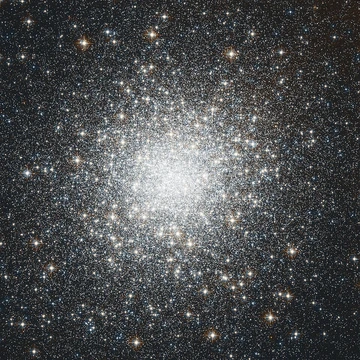
M62 (NGC 6266) takes the lead role because of its central black hole, while M54 and M68 serve as supporting characters illustrating how galactic tidal fields sculpt cluster morphology over time.
What concept does Part 2 introduce that Part 1 skipped?
Core collapse and the timescale on which a cluster's central density spikes until binary stars eject remaining single stars, a process that ultimately determines whether a cluster survives or dissolves.
Is there a major controversy or 'fan debate' around Part 2?
Yes—whether the metal-poor, second-generation stars seen in many clusters are the product of massive-star pollution in the first few million years or of a later accretion event, with Part 2 presenting both isotopic and abundance arguments.
Does Part 2 set up a 'Part 3'?
It closes with a survey of globular clusters in the Large and Small Magellanic Clouds, hinting at how low-mass host galaxies may preserve older, less-evolved cluster populations for future study.