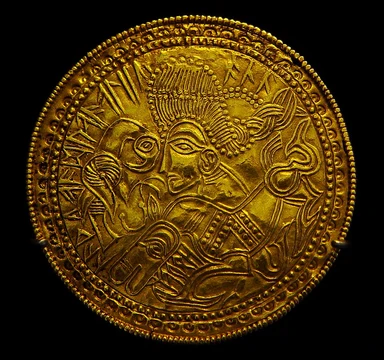
Nydam Mose
Sacred Iron Age bog with sacrificed weapons and ships.
Last updated

via Wikipedia: Nydam Mose · see source
Nydam Mose, also called Nydam Bog, is an archaeological site in Denmark located at Øster Sottrup, a town in Sundeved, 8 km from Sønderborg. During the Iron Age, this bog was a sacred place where the weapons and ships of vanquished armies were offered to indigenous gods in thanks for victory over the fallen enemy.
Many items were deliberately destroyed—bent, broken, or hacked into pieces—in ritual sacrificial acts from the period 200–400 CE. The first known finds from the bog date from the 1830s, when a local farmer gave old swords and shields as toys to his children. Among numerous other items, three boats were found, including the 23 m long oak boat, one of the oldest known rowing vessels in Northern Europe, now displayed at the archaeological museum in Gottorf Castle, Schleswig, Germany.
Quick Facts
- Location
- Øster Sottrup, Sundeved, 8 km (4.97 mi) from Sønderborg, Denmark
- Period of use
- 200–450 CE
- First known finds
- 1830s
- Major excavation
- 1859–1863 by Conrad Engelhardt
- Oak boat length
- 23 m / 75 ft 6 in
- Oak boat width
- c. 3.5 m / 11 ft 6 in
- Oak boat dendro date
- 310–320 CE
Facts from the source article.
Excavation
Conrad Engelhardt excavated the bog from 1859 to 1863, uncovering weapons, tools, clothing, and two intact clinker built boats (one oak, one pine). The weapons included lances, spears, bows, arrows, and round shields. Beneath these finds lay remains of a third boat, apparently demolished during the sacrifice.
Engelhardt's work ceased with the outbreak of the Second Schleswig War in early 1864. Some discoveries were lost during that war; the pine boat was hacked up and used as firewood by troops. The National Museum of Denmark resumed excavation in 1989, revealing many weapons and personal effects from 250–550 CE.
Nydam boat
The Nydam Mose sacrifice site was likely used on different occasions from 200–450 CE. Conrad Engelhardt discovered the Nydam Boat on August 17, 1863. This oak boat was the first and largest of the three found, and the only one preserved.
Dendro dating places it at 310–320 CE. It is 23 m long, about 3.5 m wide, of clinker type, weighed over three tonnes, had 14 pairs of oars, and likely a crew of around 45 men. After losing the war, Denmark transferred the boat to Prussia; it is now displayed at Gottorf Castle in Schleswig, Germany.
Nydam Society
Interest in Nydam Bog archaeology has been particularly lively locally, and the discoveries remain a significant theme in Danish-German border relations. Through its work, this interest group contributed to the resumption of the National Museum of Denmark's investigation of the bog. Today the site is a green meadow with parking on Nydamvej; a path called Nydamstien leads to the small white house Nydamhuset beside the archaeological site, about a 10-minute walk.
The society's long-standing desire to build a replica of the Nydam Boat was realized. The Nydam Tveir was built using techniques of the time to exploit timber characteristics and understand large vessel construction. Construction was based on the oak boat found in 1859 and divided into two phases: a feasibility study to investigate construction and gather experience, followed by building the complete boat.
Did You Know?
- The Nydam Boat is one of the oldest known rowing vessels in Northern Europe, though the Hjortspring boat found in Denmark is even older.
- The Nydam Society, formed in 1983, contributed to the resumption of the National Museum of Denmark's excavation of the bog.
More in Germanic Paganism
Sources
Compiled from Wikipedia and the sources listed below. Text from Wikipedia is available under CC BY-SA 4.0; this entry is adapted from it.
- Wikipedia: Nydam Mose (CC BY-SA 4.0).
Spotted an error? Know more?
Reader corrections go straight into our review queue. Suggest an edit · How this site is sourced