Galder (incantation)
Old Germanic incantation performed with rites, often in falsetto.
Last updated
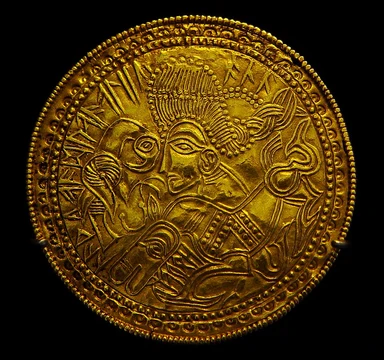
A galder is a spell or incantation in old Germanic culture, typically performed alongside specific rites. Both women and men could perform galders, and some scholars suggest they were chanted in falsetto. During the Middle Ages, the term came to be broadly synonymous with witchcraft and magic.
Quick Facts
- Proto-germanic root
- galdraz
- Meaning of root
- song or incantation
- Related verb
- galaną (to sing or cast a spell)
- Modern scandinavian derivative
- gal
- gal
- galen (crazy)
- Odin's claimed galders
- 18
- Example of galder meter
- galdralag
Facts from the source article.
Etymology
The term galder breaks down into "gale-der" or "yell-der," pointing to something that involves yelling, crying, or singing. It comes from the reconstructed Proto-Germanic galdraz, which meant a song or incantation. This word is linked to the verbs gala and galan, both from Proto-Germanic galaną (to sing or cast a spell), and also to the Modern English word gale. In Old High German, the -stro suffix created galster instead.
The Modern Scandinavian word for "crazy" (gal, gal, galen) shares this root, originally describing someone whose mind was twisted by a spell. Other related words include að gala ("to sing, call out, yell"), gala ("to yell, crowing of a rooster"), and the second part of English nightingale. Several derivatives of galder exist, often meaning witch, such as gealdricge, galdrakona, and Galsterweib.
Attestations
Some incantations were composed in a special meter called galdralag, similar to the six-lined ljóðaháttr but with at least one more C-line. Diverse runic inscriptions suggest informal impromptu methods, and performed parallelism was characteristic. A practical galder for women eased childbirth, while others were used to bring madness onto a person, whence modern Swedish galen. A master of the craft could raise storms, sink distant ships, blunt swords, soften armor, and decide victory or defeat in battles, as seen in Grógaldr and Frithiof's Saga.
In Grógaldr, Gróa chants nine galders to aid her son, and in Buslubœn, the schemes of king Ring of Östergötland are averted. The Poetic Edda mentions galders in several poems; in Hávamál, Odin claims to know 18 galders, mastering them against fire, sword edges, arrows, fetters, and storms, and could conjure the dead.
In Skírnismál, Skirnir uses galders to force Gerðr to marry Freyr. In Oddrúnargrátr, Borgny could not give birth until Oddrún chanted 'biting galders'. In Beowulf, ġealdru protect the dragon's hoard.
Signed galders
During the Viking Age, galders written in runes, called runic galders, appear on rune sticks or rune plates, such as the 12th century Högstena runic galder. In Medieval Scandinavia, a drawn or written spell was called a 'galder letter'. Such letters, intended to make the holder invulnerable especially against cuts and thrusts, could be worn as an amulet and were called 'sword letters'. These could be worn around the neck, in a pocket, or in a sword hilt.
Danish Renaissance sources mention such letters using both regular and runic letters and symbols, and they could also be used against illness and misfortune. This type of signed galder was later banned or spoken against, especially with the Reformation, which opposed the use of symbolism and worldly objects for supernatural aid. An excerpt from the manuscript Själens tröst, written around 1430, speaks against them. In 1526, Dane Poul Helgesen translated Martin Luther's writings, using the term sword letter where Luther spoke against such letters.
Records from the 16th century describe Icelandic Medieval magic sigils called 'galder staves', today commonly referred to as Icelandic magical staves, including famous examples like Ægishjálmur and Vegvísir.
More in Germanic Paganism
Sources
Compiled from Wikipedia and the sources listed below. Text from Wikipedia is available under CC BY-SA 4.0; this entry is adapted from it.
- Wikipedia: Galder (incantation) (CC BY-SA 4.0).
Spotted an error? Know more?
Reader corrections go straight into our review queue. Suggest an edit · How this site is sourced