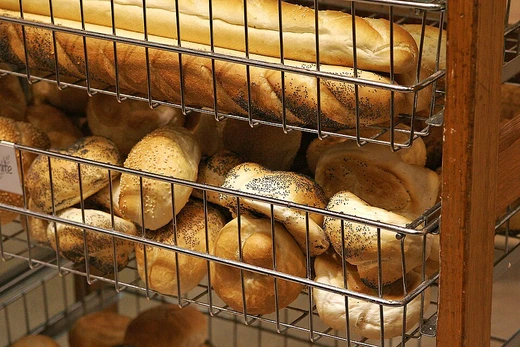
Beer in Germany
Germany ranks among top beer exporters and consumers globally.

User:Nino Barbieri · CC BY-SA 2.5
Beer is a major part of German culture, with production governed by the Reinheitsgebot purity law that permits only water, hops, yeast and malt as ingredients.[1] Bavaria is home to roughly half of all German breweries, and its seven largest breweries together produce 158 million US gallons each year.[2]
Last updated 2026-10-08 from the source article.
Quick Facts
- Field
- Brewing and beer culture
- Nationality
- German
- Known for
- Reinheitsgebot purity law
- diverse beer styles
- high per-capita consumption
- Top beer style
- Pilsener (pale lager, ~two-thirds of market)
- Highest brewery density
- Aufseß, Franconia (4 breweries for 1,352 citizens)
Facts from the source article.
Key facts and history
The law originally stated that only barley, hops and water could be used for brewing beer.[3] This Bavarian law became the basis for legislation throughout Germany for 471 years, making it the oldest food-quality regulation in history.[3] The purity law led to the extinction of northern German spiced and cherry beers.[3] A later court ruling allowed other ingredients, and the Provisional German Beer Law then permitted certain additional ingredients while maintaining high standards.[3]
Beer tax is an excise tax levied on beer and mixed beer drinks, with revenue accruing to the federal states.[4] Home and hobby brewers may produce up to 200 liters per calendar year tax-free.[4][5] The Weihenstephan brewery, run by a Benedictine abbey founded in 725, has been in operation since 1040 and is widely considered the world's oldest continuously operating brewery.[6] Oettinger became Germany's top-selling beer brand in 2004, surpassing Krombacher.[7]
When accompanied by a parent or guardian, individuals aged 14 to 15 are allowed to drink beverages with an alcohol content of up to 1.2%.[8]
What the cited sources add
A 2008 Der Spiegel article notes that Germans mark the Reinheitsgebot with parties and brewery tours across the country.[3] The same article states that yeast was not an ingredient in beer production prior to Louis Pasteur's 19th-century discovery of fermentation.[3] A 2014 HuffPost article describes Munich's beer scene as dominated by seven mega-breweries with a yearly output of 6 million hectoliters.[9] The HuffPost article identifies Lower Bavaria as a hidden treasure for beer, with the Upper Palatinate home to the legendary Zoigl beer.[9]
Smaller independent breweries with annual production under 200,000 hectoliters can claim reduced beer tax rates.[4] A Weizen glass, originating in Germany, is narrow at the bottom and wider at the top, generally holding 500 millilitres.[10] The customs portal for Germany states that the majority of beers produced there are full-bodied, with an original gravity ranging from 11 to 16 degrees Plato.[4]
References
- Wikipedia, "Beer in Germany" (CC BY-SA 4.0), which cites: "BierStDB - Verordnung zur Durchführung des Vorläufigen Biergesetzes", www.gesetze-im-internet.de; "Vorläufiges Biergesetz"; "492 Years of Good Beer", Der Spiegel, 23 April 2008 (we also read that source) en.wikipedia.org
- Wikipedia, "Beer in Germany" (CC BY-SA 4.0), which cites: Quoted in Sonntag Aktuell Newspaper (Stuttgart), 28.09.2008; "Beer Tour Alert: The 5 Best Brewing Hotspots in Bavaria for Your Craft Beer Trip (No, They're Not in Munich)", HuffPost, 17 June 2014 (we also read that source) en.wikipedia.org
- "492 Years of Good Beer", Der Spiegel, 23 April 2008. facts only, no text reused. spiegel.de
- "Bundesportal Pay beer tax", verwaltung.bund.de. facts only, no text reused. verwaltung.bund.de
- Wikipedia, "Beer in Germany" (CC BY-SA 4.0), which cites: "Bundesportal Pay beer tax", verwaltung.bund.de (we also read that source) en.wikipedia.org
- Wikipedia, "Beer in Germany" (CC BY-SA 4.0), which cites: McFarland, "World's Best Beers: One Thousand Craft Brews from Cask to Glass", Sterling Publishing Company, October 2009 (we also read that source) en.wikipedia.org
- Wikipedia, "Beer in Germany" (CC BY-SA 4.0), which cites: Cited news from Financial Times Germany on oettinger.de (original not read by us) en.wikipedia.org
- Wikipedia, "Beer in Germany" (CC BY-SA 4.0), which cites: "Berufsunfähigkeitsversicherung Versicherungskammer Bayern", www.vkb.de (original not read by us) en.wikipedia.org
- "Beer Tour Alert: The 5 Best Brewing Hotspots in Bavaria for Your Craft Beer Trip (No, They're Not in Munich)", HuffPost, 17 June 2014. facts only, no text reused. huffingtonpost.com
- Wikipedia, "Beer in Germany" (CC BY-SA 4.0), which cites: Wright, "The Beer Journal", Lulu.com, March 2020 (we also read that source) en.wikipedia.org
Each numbered sentence above was checked against the source it cites before publication. Sentences citing Wikipedia adapt text from the English Wikipedia article Beer in Germany (contributors), used under CC BY-SA 4.0; this entry is available under the same licence. Other sources were used for facts only; no text or images are copied from them.
More in German cuisine
Spotted an error? Know more?
Reader corrections go straight into our review queue. Suggest an edit · How this site is sourced