2q37 monosomy
Rare genetic disorder from terminal deletion of chromosome 2q37.
2q37 monosomy is a rare genetic disorder caused by a deletion of a segment at the end of chromosome 2. It is characterized by intellectual disability, facial dysmorphism, and behavioral problems, with brachymetaphalangism occurring in about half of cases. The condition shows striking phenotypic variability, and the size of the deletion does not reliably predict prognosis.
Quick Facts
- Field
- Medical genetics
- Causes
- genetic
Facts from the source article.
Background
This syndrome nearly always involves some intellectual disability and distinctive facial features like a round face, deep-set eyes, and a thin upper lip. Behavioral issues are frequent. About half of those affected have shortened hand or foot bones, though this usually appears only after age two.
Clinical Presentation & Physical Features
2q37 monosomy manifests through a constellation of physical and developmental features that affect nearly every individual carrying the deletion. Intellectual disability of varying severity is a near-universal hallmark, accompanied by a recognizable facial profile: a round face, deeply set eyes, and a characteristically thin upper lip. Behavioural difficulties further complicate daily life for affected individuals. A distinctive skeletal finding, brachymetaphalangism—shortening of the metacarpal or metatarsal bones—appears in roughly half of all cases, though it typically remains undetectable until after the second birthday, making early diagnosis challenging. Beyond these core features, some patients develop additional complications including congenital heart defects and seizure disorders. The breadth of possible manifestations means that no two individuals with 2q37 monosomy present in exactly the same way, and clinicians must remain attentive to the full spectrum of potential findings when evaluating a child with overlapping symptoms.
Genetic Architecture of the Deletion
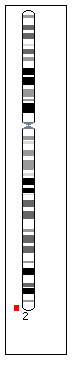
The genetic architecture of 2q37 monosomy centers on a terminal deletion at the very end of chromosome 2. Researchers have identified a minimal critical region of approximately three megabases that encompasses the genes GPR35, GPC1, and STK25; loss of this segment is sufficient to produce the syndrome. The vast majority of confirmed deletions are terminal, meaning they extend to the chromosome's end rather than excising an internal chunk. Notably, no consistent breakpoints have been identified across cases, which strongly suggests the rearrangement is not driven by non-homologous recombination or low-copy repeat sequences. Instead, the deletions appear to arise through diverse molecular mechanisms, explaining the wide variation in deleted segment sizes observed among patients and reinforcing that this is not a single, mechanistically uniform event.
Prognosis & Phenotypic Variability
One of the most clinically significant aspects of 2q37 monosomy is the striking phenotypic variability among affected individuals. Despite the deletion always occurring at the same chromosomal location, the size and precise extent of the missing segment cannot be used as a reliable predictor of how severely a person will be affected. In a study examining twenty patients, researchers found no clear correlation between the clinical features a child displayed and either the size or the exact position of the monosomic region. This means that a smaller deletion does not guarantee a milder course, nor does a larger one ensure a more severe one. For families seeking to understand what the future may hold for their child, this unpredictability poses a particular challenge. Genetic counselors and clinicians must therefore frame expectations around the broad range of possible outcomes rather than a single trajectory, and must resist the temptation to read prognosis directly from the length of the deleted segment.
Inheritance Patterns & Family Occurrence
The inheritance patterns of 2q37 monosomy present a mixed picture that complicates genetic counseling. A high proportion of cases arise de novo, meaning the deletion occurs spontaneously in the affected child without being inherited from either parent. Nevertheless, multiple affected individuals within a single family have been documented, indicating that the condition can occasionally be passed down through generations. In Aldred's series, maternally and paternally derived rearrangements appeared in roughly equal proportions, ruling out a strong parental bias in transmission. The absence of shared breakpoints across cases further underscores that the deletion does not follow a single, predictable genetic pathway. For families navigating recurrence risk, these findings suggest that while most cases are isolated events, the possibility of familial transmission—though uncommon—must be acknowledged, and careful genetic evaluation of both parents is warranted to determine whether a balanced rearrangement might be present.
Gallery
More in Genetic diseases and disorders
Spotted an error? Know more?
Reader corrections go straight into our review queue. Suggest an edit · How this site is sourced