Frequently Asked Questions
The most-asked questions about games related to chaturanga.
What exactly is chaturanga?
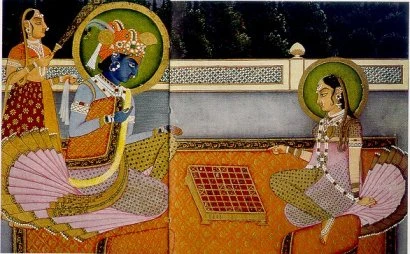
Chaturanga is an ancient Indian two-player strategy board game that dates to roughly the 6th century CE and is widely regarded as the direct ancestor of modern chess. It is played on an 8×8 grid and its name translates to 'four divisions,' referring to the four branches of a classical Indian army: infantry, cavalry, elephants, and chariots.
How does chaturanga differ from the chess most people play today?
The most visible differences are the queen-equivalent piece (called a mantri or minister), which in chaturanga could only move one square diagonally, and the absence of castling. Pawns also did not have the two-square initial advance, and the overall tempo of the game was considerably slower than modern chess.
When and where did chaturanga originate?
The game emerged in the Gupta or early post-Gupta period of northern India, with the earliest clear literary reference appearing in the 7th-century text Harshacharita by the court poet Bana. It was a pastime of the Kshatriya warrior class and was already well established before it reached Persia.
What do the traditional piece names mean?
The four main piece types are named after army units: ratha (chariot), ashva (horse), gaja (elephant), and patta (foot-soldier or pawn). The king is called rana, and the powerful advisor piece is the mantri, each reflecting the military and courtly structure of the era.
How did chaturanga evolve into shatranj and then modern chess?
After spreading to Sasanian Persia, the game was adapted as shatranj, where the mantri gained a slightly larger move and the rules were codified in Arabic manuals from the 8th–9th centuries. Shatranj entered the Iberian Peninsula and the broader European world through Moorish and trading contacts, and over the following centuries the queen's movement was expanded, castling was added, and the modern ruleset solidified.
What are the main variants and related games I should know about?
Beyond shatranj, there are regional Indian variants such as makchess and the Tibetan game tse-tsu, as well as the Persian-Arabic shatranj tradition with its own opening literature. Modern revival projects like 'chaturanga reimagined' and various online implementations also fall under the broader family.
What core rules should a beginner understand before playing a chaturanga game?
You move the mantri one square diagonally, the gaja one square in an L-shape (similar to a modern knight but restricted), the ratha any number of squares along a rank or file, and the patta one square forward with a single diagonal capture. The objective is to checkmate the rana, and there is no draw-by-repetition or fifty-move rule as in modern chess.
Which historical sources or figures are most associated with chaturanga?
The 7th-century poet Bana is the earliest named author who mentions the game in a narrative context, and the Arab chess manuals of al-Adli (c. 850 CE) and al-Laylī (c. 1000 CE) preserve shatranj rules that trace directly back to chaturanga. In India, the game also appears in Jain and Buddhist literature as a pastime of kings and monks.
Where can a newcomer actually learn and play chaturanga today?
Several open-source implementations exist on GitHub and itch.io that let you play a rules-faithful chaturanga game online. Academic papers on the history of chess (such as those by Hooper & Whyld or the Chess History section of the FIDE archive) provide rule reconstructions, and a handful of YouTube channels walk through the differences step by step.
Why does chaturanga matter beyond being a 'proto-chess' curiosity?
It offers a window into how classical Indian military organization, court culture, and strategic thinking were encoded into a recreational form that then shaped entertainment across Persia, the Arab world, and Europe. Studying it also highlights how a single rule change—like expanding the mantri's range—can transform an entire game's character and competitive depth.