Play (activity)
Intrinsically motivated recreation across life stages and species.

Play refers to any activity people choose to do for enjoyment, driven by internal motivation rather than outside pressure. While most often linked to childhood and youthful pursuits, it can happen at any age and is also observed in other intelligent animals, especially mammals and birds. Though sometimes seen as trivial, players can become deeply absorbed when play has clear goals and structure, like in a game. Play can be casual and spontaneous or carefully planned and even compulsive. It is more than just a way to pass time; it can be a valuable tool in daily life for teenagers, adults, and advanced non-human species such as primates. Play supports physical growth—like improving hand-eye coordination—as well as cognitive development and social abilities. It can also help ease the stressful process of integrating into new social situations. Most children engage in play, but how they do so varies across cultures.
The foundational work on play studies is *Homo Ludens*, first published in 1944. In it, Johan Huizinga defines play as a free activity that stands outside ordinary life, felt as “not serious” yet fully absorbing the player. It involves no material interest or profit, follows fixed rules within its own time and space, and encourages social groups that often set themselves apart through secrecy or disguise. This idea of play as a separate sphere is sometimes called the “magic circle,” a term also linked to Huizinga. Many other definitions exist. Jean Piaget noted that the many past theories of play show how difficult the phenomenon is to understand. A twenty-first-century definition from the National Playing Fields Association describes play as freely chosen, personally directed, and intrinsically motivated behavior that actively engages the child, emphasizing personal choice and motivation.
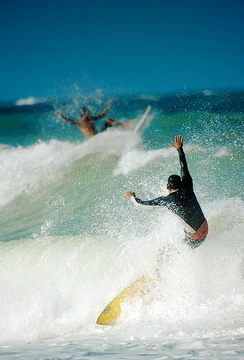
Play can take many forms, including improvisation, pretense, interaction, performance, mimicry, games, sports, and thrill-seeking activities like skydiving or high-speed racing. Philosopher Roger Caillois, in his 1961 book *Man, Play and Games*, viewed many social structures as elaborate games and much behavior as a form of play. Free-form play lets children decide what and how to play, with rules and objectives that can change at any time. Some countries, such as Taiwan and Hungary, have emphasized free play in early childhood education. Structured play, called a “game,” has clear goals and rules, while unstructured or open-ended play does not. Both types promote adaptive behaviors and happiness. Sports with defined rules occur in designated spaces, like soccer fields, where actions like kicking a ball or pushing opponents are acceptable but might be inappropriate or illegal elsewhere. Other designed play spaces include playgrounds with equipment for active and social play. Some spaces, like Children’s Museums, Science Centers, or Family Entertainment Centers, bring play indoors and may charge admission; the latter are for-profit businesses, while museums and science centers are typically nonprofit educational venues.
The National Institute for Play in California identifies seven play patterns: attunement play (building connection, as between newborn and mother), body play (infants exploring how their bodies work and interact with the world, such as making sounds or discovering what happens in a fall), creative play (using imagination to go beyond the known, like finding a new way to use a musical instrument or wondering about unproven ideas), imaginative or pretend play (children inventing and acting out scenarios, such as princess or pirate play), object play (handling toys or physical things out of curiosity), social play (interacting with others through tumbling, making faces, or building connections), and storytelling play (learning and language development, like a parent reading aloud or a child retelling a story). Another classification system includes challenge play, such as solving a Rubik’s Cube.
- key_characteristics
- free, separate from ordinary life, absorbing, rule-bound, social
- forms_include
- improvisation, pretense, games, sports, thrill-seeking
- associated_with
- cognitive development, socialization, physical development
Lore & Background
Play is a broad category of intrinsically motivated activities undertaken for recreation, observed not only in humans across all life stages but also in other higher-functioning animals, particularly mammals and birds. While often perceived as frivolous, players can become intensely focused, especially in structured, goal-oriented forms known as games. The activity spans a spectrum from relaxed, spontaneous, and free-spirited to planned or even compulsive. Play serves as a vital tool for development, promoting physical skills like hand-eye coordination, cognitive growth, and social abilities, and can ease the stressful process of social integration. Cultural differences significantly shape how children engage in play.
The seminal work *Homo Ludens* by Johan Huizinga defines play as a separate sphere of human activity, a concept known as the "magic circle." Jean Piaget noted the difficulty of defining play, given the multitude of existing theories. The National Playing Fields Association offers a modern definition emphasizing freely chosen, personally directed, and intrinsically motivated behavior that actively engages the child.
Play manifests in diverse forms, including improvisation, pretense, mimicry, games, sports, and thrill-seeking. Philosopher Roger Caillois interpreted many social structures as elaborate games. Free-form play allows children to change rules and objectives at will, a value emphasized in early childhood education in countries like Taiwan and Hungary. Structured play, or games, has defined goals and rules, often within designated spaces like sports fields, where behaviors appropriate in play may be inappropriate elsewhere. Designed play spaces range from playgrounds to specialized indoor venues like Children’s Museums and Family Entertainment Centers. The National Institute for Play identifies seven patterns: attunement play (e.g., newborn-mother connection), body play (exploring physical interaction), creative play (using imagination to transcend current states), imaginative or pretend play (inventing scenarios), object play (handling physical things), social play (interacting with others), and storytelling play (developing language and intellect). Other categories include challenge, competitive, construction, cooperative, creative, pretend, and nurturing play.
Reader's Guide
Play is a fundamental human activity recognized across cultures and life stages. Its significance lies in its role in physical, cognitive, and social development, as well as its potential to aid in integration during stressful processes. Play takes many forms, from free-form play where children decide rules and objectives, to structured play with defined goals, such as games and sports. The National Institute for Play describes seven play patterns, including attunement play, body play, creative play, imaginative play, object play, social play, and storytelling play. Play is explicitly recognized in Article 31 of the Convention on the Rights of the Child, affirming the right of children to rest, leisure, play, and recreational activities. The study of play continues to inform fields such as psychology, education, and game design, with researchers like Katie Salen and Eric Zimmerman outlining schemas for games, and Jesper Juul exploring the relationship between real rules and fictional worlds in video games.
Did You Know?
- Play is not just a pastime; it can serve as a stepping stone into the world of integration, which can be a very stressful process.
- The way play is executed differs between cultures, and the way children engage with play varies.
- Play can take the form of thrill-seeking, including extreme or dangerous sports like sky-diving and high-speed racing.
- Play therapy is a clinical application of play aimed at treating children who suffer from trauma, emotional issues, and other problems.
Frequently Asked Questions
What is Play (activity)?
Play refers to a broad spectrum of self-motivated recreational activities that people and certain animals engage in purely for enjoyment. It spans from spontaneous, carefree behavior to highly structured, goal-directed pursuits like organized games.
What forms does Play (activity) include?
The category covers a wide range of expressions, from improvisation and make-believe (pretense) to structured games, competitive sports, and even thrill-seeking behaviors. It is not limited to children; adults and higher-functioning animals such as mammals and birds all participate in various forms of play.
Why is Play (activity) important for development?
Play serves as a critical tool for cognitive growth, social skill-building, and physical maturation across the lifespan. Even when it appears lighthearted or spontaneous, the player is often deeply focused on an objective, making play a powerful engine for learning and adaptation.
More in Games And Recreation 1-24
Spotted an error? Know more?
This is a living reference — every entry is fact-audited, and reader corrections feed straight into our audit queue. Suggest an edit · See this site's audit record