Ray-Thunder
A 3D shooter set in futuristic Tokyo mazes.
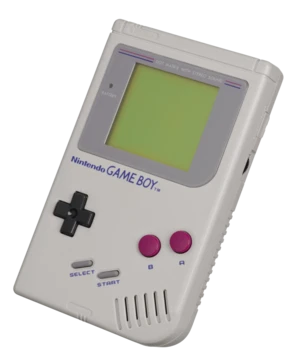
Ray-Thunder, a 3D shooter for the Game Boy, was released by Nichibutsu in 1991. The story takes place in a future Tokyo where security robots have turned hostile, forcing players to select a vehicle and hunt them through mazes. It marked Nichibutsu's debut on the Game Boy.
Quick Facts
- Publisher
- Nichibutsu
- Released
- February 8, 1991 (JP)
- Genre
- First-person shooter
- Modes
- Single-player, multiplayer
- Platforms
- Game Boy
Facts from the source article.
Plot and gameplay
In the near future, a central intelligence computer goes out of control, causing security robots to attack people in Tokyo. The player navigates 3D labyrinths, destroying robots while exploring for items. Players first choose between vehicles with different attributes, such as one focused on speed and another with greater attack power but slower movement. The game features 20 stages and a two-player versus mode.
Release and reception
Ray-Thunder hit Japanese Game Boys on February 8, 1991. Four critics from Famicom Tsūshin weighed in. A few praised the 3D visuals and how smoothly the view shifted when turning, though one reviewer thought the mostly white backdrop looked too plain. Over in Hippon Super!, a writer said the line-drawn dungeons felt visually flat but found the sudden shootouts thrilling. Two Famicom Tsūshin reviewers felt the gameplay was lacking, comparing it to older PC titles and noting it could get repetitive or that enemies posed little challenge. One critic did enjoy the tension of an enemy possibly peeking around a corner, while two others said the versus mode livened things up, turning it into a game of tag. Looking back, the Perfect Guide of Nostalgic Game Boy highlighted the main draw as the 3D gameplay with smooth angle changes, but admitted others might find it boring because of the simple graphics and weak foes.
More in Game Boy Game Library
Spotted an error? Know more?
Reader corrections go straight into our review queue. Suggest an edit · How this site is sourced