Frequently Asked Questions
The most-asked questions about galaxy clusters and groups, part 2.
What does Part 2 of the encyclopedia actually cover?
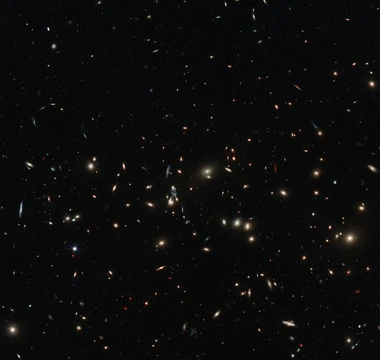
Part 2 moves past the basic definitions from Part 1 and dives into the internal physics of clusters and groups: the hot intracluster gas, the dark-matter scaffolding, and the long-term evolutionary story of how these systems grow, collide, and settle. It also profiles the most studied individual clusters in detail.
Who are the central 'characters' readers should know?
The Virgo Cluster (our nearest major neighbor at roughly 16.5 million light-years), the Coma Cluster (a textbook relaxed giant), and the Fornax Cluster round out the core cast. Among groups, the Local Group and the NGC 185/4448 pair serve as the small-scale representatives.
Where should I start if I've only read Part 1?
Begin with the chapter on the intracluster medium, because understanding that 10⁸ K plasma is the key to reading almost every other entry in Part 2. After that, the Virgo Cluster profile gives you a concrete anchor before you tackle the larger, more abstract Coma and Shapley Supercluster sections.
What is the intracluster medium and why does it get so much attention?
It is the tenuous, extremely hot hydrogen and helium gas that fills the space between member galaxies and contains roughly ten times more baryonic mass than all the stars in the cluster combined. It dominates the X-ray emission we observe and acts as the primary diagnostic tool for measuring a cluster's total mass.
What is the dark-matter situation in these systems?
Dark matter accounts for roughly 85 percent of a cluster's total mass and forms a vast, roughly spherical halo that is much more extended than the visible galaxies. Gravitational lensing and the velocity dispersion of member galaxies are the two main ways astronomers map its distribution.
What counts as a 'notable moment' in a cluster's story?
The most dramatic events are major mergers, such as the Bullet Cluster collision, where two subclusters slammed together and their dark matter separated from the hot gas. Other highlights include the ongoing substructure accretion in Virgo and the still-unresolved 'missing baryon' problem in the Coma Cluster.
How does Part 2 treat galaxy groups differently from full clusters?
Groups are presented as the lower-mass end of the same hierarchy, typically containing a few dozen galaxies bound by roughly 10¹⁴ solar masses. Part 2 emphasizes that groups lack a significant hot X-ray-emitting medium and that their members interact more directly, making them useful laboratories for studying galaxy evolution in a less extreme environment.
What is the key takeaway about cluster mergers?
Mergers are the primary growth mechanism for clusters and leave behind observable substructure—offset dark-matter peaks, shock-heated gas, and tidal tails—that can persist for billions of years. The Bullet Cluster observation in 2006 became the canonical evidence that dark matter interacts weakly with itself and with ordinary matter.
How do these structures actually form?
In the standard ΛCDM picture, small dark-matter halos form first and then merge hierarchically, dragging baryonic gas along to seed galaxies. By the present epoch the largest halos have assembled into clusters of 10¹⁵ solar masses or more, while smaller ones remain as groups, and the whole process is still ongoing.
What is the single most surprising fact fans should know?
Despite containing hundreds to thousands of galaxies, a typical cluster is mostly empty space: the average density of the intracluster medium is about 10⁻⁴ particles per cubic centimeter, far thinner than a laboratory vacuum. The 'massive' reputation comes almost entirely from the invisible dark-matter halo rather than from the stars or gas we can see.