Curaçao
A Dutch Caribbean island with a Spanish colonial past.
Curaçao is a constituent country within the Kingdom of the Netherlands, located in the southern Caribbean Sea. It is the largest of the ABC islands in both area and population, and its capital is Willemstad. The island is known for its indigenous bitter orange-based liqueur, Curaçao.
Quick Facts
- Official name
- Country of Curaçao
- Pais Kòrsou
- Land Curaçao
- Anthem
- Himno di Kòrsou ("Anthem of Curaçao")
- Song type
- Royal anthem
- Song
- Wilhelmus
- Founded
- Netherlands Antilles
- Official languages
- Papiamento
- Dutch
- English
- Demonym
- Curaçaoan, Dutch
- Capital
- Willemstad
Facts from the source article.
Did You Know?
- From 1525, Spanish maps showed the island as Curaçote, Curasaote, or Curasaore.
- The island has six well-preserved forts built by the Dutch after 1634, including Fort Amsterdam (1635) and Fort Beekenburg (1703).
- The King of the Netherlands serves as head of state, represented locally by the Governor of Curaçao.
History
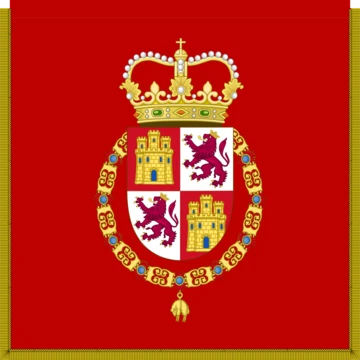
Before the Spanish arrived, Curaçao was home to the Arawak and Caquetio peoples, whose ancestors had come from South America. A Spanish expedition under Alonso de Ojeda spotted the island in 1499, and Spain officially settled it in 1527, using it as a base for exploring northern South America and treating it as an extension of Venezuela. The Spanish brought horses, sheep, goats, pigs, and cattle, and cattle herding became a key activity. Because the soil was poor for farming and there were no valuable metals, the Spanish called Curaçao "the useless island." Over time, fewer Spaniards lived there, while the Caquetio population grew and stabilized. In the later years of Spanish rule, the island was mainly a large cattle ranch, with Spaniards living near Santa Barbara, Santa Ana, and western villages, while the Caquetio were spread across the island. The Dutch took over in 1634, turning the economy toward trade and shipping, and later made it a center for the Atlantic slave trade. The British occupied Curaçao twice during the French Revolutionary and Napoleonic Wars but gave it back to the Dutch. When slavery ended in 1863, the economy shifted and people migrated. Oil discovered in the Maracaibo Basin in 1914 turned Curaçao into a major refinery site. The island became an autonomous country within the Kingdom of the Netherlands in 2010.
Geography
Curaçao lies on the continental shelf of South America and has a hilly topography, with Christoffelberg as its highest point at 372 m. Its coastline features bays, inlets, lagoons, seasonal lakes, rough seas on the northshore, and spring water. The island experiences upwelling, a wind-driven movement of cooler, nutrient-rich deep ocean water to the surface, which provides natural minerals and thermal conditions used in hydrotherapy and mesotherapy. Off the southeast coast lies the uninhabited Isle of Klein Curaçao, which has a long beach. The flora differs from typical tropical island vegetation, belonging to the arid Guajira–Barranquilla xeric scrub ecoregion, with cacti, thorny shrubs, evergreen trees, and watapana trees. The island is semi-arid and does not support many tropical mammal, bird, or lizard species; common birds include hummingbirds, bananaquits, orioles, terns, herons, egrets, flamingos, turpials, and mockingbirds. Near shorelines, brown pelicans feed on fish, and other seabirds include gulls and cormorants.
Economy
Curaçao has an open economy with key sectors including tourism, international trade, shipping services, oil refining, oil storage and bunkering, and international financial services. The Isla oil refinery, leased by Venezuelan state oil company PDVSA until 2019, employs 1,000 people and refines oil from Venezuela for export to the United States and Asia. Schlumberger, the world's largest oil field services company, is incorporated in Curaçao. The refinery is said to be responsible for Curaçao being one of the world's top five highest per capita emission-producing countries. Along with Sint Maarten, Curaçao uses the Caribbean guilder, which replaced the Netherlands Antillean guilder on 1 July 2025. Its economy is well-developed, ranking 46th in GDP (PPP) per capita and 27th in nominal GDP per capita, and is classified as a high-income economy by the World Bank. Activities related to the port of Willemstad, including the Free Trade Zone, contribute significantly. The government's "Open Arms" policy aims to attract foreign investment, especially information technology companies. Since 2016, reduced foreign demand due to unrest in Venezuela has led to economic stagnation, though construction, financial intermediation, and utilities sectors expanded. Tourism plays a major role but is less dominant than in many other Caribbean countries; most tourists come from the Netherlands, the eastern United States, South America, and other Caribbean islands. In 2013, Curaçao hosted 610,186 cruise passengers, a 41.4% increase over the previous year, and Hato International Airport received 1.7 million passengers.
Demographics
The majority of Curaçao's population is of full or partial African descent, with minorities of Dutch, Portuguese, Jewish, Latin American, South Asian, East Asian, and Lebanese descent. Portuguese laborers from Madeira migrated in the 20th century to work in oil and agriculture. According to 2022 CIA data, there are 92 men for every 100 women. The religious breakdown from a 2011 estimate shows 72.8% Catholic, 6.6% Pentecostal, 3.2% Protestant, 3% Adventist, 2% Jehovah's Witnesses, 1.9% Evangelical, 3.8% other, 6% none, and 0.6% unspecified. The Diocese of Willemstad covers all Kingdom of the Netherlands territories in the Caribbean. There has been a shift toward the Charismatic movement, and other denominations include Seventh-day Adventist and Methodist churches. Some inhabitants practice Montamentu and other diaspora African religions. Pentecostalism is rising, and there are Muslims and Hindus. Curaçao has the oldest active Jewish congregation in the Americas, dating to 1651, and the oldest synagogue in continuous use in the Americas, completed in 1732. As of 2000, about 300 Jewish people lived on the island. According to the 2023 census, 78% speak Papiamentu most at home, 8.4% Spanish, 7.9% Dutch, 3.8% English, and 2% other languages. Most of the population can converse in at least two of Papiamentu, Dutch, English, and Spanish.
More in Former Spanish Colonies
Spotted an error? Know more?
Reader corrections go straight into our review queue. Suggest an edit · How this site is sourced