Frequently Asked Questions
The most-asked questions about fishkeeping.
What exactly is fishkeeping (aquaristics)?
Fishkeeping is the practice of maintaining a living aquatic ecosystem in a glass or acrylic tank, where ornamental fish, invertebrates, and sometimes plants coexist under carefully managed water chemistry. It ranges from a single desktop community tank to sprawling reef or biotope setups, and the hobbyist's core job is balancing temperature, pH, filtration, and feeding to keep every inhabitant healthy.
Who are the most celebrated figures in aquarium-hobby history?
The modern aquarium concept was popularized in the 1850s by early naturalists such as John Hawkins and Philippe Forel, who demonstrated that fish could be sustained in sealed glass vessels. In the living-hobby era, community leaders, reef-keeping authors, and large-scale planted-tank builders (often known through online forums and trade shows like the International Aquatic Exposition) have shaped today's standards and aesthetics.
Where should a complete beginner start?
Most experienced keepers advise beginning with a small-to-mid freshwater community tank (around 20 gallons), a reliable filter, a heater, and a basic test kit before adding any fish. The first critical step is cycling the tank—establishing beneficial bacteria—over four to six weeks before introducing livestock.
What is the nitrogen cycle, and why does everyone talk about it?
The nitrogen cycle is the biological process in which ammonia (from fish waste and uneaten food) is converted to nitrite and then to nitrate by colonies of nitrifying bacteria living in the filter and substrate. Without a cycled tank, even a single goldfish will be exposed to toxic ammonia within days, making cycling the single most important concept a new keeper must understand.
Which fish are most recommended for a first tank?
Neon tetras, white cloud minnows, and zebra danios are the go-to choices because they are small, peaceful, hardy, and available in schools of six or more. Bottom-dwellers like otocinclus catfish or corydoras add a second layer, while a single betta (in a properly sized, non-aggressive setup) is a popular centerpiece for beginners.
What's the real difference between freshwater and saltwater keeping?
Freshwater systems use tap water treated with dechlorinator and are generally more forgiving of small parameter swings, whereas saltwater (marine) systems require a full salt mix, precise salinity, alkalinity, and calcium levels plus more expensive livestock. The hobby community often describes the jump to marine as a significant step up in both cost and daily maintenance.
What is a 'planted tank' and why is it so popular?
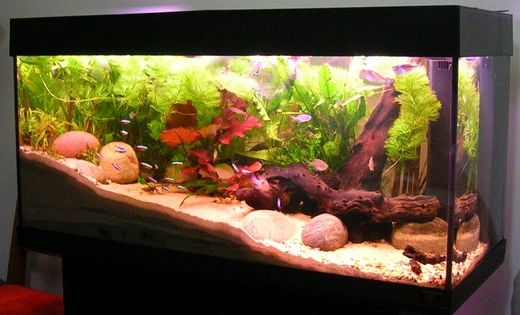
A planted tank is an aquarium where live aquatic plants—anchored in substrate or floating freely—form the primary décor rather than rocks or plastic ornaments. Enthusiasts enjoy them because the plants help oxygenate water, absorb excess nitrates, and create a living, shifting landscape that changes week to week.
What are the most common beginner mistakes?
Overstocking the tank, adding fish before cycling is complete, and skipping regular water changes top the list of issues that lead to fish loss in the first few months. Equally common are using the wrong substrate for the fish chosen, neglecting to acclimate new arrivals slowly, and treating the tank as a 'set-and-forget' container rather than a living system that needs monitoring.
What is the 'one-inch-per-gallon' rule, and is it still valid?
The old guideline suggested no more than one inch of adult fish per gallon of water, but most modern keepers consider it an oversimplification that ignores species size, activity level, and bioload. Current best practice is to research the specific species' adult size, schooling needs, and waste output, then stock conservatively—often well below that old number.
What are some landmark moments in aquarium-hobby culture?
The 1851 Great Exhibition in London featured the first public aquarium displays, sparking a Victorian craze for home tanks. More recently, the rise of high-definition planted-tank and reef-keeping videos on YouTube in the 2010s turned once-niche setups into a global visual art form, and annual events like the IAPLC (International Aquatic Plant Layout Contest) have become the hobby's most-watched showcase.