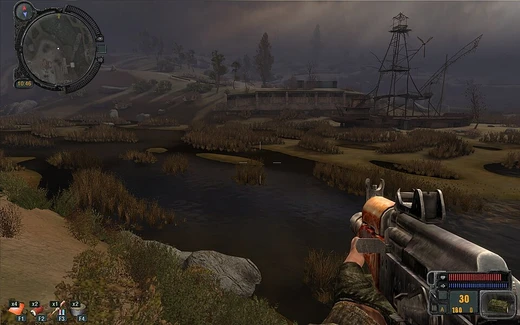
Escape from Tarkov
A hardcore tactical extraction shooter set in war-torn Tarkov.
Last updated
Escape from Tarkov is a multiplayer first-person tactical extraction shooter developed by Battlestate Games for Microsoft Windows. Set in the fictional Norvinsk region of northwestern Russia, the game pits two private military companies—United Security (USEC) and the Battle Encounter Assault Regiment (BEAR)—against each other in high-stakes raids where players fight both other players and AI-controlled Scavengers for loot while attempting to survive and escape. Notable for its realistic and hardcore gameplay, it blends elements of survival, first-person shooting, and massively multiplayer online games, with version 1.0 released on 15 November 2025.
Lore & Background
Escape from Tarkov takes place in the fictional city of Tarkov, capital of the Norvinsk Special Economic Zone in northwestern Russia, between 2015 and 2026. Political scandals and corporate collapses led to social breakdown, turning the city into a shell of itself with sections controlled by aggressive locals known as Scavengers. Two private military companies operate in this chaos: USEC, a Western-based firm hired by TerraGroup to cover up its illegal activities, and BEAR, created by the Russian government to investigate those activities. Each faction offers unique gameplay advantages—USEC characters start with greater experience on Western firearms, while BEAR characters receive bonuses for Russian and Soviet weapons.
The primary opposing NPC faction is the Scavengers, typically hostile to both PMCs. Scavs are divided into several tiers, including normal low-gear Scavs, Rogues, Cultists, Scav Raiders with better equipment, and Scav Bosses with more hitpoints and difficult AI, some accompanied by guards. Battlestate Games occasionally alters spawn rates and maps during special events.
Outside raids, player characters reside in an underground bomb shelter hideout, where scavenged materials can be used to build facilities that grant bonuses such as reduced Scavenger raid cooldowns, increased experience, and crafting abilities. Extra equipment and valuables are stored in a stash for future raids, sold to NPC traders, or traded with other players via a virtual flea market using Rubles, Euros, or USD. NPC traders also offer quests that increase loyalty and unlock higher-tier items.
The Raid Loop & Extraction Tension
Every session of Escape from Tarkov hinges on one brutal question: can you get out alive? In PMC raid mode, a player loads out their own gear, selects a map and time of day, then enters a match with up to thirteen other players and hostile NPC Scavengers. The clock runs twenty to fifty minutes depending on the map, and the only way to keep what you've scavenged—firearms, armor, medical supplies, valuables—is to reach a designated extraction zone before time runs out. Fail, and the penalty is total: everything in your inventory is lost unless it sat in a limited-slot secure container or was insured with in-game money, and even insured items can be grabbed by another player before you reclaim them.
Scavenger mode flips the script. The game hands you a random loadout, you drop into a raid already in progress, and NPC Scavengers leave you alone. You use your own extraction points, some overlapping with PMC zones, and a cooldown limits how often you can run the mode. Battlestate Games calls the whole package a realistic, hardcore experience borrowing survival and progression elements from MMOs, and that label hits hard once you've lost your gear to one bad shot.
Thirteen Districts of Norvinsk
Escape from Tarkov is set in the fictional Norvinsk region of northwestern Russia, where a war rages between two private military companies. Battlestate Games has carved thirteen distinct maps from that single city. Customs is a sprawling outdoor industrial park; Factory is the interior of a small chemical plant; Interchange pairs a road junction with a huge shopping mall. Lighthouse spans a cargo train station, a water treatment plant, chalet homes, and a lighthouse island.
Reserve is a secret military base, Shoreline packs a hydroelectric plant, villages, and a health resort into one large area, and Streets of Tarkov covers a slice of downtown. The Lab is a TerraGroup research facility, The Labyrinth is a theme park built by one of TerraGroup's contractors, Woods was once a state-protected wildlife reserve, Ground Zero is the business center where TerraGroup's headquarters sits and where the conflict began, Terminal is a massive cargo logistics hub serving as one of the last evacuation points, and Icebreaker is an enormous nuclear-powered icebreaker in the Gulf of Finland. Every map blends indoor, outdoor, and underground spaces, with shifting time of day and weather altering how a raid plays out. A planned open-world option would stitch all locations together, and a transit system already lets players hop to adjacent maps rather than extracting to their stash.
Ballistics, Grids & the Sound of Every Step
Escape from Tarkov's combat system has been compared to military simulators like the ArmA series, and the depth is easy to see. The game carries over a hundred firearms ranging from pistols to machine guns and grenade launchers, each with distinct recoil, weight, and ergonomics stats. But the weapon is only half the equation: damage is determined by the ammunition, not the gun, and every round carries its own damage and armor-penetration figures.
Players can build firearms from individual components—dust cover, grip, stock, barrel—each part shifting the weapon's statistics. Ballistics include ricochets, bullet drop, and penetration through surfaces. Outside the gun, the inventory is grid-based, with item size and shape dictated by the chest rig, backpack, or other gear you're wearing. Carrying capacity is further limited by total weight, which drags down movement speed and stamina.
Scavenging is deliberate and risky: items are revealed one at a time, and you cannot move while searching. There is no minimap telling you where you are; navigation relies on memorized landmarks. Nearly every action produces a distinct sound audible to other players, and the game tracks each round in a magazine but only shows rough estimates like empty, half-full, or full.
The Body as a Battlefield
Perhaps no system in Escape from Tarkov captures its hardcore philosophy better than the body-part health model. Each major limb and organ carries its own independent health bar, and a destroyed part imposes specific, punishing penalties. A shattered arm wrecks your aiming, reloading, and searching speed.
A destroyed stomach turns you into a wheezing, coughing mess that can no longer hear enemies while simultaneously broadcasting your position and draining your energy and hydration faster than normal. Certain injuries demand specific medical supplies: bandages stop bleeding, splints set fractures, and no single item cures everything. On top of that, players must actively manage energy and hydration; neglect them and you face health loss or an inability to sprint.
Movement itself is granular—players have fine control over speed and crouch height, and every action generates a unique noise. Players can protect themselves with bulletproof vests and combat helmets, but the sheer number of variables means even a well-equipped character can be brought to their knees by a single bad hit to the wrong body part. Outside raids, the hideout—an underground bomb shelter where players build facilities to reduce Scavenger cooldowns, boost experience gains, and unlock crafting—serves as the quiet counterpoint to all that in-raid chaos.
Reader's Guide
Escape from Tarkov's significance lies in its uncompromising realism and hardcore design, which set it apart from mainstream first-person shooters. The game features over a hundred firearms with detailed ballistics including ricochets, bullet drop, and penetration, where damage depends on ammunition type rather than the weapon itself. Players have fine control over movement speed and crouch height, and nearly every action generates distinct noises audible to others.
There is no in-game map showing player position; navigation relies on knowledge of landmarks and points of interest. Each major body part has a separate health bar, with destroyed limbs incurring significant penalties—a destroyed arm hinders aiming and reloading, while a destroyed stomach causes coughing that alerts enemies and depletes energy faster. Players must maintain energy and hydration levels to avoid penalties. The inventory system is grid-based, with carrying capacity limited by weight affecting movement and stamina.
When players die or fail to extract, they lose everything except items in a secure container or those insured (if not taken by another player). The game's extraction mechanic, where players must reach designated zones within a time limit, creates constant tension. Its blend of survival, looting, and tactical combat, along with planned open-world integration through map transit, has influenced the extraction shooter genre.
Frequently Asked Questions
What is Escape from Tarkov?
It is a hardcore multiplayer tactical extraction shooter developed by Battlestate Games for Microsoft Windows. Players act as PMC operatives who must loot, fight, and reach an extraction point before a strict time limit expires in a war-torn fictional region of northwestern Russia.
How long does a raid last and how many maps are available?
Each raid session runs between 20 and 50 minutes, giving you a hard window to grab loot and reach an extraction point. The game currently offers 13 distinct maps spread across its various play modes.
What game modes can you play in Escape from Tarkov?
The core experience is the PMC raid mode, where you bring your own gear and risk losing it permanently if you die. You can also run Scavenger raids with provided equipment, or jump into PvE, Practice, and Arena modes for lower-stakes sessions.
When did Escape from Tarkov officially launch version 1.0?
Battlestate Games released the full 1.0 build on November 15, 2025, bringing an end to years of early-access development. The title has been available exclusively on Microsoft Windows throughout its entire lifecycle.
More in First-Person Shooters
Sources
Compiled from Wikipedia and the sources listed below. Text from Wikipedia is available under CC BY-SA 4.0; this entry is adapted from it.
- Wikipedia: Escape from Tarkov (CC BY-SA 4.0).
Spotted an error? Know more?
Reader corrections go straight into our review queue. Suggest an edit · How this site is sourced