Frequently Asked Questions
The most-asked questions about first-person shooters, further titles.
What exactly is a first-person shooter?
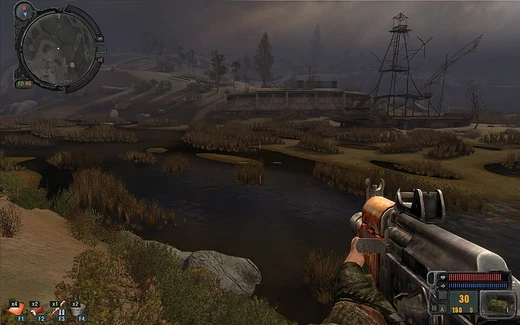
A first-person shooter is a video game genre in which the player views all action through the character's own eyes, typically engaging in combat with firearms or other weapons. The locked-in perspective makes spatial awareness, aiming, and quick reflexes the core mechanical skills.
Who are the most influential figures in FPS development?
John Carmack and John Romero, co-founders of id Software, are widely credited with pioneering the modern FPS through Wolfenstein 3D and Doom. Other key names include the Half-Life team at Valve, Cliff Bleszinski, and the developers at Bungie who created Halo.
Where should a complete beginner start with FPS games?
Doom (1993) or Half-Life (1998) are commonly recommended as accessible entry points that established the genre's core loop of movement and gunplay. For a more modern, narrative-driven introduction, Halo: Combat Evolved or Call of Duty: Modern Warfare are strong choices.
What are the foundational titles that defined the genre?
Wolfenstein 3D (1992), Doom (1993), Quake (1996), and Half-Life (1998) are generally regarded as the pillars that shaped FPS design. Each introduced a major innovation—raycasting, fast 3D combat, networked multiplayer, and scripted storytelling, respectively.
How does an FPS differ from a third-person shooter?
In a first-person shooter the camera is locked to the character's viewpoint, removing the visible body and making aiming and spatial reading the primary challenges. Third-person shooters add a visible character model, shifting emphasis toward movement, dodging, and reading the arena from outside.
What are some landmark moments in FPS history?
Doom's 1993 release brought fast-paced arena combat and multiplayer deathmatches to a mainstream audience. Half-Life in 1998 proved shooters could deliver cinematic, scripted narratives without loading screens, while Quake's 1996 launch made 3D multiplayer a competitive standard.
What are the major sub-genres within FPS?
Common sub-genres include tactical shooters (e.g., Counter-Strike), arena shooters (e.g., Quake, Unreal Tournament), narrative-driven shooters (e.g., Half-Life, DOOM), and battle-royale modes (e.g., PUBG, Fortnite). Each emphasizes different pacing, weapon handling, and team dynamics.
Who are the most iconic characters in the genre?
The Doom Slayer, Gordon Freeman from Half-Life, and Master Chief from Halo are among the most recognizable FPS protagonists. Their identities—faceless, helmeted, or narratively driven—have become shorthand for the genre itself.
What role does competitive play and esports play in FPS?
Titles like Counter-Strike, Valorant, and Call of Duty have built large esports ecosystems with major tournaments and professional leagues. The genre's emphasis on reflex, map knowledge, and team coordination makes it a natural fit for spectator sports.
Are there notable FPS titles that are often overlooked?
System Shock (1994), Duke Nukem 3D (1996), and F.E.A.R. (2005) are frequently cited by fans as underappreciated works that pushed mechanics or atmosphere beyond the mainstream. They introduced ideas—immersive simulation, physics-based combat, and a slow-motion system—that influenced later titles.