Dulcima (1971 film)
A farmer, his housekeeper, and a neighbor form a tense love triangle.
In 1971, Frank Nesbitt directed the British drama Dulcima, starring John Mills and Carol White. Based on an H.E. Bates story, the plot follows a love triangle among a farmer, his housekeeper, and a handsome neighbor.
Quick Facts
- Director
- Frank Nesbitt
- Producer
- John L. Hargreaves; Basil Rayburn
- Based on
- story by H. E. Bates
- Starring
- Carol White; John Mills
- Music
- Johnny Douglas
- Cinematography
- Tony Imi
- Editing
- Bill Lewthwaite
- Released
- 1972, 04
Facts from the source article.
Plot
Dulcima Gaskain, the eldest daughter of a large, poor Gloucestershire farming family with an ill-treating father, visits neighbor Mr. Parker and finds him unconscious in the farmyard after a drunken fall. Discovering his hat stuffed with cash, she volunteers to clean his filthy, chicken-ridden house despite his curmudgeonly attitude. Parker, a widower, agrees to her suggestion that she become his housekeeper, and his sexual interest is aroused when she arrives with her blouse open.
Dulcima fends him off by inventing a fictitious boyfriend named 'Albert', inspired by a magazine model. Parker introduces her to his shady livestock auction dealings but neglects to pay her wages, though she keeps a tally. She discovers cash stashed in hiding places and begins encouraging his lustful interest, eventually sharing his bed while still calling him 'Mr Parker'. Out walking, Dulcima meets Ashby, a young gamekeeper resembling 'Albert', and fails to pass on his request to enter Parker's land.
When Parker finds her packing to leave, she claims £40 in owed wages, but he under-pays her, so she helps herself from his hidden cash. She spends on a hair-do, clothes, make-up, and shoes, impressing Parker. Later, she purposely takes the same bus as Ashby, and they chat as they walk home; he gives her wild flowers. She later visits his cottage for tea.
Production
The 1971 film Dulcima is based on a novella by H.E. Bates, first published in his 1954 collection The Nature of Love. A Canadian television adaptation of the same story had already aired in 1969, moving the setting to a small Ontario town. Frank Nesbitt, who had previously directed documentaries, written scripts, helmed two low-budget features, and served as an assistant director on larger productions, secured the film rights. In 1969, Bryan Forbes, then head of production at EMI Films, read Nesbitt’s script and greenlit the project, casting John Mills in the lead and keeping Nesbitt as director.
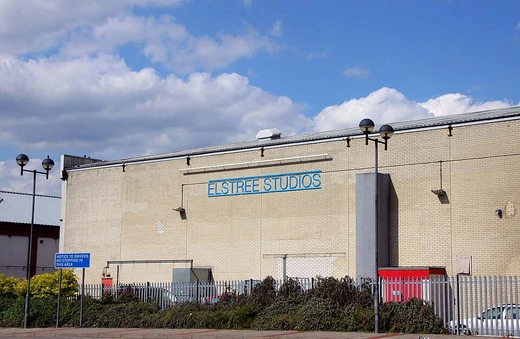
Forbes announced the film that August as part of his initial lineup, though production was delayed until the following year. Carol White, famous for Cathy Comes Home and Poor Cow, took the female lead. Most of the movie was filmed on location at a farm in and around Minchinhampton and Tetbury, Gloucestershire, with additional work at Elstree Studios. Shooting began on 15 June 1970, lasted six weeks, and was hampered by constant rain.
Mills described his role as one of his best ever, while White spent hours daily studying her part, including scenes she wasn’t in, and struggled with the Cotswolds dialect. Forbes later remarked that Nesbitt showed real promise in his handling of this melodramatic, rural story.
Release and Reception
The film was the British entry at the Berlin Film Festival in June 1971, shortly after Forbes resigned from EMI. The Daily Telegraph felt Mills was miscast in a role requiring someone like Michel Simon. The Guardian called it 'a kind of reverse Lady Chatterley's Lover' that was 'competently, if boringly made.' Variety described it as a polished, well-acted, trimly directed British film easy to see but in no danger of cinema history.
Released in British cinemas in April 1972, it was a commercial failure. Forbes wrote that the cinema and distribution arms showed no enthusiasm, and proper marketing could have changed its fate. The Daily Telegraph later called it 'an entirely honorable failure.' Sight and Sound said the script swerved between women's mag sentimentalism and brooding tragedy, with pretty locations dissipating both moods.
The Guardian felt the script was played for all it was worth but could not take its bloody, melodramatic ending. Released in the USA in late 1972, the Los Angeles Times called it 'a fine English film' that was sensitively written and directed. White wrote in her memoirs that it was a good film but lacked the magic ingredient for cinema history. John Mills's biographer argued neither relationship was believable, and the climax was straight out of a Victorian novel, suggesting a French treatment by Marcel Pagnol and a director like Claude Berri.
Yorkshire magazine declared it a curiosity piece between period dramas like The Go-Between and the bawdiness of the Confessions series.
More in Films Shot at EMI-Elstree Studios
Spotted an error? Know more?
Reader corrections go straight into our review queue. Suggest an edit · How this site is sourced