The Passion of the Christ
A film depicting the final hours of Jesus Christ.
Last updated
The Passion of the Christ is a 2004 American epic biblical drama film co-produced and directed by Mel Gibson. It depicts the final twelve hours of Jesus Christ's life, known as the Passion, and became the highest-grossing Christian film of all time.
Plot
On the night of Passover, Jesus prays in Gethsemane while his followers Peter, James, and John fall asleep. After Jesus rebukes Satan, Judas Iscariot, bribed by Caiaphas and the Pharisees, leads temple guards to arrest Jesus. Jesus is beaten on the way to the Sanhedrin, where false accusations are made. Caiaphas condemns him to death for blasphemy.
Peter denies knowing Jesus three times, as predicted, and weeps bitterly. Guilt-ridden Judas tries to return the money but is refused; haunted by demons, he hangs himself. Jesus is brought before Pontius Pilate, who finds no fault in him and sends him to Herod Antipas. Herod deems Jesus harmless and returns him.
Pilate offers the crowd a choice between Jesus and Barabbas; the crowd demands Barabbas freed and Jesus crucified. Pilate orders Jesus flogged, and he is brutally scourged. Mary and Mary Magdalene clean his blood, and Mary Magdalene recalls Jesus saving her from a stoning.
Production
Gibson originally planned to use two old languages without subtitles, believing the image would overcome the language barrier. The script was written in English by Gibson and Benedict Fitzgerald, then translated into Latin and reconstructed Aramaic by William Fulco. Fulco sometimes included deliberate pronunciation errors when characters spoke unfamiliar languages, and some crude language by Roman soldiers was not subtitled. In 2008, Fitzgerald sued Gibson and others for defrauding him of millions and incorrectly taking co-writing credit; an undisclosed settlement was reached in 2009.
The film was shot in Italy at Cinecittà Studios in Rome, and on location in Matera and the ghost town of Craco. The $30 million production cost plus $15 million in marketing were fully borne by Gibson and Icon Productions. Gibson and his production designers used part of a set constructed for Martin Scorsese's Gangs of New York, saving time and money.
Release
The Passion of the Christ opened in the United States on February 25, 2004, Ash Wednesday. It earned $83.8 million from 4,793 screens in its opening weekend and $125.2 million since its Wednesday opening, ranking fourth in domestic opening weekend earnings for 2004 and setting a record for the biggest February debut until Fifty Shades of Grey. It tied with The Lord of the Rings: The Return of the King for the highest five-day Wednesday opening. The film earned $370.8 million in the US, remaining the highest-grossing R-rated film domestically for 20 years until Deadpool & Wolverine surpassed it in 2024.
It sold an estimated 59.6 million tickets in the US. In the Philippines, it was rated PG-13 and endorsed by the Catholic Bishops Conference.
Malaysia initially banned it but later allowed Christian audiences to view it in designated theaters. In Israel, no distributor would market it. The film earned $612 million worldwide and was the highest-grossing non-English-language film until 2017.
Reception
Rotten Tomatoes reports a 50% approval rating from 278 critics, with the consensus that the film may leave viewers emotionally drained rather than spiritually uplifted. Metacritic gives a weighted average of 47 out of 100, indicating mixed or average reviews. Audiences polled by CinemaScore gave it an A+. Richard Corliss of Time called it a serious, handsome, excruciating film radiating total commitment.
Armond White praised Gibson's direction, comparing him to Carl Theodor Dreyer. Roger Ebert gave it four stars, calling it the most violent film he had ever seen and noting it provided a visceral idea of the Passion. David Edelstein of Slate described it as a two-hour-and-six-minute snuff movie. Jami Bernard of the New York Daily News called it the most virulently anti-Semitic movie since World War II German propaganda.
Robert Wilonsky found it too turgid and zealous. Entertainment Weekly named it the most controversial film of all time in 2006, and Time listed it as one of the most ridiculously violent films in 2010.
Did You Know?
- The film includes a visual allusion to Genesis 3:15 when Jesus crushes a serpent's head in the Garden of Gethsemane.
- Mel Gibson described the film as a movie about love, hope, faith, and forgiveness.
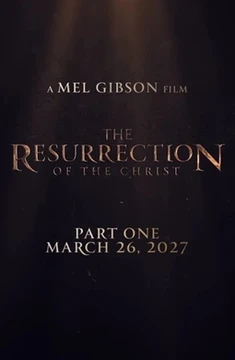
- Two sequels, The Resurrection of the Christ: Part One and Part Two, are due in 2027 and 2028 with a new cast.
More in Film Portrayals of Jesus' Death and Resurrection
Sources
Compiled from Wikipedia and the sources listed below. Text from Wikipedia is available under CC BY-SA 4.0; this entry is adapted from it.
- Wikipedia: The Passion of the Christ (CC BY-SA 4.0).
Spotted an error? Know more?
Reader corrections go straight into our review queue. Suggest an edit · How this site is sourced