Frequently Asked Questions
The most-asked questions about filipino cuisine.
What is Filipino cuisine and what defines it as a whole?
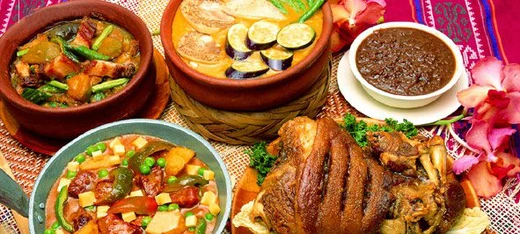
Filipino cuisine is the culinary tradition of the Philippine archipelago, shaped over centuries by indigenous, Spanish, Chinese, and American influences. Its signature flavor profile leans heavily on sourness, saltiness, and umami, with vinegar, fish sauce, and coconut milk appearing across virtually every region.
Who are the 'main characters' fans point to first?
Chicken adobo is widely treated as the franchise lead and de facto national dish, while sinigang (sour soup) and lechon (whole roasted pig) serve as the most iconic supporting stars. Street-food staples like sisig, kwek-kwek, and turon round out the ensemble cast.
Where should a newcomer start exploring?
Most guides recommend beginning with chicken adobo and sinigang, since they showcase the core sour-salty-umami palette without requiring rare ingredients. Sampling a regional longganisa or a simple street snack like turon from there gives a fuller picture of the tradition.
What key ingredients define the overall flavor?
Palm vinegar, toyo (fish sauce), bagoong (fermented shrimp paste), and coconut milk form the backbone of the majority of recipes. Annatto and calamansi then add the characteristic golden hue and bright citrus finish that distinguish a dish as Filipino.
What is the actual role of rice in a Filipino meal?
Rice is not a side dish—it is the structural foundation of every sitting, eaten at breakfast, lunch, and dinner in portions that often surprise outsiders. The local saying 'no rice, no meal' captures how non-negotiable starch is to the dining experience.
How does regional variation work across the islands?
The archipelago's 7,000-plus islands produce distinct culinary zones: Visayan cooking favors coconut and seafood, Mindanao leans into spiced and meat-heavy preparations, and Bicol is famous for its coconut-milk-and-chili combinations. Each region also maintains its own signature longganisa, street snacks, and festive dishes.
What are the most notable cultural 'moments' tied to food?
The Christmas season is the biggest culinary showcase, with feasts stretching from early December through January featuring lechon, kare-kare, and pastillas. Fiestas and weddings similarly center on elaborate multi-course spreads that routinely run well past midnight.
What is the most common misconception about Filipino food?
A frequent assumption is that it is interchangeable with Thai or Vietnamese cuisine, but its heavy reliance on vinegar-based cooking, Spanish-derived pastillas and empanadas, and American-influenced adaptations make it distinctly its own tradition. Another myth is that it is uniformly spicy, when in fact sourness and saltiness dominate over heat in most everyday dishes.
Why is street food and the carinderia culture so central?
Open-air eateries and street vendors function as the everyday dining room for most Filipinos, serving affordable plates of sinigang, pancit, and grilled skewers from dawn until late night. This culture keeps home-style cooking accessible to anyone with a small budget and makes the cuisine feel communal rather than restaurant-bound.
Is Filipino cuisine as layered and complete as other major world cuisines?
It spans the full spectrum from delicate sinigang broths to rich kare-kare peanut sauces, from airy pastillas to hearty beef caldereta. The tradition also includes its own baking, fermented condiments, and a growing modern fine-dining scene, giving it depth comparable to any major culinary system.