Cath Gabhra
A Fenian Cycle battle that destroyed the fianna.
Last updated
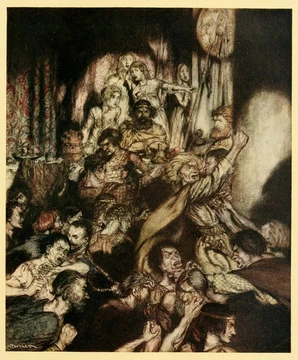
Cath Gabhra, also called The Battle of Gabhair or Gowra, is a Fenian Cycle story that describes the ruin of the fianna and the fall of nearly all its members during a fight with High King Cairbre Lifechair. Unusually, the tale casts the fianna—normally the cycle's champions—in a harsh light. The battle appears in several poems about Cairbre Lifechair preserved in the Book of Leinster and in the longer narrative Acallam na Senórach. Cairbre's daughter Sgiam Sholais was engaged to Maolsheachlainn, prince of the Déisi, but the fianna and Fionn mac Cumhaill insisted on a heavy payment for the wedding.
Convinced the fianna had grown corrupt, Cairbre gathered a huge army from Ulster, Leinster, and Connacht, joined by the faction of the fianna loyal to Fionn's enemy Goll mac Morna. Fionn and his warriors received help from the men of Munster and the Déisi. Cairbre opened the final clash by killing Fionn's servant Ferdia. The fianna's mightiest fighter, Oscar (Fionn's grandson and Oisín's son), struck down Cairbre but died from his wounds, dooming the fianna.
In some versions, Fionn himself is killed by Aichlech while grieving over Oscar's body. Cairbre's forces won, and only Oisín and Caílte mac Rónáin survived, living long enough to tell their story to Saint Patrick two centuries later, as recorded in Acallam na Senórach.
Quick Facts
- Also known as
- The Battle of Gabhair or Gowra
- Cycle
- Fenian Cycle
- High king
- Cairbre Lifechair
- Notable deaths
- Oscar (son of Oisín) and Cairbre Lifechair; in some versions Fionn mac Cumhaill
- Survivors
- Oisín and Caílte mac Rónáin
Facts from the source article.
More in Fenian Cycle
Sources
Compiled from Wikipedia and the sources listed below. Text from Wikipedia is available under CC BY-SA 4.0; this entry is adapted from it.
- Wikipedia: Cath Gabhra (CC BY-SA 4.0).
Spotted an error? Know more?
Reader corrections go straight into our review queue. Suggest an edit · How this site is sourced