The Xenomorph
A primal, eusocial endoparasitoid extraterrestrial species.

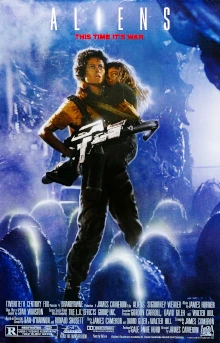
The xenomorph—also designated XX121, *Internecivus raptus*, or simply the Alien—is a fictional extraterrestrial species that functions as an endoparasitoid and serves as the primary antagonist across the *Alien* and *Alien vs. Predator* franchises owned by 20th Century Studios. First appearing in the 1979 film *Alien*, the creature later returned in *Aliens* (1986), *Alien³* (1992), *Alien Resurrection* (1997), and *Alien: Romulus* (2024). A predecessor form appeared in *Prometheus* (2012), with a further evolved version in *Alien: Covenant* (2017), and the species also featured in the 2019 short films *Alien: Containment*, *Specimen*, *Night Shift*, *Ore*, *Harvest*, and *Alone*. Crossover appearances include *Alien vs. Predator* (2004) and *Aliens vs. Predator: Requiem* (2007), while a xenomorph skull and tail briefly appear in *Predator 2* (1990), *Predator: Concrete Jungle* (2005), *Predators* (2010), and *The Predator* (2018). The species also appears as a protagonist (named 6) in the video game *Aliens vs. Predator* (2010) and returns in the FX television series *Alien: Earth* (2025–present). Numerous literature and video game spin-offs also feature xenomorphs.
The design of the xenomorph is credited to Swiss surrealist H. R. Giger, originating from his lithograph *Necronom IV* and refined for the first film. Italian special effects designer Carlo Rambaldi created and built the practical effects for the creature’s head. The species’ design and life cycle have been extensively augmented—sometimes inconsistently—across each film.
Unlike many other alien races in science fiction (such as the Daleks and Cybermen in *Doctor Who*, or the Klingons and Borg in *Star Trek*), xenomorphs are not sapient toolmakers and possess no technological civilization. They are primal, predatory beings driven solely by the preservation and propagation of their own species, eliminating any lifeform that threatens their existence. Like wasps or termites, xenomorphs are eusocial: a single fertile queen produces a caste system of warriors, workers, and other specialized strains. Their biological life cycle involves the traumatic implantation of endoparasitoid larvae inside living hosts; these “chestburster” larvae erupt from the host after a short incubation, mature into adults within hours, and then seek new hosts for implantation.
**Concept and creation**
The script for the 1979 film *Alien* was initially drafted by Dan O’Bannon and Ronald Shusett. O’Bannon wrote an opening in which a mining ship’s crew investigates a mysterious message on an alien planet, settling on an alien creature as the threat but struggling to find a compelling way for it to board the ship. Inspired by a dream, Shusett suggested: “the monster screws one of them,” planting an egg inside the body, which then bursts out of the chest. Both realized the idea was unprecedented, and it became the film’s core. O’Bannon later described the film as “about alien interspecies rape,” noting that the symbolism of “homosexual oral rape” was an effective way to discomfort male viewers.
The film’s title was decided late in development. O’Bannon quickly dropped the original title *Star Beast* but could not find a replacement. “I was running through titles, and they all stank,” he said, “when suddenly, that word *alien* just came out of the typewriter at me. *Alien*. It’s a noun and it’s an adjective.” The word became the film’s title and, by extension, the creature’s name.
Before writing *Alien*, O’Bannon had worked in France on Alejandro Jodorowsky’s planned adaptation of Frank Herbert’s *Dune*, where Swiss artist H. R. Giger was also hired. Giger showed O’Bannon his nightmarish, monochromatic artwork, which deeply disturbed him. “I had never seen anything that was quite as horrible and at the same time as beautiful as his work,” O’Bannon recalled. When *Dune* collapsed, O’Bannon remembered Giger once *Alien* was greenlit, recommending him to director Ridley Scott, arguing that Giger’s monster design would be truly original.
After O’Bannon gave Scott a copy of Giger’s book *Necronomicon*, Scott immediately saw the potential in Giger’s designs. He chose *Necronom IV*, a print Giger completed in 1976, as the basis for the Alien’s design, citing its beauty and strong sexual overtones. The creature’s ambiguous gender—it could just as easily be male or female—was also a key factor. “It could just as easily fuck you before it killed you,” said line producer Ivor Powell, “which made it all the more disconcerting.” 20th Century Fox initially hesitated to involve Giger, fearing his work would be too disturbing for audiences, but eventually relented. Giger offered to design the Alien from scratch, but Scott insisted he base it on *Necronom IV*, arguing that starting over would take too long. Giger signed on to design the adult, egg, and chestburster forms, and later also designed the alien planetoid LV-426 and the “space jockey” alien vessel.
Giger conceived the Alien as vaguely human, but a human in full armor, protected from all outside forces. He mandated that the creature have no eyes, believing that not being able to tell if it was looking at you made it far more frightening. Giger also gave the Alien...
- first_appearance
- Alien (1979)
- classification
- Fictional endoparasitoid extraterrestrial species
- designer
- H. R. Giger
- practical_effects_head
- Carlo Rambaldi
- binomial_name
- Internecivus raptus (murderous thief) or Lingua foeda acheronsis (foul tongue from Acheron)
- social_structure
- Eusocial, with a single fertile queen breeding castes of warriors, workers, or other specialist strains
Lore & Background
The xenomorph's design is credited to Swiss surrealist artist H. R. Giger, originating in a lithograph titled Necronom IV and refined for the series's first film, Alien. Giger conceived the Alien as vaguely human but in full armor, with no eyes and a second inner set of pharyngeal jaws. His design was heavily influenced by an aesthetic he termed biomechanical, a fusion of the organic and the mechanical. The practical effects for the xenomorph's head were constructed by Italian special effects designer Carlo Rambaldi, though the design itself was by Giger. The species made its debut in the film Alien (1979) and reappeared in sequels and prequels, as well as crossover films and various literature and video game spin-offs.
Reader's Guide
The xenomorph's biological life cycle involves traumatic implantation of endoparasitoid larvae inside living hosts; these 'chestburster' larvae erupt from the host's body after a short incubation period, mature into adulthood within hours, and seek out more hosts for implantation. The script for the 1979 film Alien was initially drafted by Dan O'Bannon and Ronald Shusett, who conceived the idea of the creature implanting its egg in a human body and bursting out of the chest. O'Bannon felt that the symbolism of 'homosexual oral rape' was an effective means of discomforting male viewers. The term xenomorph was first used by the character Lieutenant Gorman in Aliens to refer to extraterrestrial life in general, and was erroneously assumed by some fans to refer specifically to this creature. The species' binomial names are given in Latin as either Internecivus raptus (meant as 'murderous thief') or Lingua foeda acheronsis (meant as 'foul tongue from Acheron') in some comic books.
Did You Know?
- The term 'xenomorph' was first used by the character Lieutenant Ripley in Aliens to refer specifically to the Alien species, not extraterrestrial life in general.
- The creature's binomial name Internecivus raptus is meant as 'murderous thief'.
Origins and Visual Design
R. Giger titled Necronom IV. Giger first crossed paths with screenwriter Dan O'Bannon while both were attached to Alejandro Jodorowsky's abandoned Dune adaptation in France. O'Bannon was so shaken by Giger's monochromatic, nightmarish portfolio that he remembered the artist years later when Alien received greenlight. Director Ridley Scott, after reviewing Giger's book Necronomicon, selected Necronom IV as the foundation, drawn to its beauty and ambiguous sexual undertones. Giger conceived the creature as a human figure encased in full armor, deliberately removing eyes to heighten the terror of an unseen gaze. He added a secondary set of pharyngeal jaws at the tip of a long proboscis, all rendered in his signature biomechanical style that fuses organic tissue with mechanical structure. His physical mock-up incorporated fragments of a Rolls-Royce, rib bones, and snake vertebrae shaped with plasticine. Giger's responsibilities ultimately expanded beyond the creature itself to include the egg, chestburster, the planetoid LV-426, and the derelict space jockey vessel.
Biology and Life Cycle
The xenomorph is classified as an endoparasitoid species, meaning its reproductive strategy depends on parasitizing living hosts. Rather than building tools or developing a technological civilization, the creatures operate as purely primal predators whose sole drive is the preservation and propagation of their own kind, even at the cost of eliminating any organism that threatens their survival. Their social structure mirrors that of wasps or termites: a single fertile queen produces a caste system of warriors, workers, and other specialist strains, making the species eusocial. The life cycle centers on traumatic implantation. A larva is deposited inside a living host, where it incubates briefly before erupting violently from the chest in what became known as the chestburster stage. The young creature then matures into full adulthood within mere hours, immediately turning its attention to finding additional hosts for the next round of implantation. This relentless, self-sustaining cycle of invasion and rapid growth is what makes the xenomorph such an efficient and terrifying biological weapon throughout the franchise.
Creative Genesis and Thematic Intent
The chestburster sequence that defines the franchise was born from a casual exchange between co-writers Dan O'Bannon and Ronald Shusett. Shusett, waking from a dream, pitched the idea that the monster would impregnate a crew member, with the larva later bursting from the victim's chest. Both writers recognized the concept had never been attempted on screen. O'Bannon later described the film as essentially a story about alien interspecies rape, noting the symbolism was deliberately designed to unsettle male audiences. The creature's design reinforced this ambiguity: Ridley Scott selected Giger's Necronom IV partly because the form could read as either male or female. Line producer Ivor Powell captured the effect, observing that the creature could just as easily assault a victim before killing them, making the threat all the more disconcerting. Even the title emerged from creative frustration. O'Bannon had discarded the working name Star Beast and cycled through alternatives he found unsatisfactory until, as he put it, the word alien simply appeared from his typewriter, becoming both the film's name and the creature's identity.
Franchise Footprint and Cultural Presence
Since its 1979 debut in Ridley Scott's Alien, the xenomorph has become one of the most persistent antagonists in studio filmmaking under 20th Century Studios. The core franchise continued through Aliens (1986), Alien 3 (1992), Alien Resurrection (1997), and most recently Alien: Romulus (2024). The creature crossed over into the Predator universe in Alien vs. In interactive media, a xenomorph named 6 serves as a playable protagonist in the 2010 video game Aliens vs. Predator. The franchise also extends into literature and additional video game spin-offs, and the creature is set to anchor the FX television series Alien: Earth, which premiered in 2025.
Frequently Asked Questions
What is a Xenomorph?
The Xenomorph is a fictional eusocial endoparasitoid species that serves as the central antagonist across the Alien and Alien vs. Predator film franchises. Rather than being a thinking, tool-using civilization, it operates as a purely predatory biological machine whose sole drive is to reproduce and spread its kind by any means necessary.
Who designed the Xenomorph?
Swiss artist H. R. Giger created the iconic biomechanical look of the creature for the 1979 film Alien, and his design has remained the visual standard for the species ever since. Carlo Rambaldi led the practical-effects team that translated Giger's drawings into the on-screen puppet and animatronics.
How does the Xenomorph life cycle work?
The species follows an endoparasitoid strategy: an egg hatches into a facehugger that implants an embryo into a living host, which then births a chestburster that rapidly matures into the adult form. A single fertile queen oversees a eusocial colony of warriors, workers, and other specialist castes.
What is the Xenomorph's binomial name?
Within the franchise's in-universe taxonomy the creature is classified as Internecivus raptus, a Latin phrase meaning roughly "murderous thief." An alternative designation, Lingua foeda acheronsis, translates to something like "foul tongue from Acheron."
Why is the Xenomorph considered important in science fiction?
Unlike most sci-fi aliens, the Xenomorph has no sapience, no civilization, and no grand agenda—it is a pure biological weapon that redefined what a cinematic monster could look and feel like. Its design and the visceral horror it inspired have made it one of the most recognizable and influential creatures in all of film science fiction.
More in Famous Aliens 1-20
Spotted an error? Know more?
This is a living reference — every entry is fact-audited, and reader corrections feed straight into our audit queue. Suggest an edit · See this site's audit record