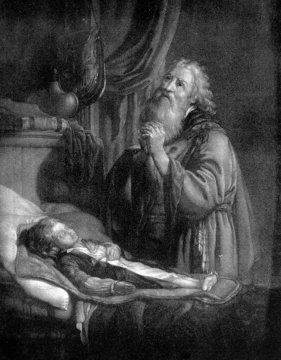
João Maria (monk)
Three ascetic healers venerated as one immortal saint in southern Brazil.
Last updated
Three wandering ascetics known as João Maria preached and healed with herbs in southern Brazil from the 1800s into the early 1900s. The last one led a peasant uprising in 1912. Devotees believe they were a single saint reborn across different lives. A cave where the first monk dwelled, now part of Monge State Park, still attracts thousands of pilgrims each year.
João Maria D’Agostini
Born in Piedmont, Italy, he entered a seminary in Rome as a young man but left before ordination. After wandering Europe, he traveled to South America, passing through Venezuela, Colombia, Ecuador, Peru, and finally Brazil. Records from 1844 show him traveling from Pará to Rio de Janeiro, where he became famous as a healer and counselor. He later moved to Sorocaba, continuing his medical and advisory work.
After leaving São Paulo, he reappeared in Rio Grande do Sul, where thousands gathered at Cerro Campestre in Santa Maria, drawn by reports of miraculous water. Authorities analyzed the water and found it potable but ordinary. He then traveled through Santa Catarina and Paraná, living in a cave near Lapa in 1847, where he performed marriages, baptisms, healings, and blessings.
He organized processions, built chapels, blessed cattle, and baptized children, and his herbal teas became well known. In 1848 he was deported to Santa Catarina, then to Rio de Janeiro, where he vanished from sight. He reappeared in Buenos Aires in 1853, walked through Bolivia and much of South and Central America until 1861, and arrived in New Mexico in 1862, living in the mountains. He was assassinated there on 17 April 1869 at age 69; his tomb may be seen in New Mexico.
João Maria de Jesus
Beginning his travels in southern Brazil in 1890, he resembled Agostini in appearance, with a long white beard, and in his way of life. He was famous as a healer, and his medicine was considered miraculous; it was said he could cure a person by praying for their health and prescribing a tea from a common herb called "monk's broom." He stated, "He who does not know how to read the book of nature is illiterate in God's eyes." Devotees believed that objects or places he touched became sacred and would provide his blessings after he disappeared. During the Federalist Revolution of 1893–95, he attended wounded rebels. His teachings were prophetic and apocalyptic: he said God would punish mankind with plagues of insects and bloody wars, considered the First Brazilian Republic of 1889 the work of the devil, and defended restoration of the monarchy as the "order of God." He may have died in 1908 in a hospital in Ponta Grossa, Paraná, or may be buried in Lagoa Vermelha, Rio Grande do Sul, but his devotees think he still lives on Morro Taió, a hill in Santa Catarina.
José Maria de Santo Agostinho
Before taking the name José Maria de Santo Agostinho, this figure served as a soldier under the name Miguel Lucena de Boaventura. He eventually made his home in Taquaraçu, Santa Catarina, where he became well-known for his ability to heal the sick. He ran what was called a "people's pharmacy," offering prayers alongside medicinal herbs, seeds, and roots.
He also stated that he was the brother of the first João Maria. During the Contestado War, which lasted from 1912 to 1916, he served as the religious leader for rebels—small farmers and settlers who had been forced off their land by large capitalist landowners and companies. From his headquarters at Fazenda do Irani, he organized these dispossessed peasants and sharecroppers.
When the state government sent its security regiment to Taquaruçu to break up his followers, a battle erupted on October 22, 1912. Though the rebels defeated the troops, José Maria was killed while leading them. In their fervor, his followers declared him a saint, calling him São João Maria, and believed he would return within months leading an enchanted army under Saint Sebastian.
Legacy
Over time, locals began to blur the lines between José Maria and the various João Marias, eventually seeing them as the same figure. In 1935, a socio-religious movement emerged in Soledade, Rio Grande do Sul, led by André Ferreira França. The group faced persecution, and André was killed by gunfire during a confrontation with the city's military brigade.
Although scholars have produced a large body of work about the monks known as João Maria, the faithful care little about historical accuracy, focusing instead on the sacred qualities these figures are believed to possess. Even today, some believe that João Maria, now over two centuries old, still roams the region performing miracles. Across central and eastern Paraná, Santa Catarina, southern São Paulo, and northern Rio Grande do Sul, small altars or crosses mark spots where one of the João Marias is said to have passed. The various wanderers recognized as the monk or prophet João Maria share many traits: they are homeless, familyless pilgrims who have renounced worldly pleasures to serve God through penance.
They preach about the Apocalypse, when God will punish all sinners, and are credited with miraculous healing powers and immortality. Monge State Park, established in Lapa in 1960, features the monk's cave as its main draw—a pilgrimage site for thousands of devotees, along with a spring believed to have healing properties. In 2015, Paraná Turismo explored creating a tourist route to visit the olhos d'água at locations tied to the monk, and by December of that year, the tourism secretariat had identified 38 municipalities where he had been present.
More in Faith Healers
Sources
Compiled from Wikipedia and the sources listed below. Text from Wikipedia is available under CC BY-SA 4.0; this entry is adapted from it.
- Wikipedia: João Maria (monk) (CC BY-SA 4.0).
Spotted an error? Know more?
Reader corrections go straight into our review queue. Suggest an edit · How this site is sourced