Frequently Asked Questions
The most-asked questions about exploration of the moon.
What does 'exploration of the Moon' mean in a broad sense?
It covers every crewed or robotic attempt by any nation to orbit, land on, or scientifically study Earth's Moon since the mid-20th century. The scope includes the Soviet Luna and Zond programs, the American Apollo and Surveyor missions, and contemporary efforts by China, India, Japan, and others.
Who are the most well-known figures in lunar exploration history?
Neil Armstrong and Buzz Aldrin, who first set foot on the lunar surface in July 1969, remain the most recognizable names. Among engineers and scientists, Wernher von Braun and Margaret Hamilton, whose team wrote the Apollo guidance software, are also frequently cited by fans.
Where should a newcomer begin learning about Moon exploration?
Most fans suggest anchoring your study in the Apollo 11 story, then widening out to the full Apollo program and the parallel Soviet efforts of the 1960s. NASA's public mission archives, well-regarded Apollo histories, and the original mission control recordings make strong entry points.
How many humans have actually walked on the Moon?
Twelve astronauts walked on the lunar surface across six Apollo missions between 1969 and 1972. No human has set foot on the Moon since the Apollo 17 crew in December 1972.
What was the first successful crewed Moon landing?
Apollo 11, launched on 16 July 1969, touched down in the Sea of Tranquility on 20 July, making it the first crewed landing. Armstrong's words describing his first step on the surface became the defining moment of the 1960s space race.
What made Apollo 13 such a defining moment?
An oxygen-tank rupture roughly two days into the mission forced the crew to abort their planned landing and use the lunar module as a lifeboat to coast home. The safe return of all three astronauts is widely regarded as one of the greatest 'successful failures' in spaceflight history.
Which nations have successfully landed a spacecraft on the Moon?
The United States and the Soviet Union achieved both crewed and robotic landings during the 1960s and 1970s. In the 21st century, China's Chang'e missions and India's Chandrayaan-3 (2023) have added new successful landings to the record.
What is the Artemis program and why do fans follow it closely?
Artemis is NASA's current initiative to return humans to the lunar surface, with crewed flights targeted for the late 2020s. Fans are drawn to its goals of landing the first woman and first person of color on the Moon, establishing a sustained presence, and using the Moon as a proving ground for Mars.
Which 'firsts' do fans most often cite as key lunar milestones?
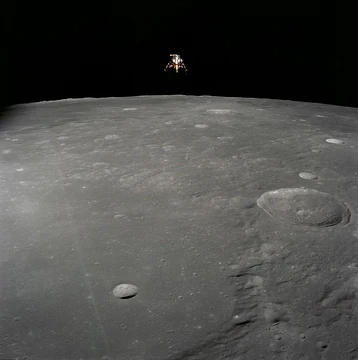
Luna 2's 1959 impact made it the first human-made object to reach the lunar surface, and Apollo 8's December 1968 orbit was the first time humans traveled to and circled the Moon. The 1969 Apollo 11 landing and the 1969 Apollo 12 precision landing in Oceanus Procellarum are other frequently highlighted milestones.
What is the current state of Moon exploration in the mid-2020s?
Multiple nations are actively operating or developing lunar programs, with China conducting regular Chang'e missions and India's Chandrayaan-3 having successfully landed near the south pole in 2023. NASA is in the final preparation phases for its first Artemis crewed landing, while a growing commercial sector builds landers and surface infrastructure.