Sokoke
Last updated
The Sokoke is a natural breed of domestic cat developed from the feral khadzonzo landrace of coastal Kenya, beginning in the late 1970s.[1] The breed's name comes from the Arabuko Sokoke National Park, the location where the original cats used for breeding were sourced.[1]
Biology and range
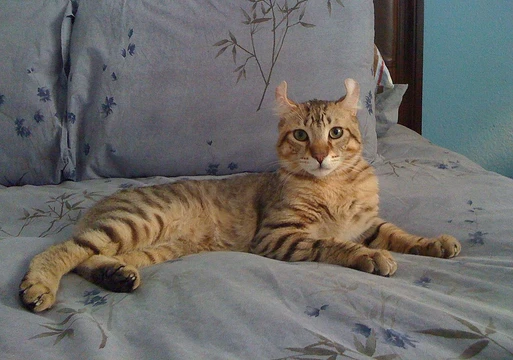
The Sokoke is a lean, medium-sized cat with a long, graceful body and slender legs.[2] Males weigh 4–5 kg and females 2.5–3 kg.[2] Sokokes typically have blotched tabby coats in shades of black to brown, with a "wood-grain" look prized in show cats.[3][4] The breed has a lifespan of up to 15 years.[2]
Sokokes are extremely playful, love to jump and climb, and are very vocal.[2] They form a very special bond with their owners and are sociable with dogs and older children.[2] The breed has no known inherited diseases or health issues.[2] The fur is short, rough to the touch yet shiny, and lacks a significant undercoat.[5]
Cats from the forest consistently produce offspring with ticked coats featuring large rosette spots that can merge together.[6] Among the urban population, a broader range of colors and patterns appears, such as coats with white patches or those that are predominantly black.[6]
What the specialist sources record
The feral khadzonzo cats were "discovered" by horse breeder and wildlife artist Jeni Slater in 1978 near the Watamu coconut plantation.[6] The breed is one of the rarest in the UK, with less than 30 registered with the GCCF.[2] Sokokes were found as a naturally occurring native breed in the greater Arabuko-Sokoke Forest Preserve area near Mombasa, Kenya.[2] Research from the US National Cancer Institute's DNA analysis showed that the spotted khadzonzo street cats of eastern Kenya, the cats from the Lamu Archipelago, and the standardized Sokoke are all genetically connected.[7]
References
- Wikipedia, "Sokoke" (CC BY-SA 4.0), which cites: Authors, "My Cat", REI (Rifreddo), 2 January 2015; Cat, "Sokoke - All The Way From Kenya", Cat Concerns, 2016-09-19 (original not read by us) en.wikipedia.org
- "Sokoke Cat breed information", Your Cat, 2018-12-20. facts only, no text reused. yourcat.co.uk
- Wikipedia, "Sokoke" (CC BY-SA 4.0), which cites: Turner, "Sokoke Forest Cat", Cat World, February 1993; Cat, "Sokoke - All The Way From Kenya", Cat Concerns, 2016-09-19 (original not read by us) en.wikipedia.org
- Wikipedia, "Sokoke" (CC BY-SA 4.0), which cites: Turner, "Sokoke Forest Cat", Cat World, February 1993; Turner, "Sokoke Forest Cat", Cat World, February 1993 (original not read by us) en.wikipedia.org
- Wikipedia, "Sokoke" (CC BY-SA 4.0), which cites: Turner, "Sokoke Forest Cat", Cat World, February 1993 (original not read by us) en.wikipedia.org
- Wikipedia, "Sokoke" (CC BY-SA 4.0), which cites: Longley, "The Mysterious History of Sokoke Cats", North American Sokoke Association, 9 August 2004 (original not read by us) en.wikipedia.org
- Wikipedia, "Sokoke" (CC BY-SA 4.0), which cites: Cat, "Sokoke - All The Way From Kenya", Cat Concerns, 2016-09-19; "Sokoke Cat breed information", Your Cat, 2018-12-20 (we also read that source) en.wikipedia.org
Each numbered sentence above was checked against the source it cites before publication. Sentences citing Wikipedia adapt text from the English Wikipedia article Sokoke (contributors), used under CC BY-SA 4.0; this entry is available under the same licence. Other sources were used for facts only; no text or images are copied from them.
More in Experimental cat breeds
Sources
Compiled from Wikipedia and the sources listed below. Text from Wikipedia is available under CC BY-SA 4.0; this entry is adapted from it.
- Wikipedia: Sokoke (CC BY-SA 4.0).
Spotted an error? Know more?
Reader corrections go straight into our review queue. Suggest an edit · How this site is sourced