Henry III of France
Last updated
His reign was marked by religious wars, fiscal reform efforts, and ongoing debates about his sexuality.[1][2][3] Before ascending to the French throne, Henry was chosen by the Polish–Lithuanian Commonwealth as its inaugural elected monarch.[4][5]
Life and work
Henry enjoyed hunting, riding, fencing, and indulging his tastes for the arts and reading.[6] Henry was crowned king of France on 13 February 1575 at Reims Cathedral, and married Louise of Lorraine the next day, though no issue resulted from their union.[5] On 1 August 1589, a Dominican friar named Jacques Clément fatally stabbed Henry at Saint-Cloud.[6][7] During his youth, Henry exhibited Protestant leanings as an act of defiance, and at age nine he referred to himself as "a little Huguenot".[8]
After his mother gave him a strong warning, Henry abandoned Protestant tendencies and became a devout Catholic.[6] Talks in 1570 about Henry courting Queen Elizabeth I of England were initiated, yet they produced no result.[6][7] In 1569, the royal army under Henry's command achieved victories against the Huguenots at both Jarnac and Moncontour.[1] An Assembly of Notables was convened by Henry after 1582 to achieve fiscal reform, and by 1585 the royal budget was nearly balanced before political upheavals occurred.[2]
What the cited sources add
Art historian Philip Mould identified a miniature previously thought to be Sir Walter Raleigh as a portrait of Henry III of France.[9] The portrait shows Henry wearing strings of jewels, a bonnet, and a shirt with elegant white ruffles.[9] Diarist Pierre de L’Estoile complained that Henry frequently wore women’s clothing and kept a coterie of male companions.[9] Scholar Katherine B. Crawford argued in 2003 that many of Henry’s political opponents painted his sexuality as deviant in order to discredit him.[9]
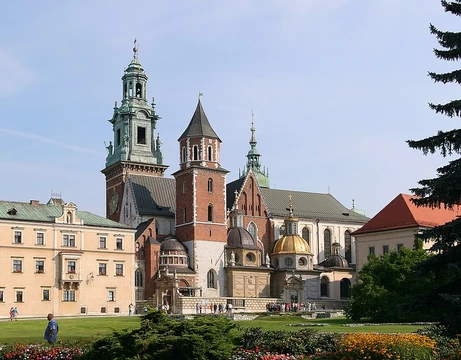
Crawford added that these polemics may have strongly influenced the fanatical monk Jacques Clément, who fatally stabbed the king.[9] Cultural friction between Polish and French people characterized Henry's brief time ruling at Wawel Castle in Poland.[10] French visitors at Wawel learned about new septic technology that removed waste outside the castle walls, and Henry later desired similar construction at the Louvre.[11]
References
- Wikipedia, "Henry III of France" (CC BY-SA 4.0), which cites: Holt, "The French Wars of Religion 1562–1628", Cambridge University Press, 1995, p. 66; Sutherland 1973; Knecht 1989, p. 41; Knecht 1998, p. 130; "Henry III", britannica.com; Holt, "The French Wars of Religion 1562–1628", Cambridge University Press, 1995, p. 66; Sutherland 1973 (original not read by us) en.wikipedia.org
- Wikipedia, "Henry III of France" (CC BY-SA 4.0), which cites: Jouanna 2021, p. 568; Carpi 2012, p. 367; Carpi 2012, p. 367; Chevallier 1985, p. 518-519; Chevallier 1985, p. 518-519 (original not read by us) en.wikipedia.org
- Wikipedia, "Henry III of France" (CC BY-SA 4.0), which cites: McGreevy, "Petite portrait of Henry III, King who challenged sexual norms in 16th century France, discovered", Smithsonian Magazine, January 27, 2021; MacCulloch 2004, p. ?; Crompton 2003, p. 328-330; Solnon, "La Cour de France", Fayard, 1987; Le Roux, "Un régicide au nom de Dieu, l'assassinat d'Henri III", Gallimard, 2006; Boucher, "La cour de Henri III", Ouest-France, 1986 (we also read that source) en.wikipedia.org
- Wikipedia, "Henry III of France" (CC BY-SA 4.0), which cites: Stone 2001; Davies 2007, p. 10; Roşu, "Elective monarchy in Transylvania and Poland-Lithuania, 1569-1587", Oxford University Press, 2017 (we also read that source) en.wikipedia.org
- Wikipedia, "Henry III of France" (CC BY-SA 4.0), which cites: George 1875, p. table XXX; Kosior 2019, p. 32; Spangler 2021, p. 45 (original not read by us) en.wikipedia.org
- Wikipedia, "Henry III of France" (CC BY-SA 4.0), which cites: Knecht 2016, p. 2 (original not read by us) en.wikipedia.org
- Wikipedia, "Henry III of France" (CC BY-SA 4.0), which cites: Knecht 2016, p. 2; Knecht 2016, p. 2 (original not read by us) en.wikipedia.org
- Wikipedia, "Henry III of France" (CC BY-SA 4.0), which cites: Knecht 2016, p. 2; Knecht 2016, p. 2; Knecht 2016, p. 2 (original not read by us) en.wikipedia.org
- McGreevy, "Petite portrait of Henry III, King who challenged sexual norms in 16th century France, discovered", Smithsonian Magazine, January 27, 2021. smithsonianmag.com
- Wikipedia, "Henry III of France" (CC BY-SA 4.0), which cites: Paweł Jasienica, "Rzeczpospolita Obojga Narodów (The Commonwealth of the Both Nations)", 1982; Paweł Jasienica, "Rzeczpospolita Obojga Narodów (The Commonwealth of the Both Nations)", 1982 (we also read that source) en.wikipedia.org
- Wikipedia, "Henry III of France" (CC BY-SA 4.0), which cites: Krzysztof Prendecki, "Kuracja wiedzą", placet.pl, 30 October 2006; Krzysztof Prendecki, "Kuracja wiedzą", placet.pl, 30 October 2006 (original not read by us) en.wikipedia.org
Each numbered sentence above was checked against the source it cites before publication. Sentences citing Wikipedia adapt text from the English Wikipedia article Henry III of France (contributors), used under CC BY-SA 4.0; this entry is available under the same licence. Other sources were used for facts only.
More in European Monarchs & Consorts
Sources
Compiled from Wikipedia and the sources listed below. Text from Wikipedia is available under CC BY-SA 4.0; this entry is adapted from it.
- Wikipedia: Henry III of France (CC BY-SA 4.0).
Spotted an error? Know more?
Reader corrections go straight into our review queue. Suggest an edit · How this site is sourced