Enoch
Pre-Flood patriarch taken alive into heaven.
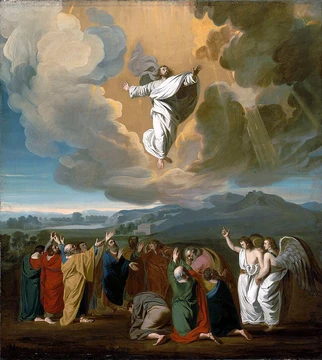
Enoch is a biblical patriarch who lived before Noah's flood, the son of Jared and father of Methuselah. According to the Book of Genesis, he lived 365 years and then was taken by God, an event interpreted in some Jewish and Christian traditions as entering heaven alive. He is venerated as a saint in the Catholic Church, Eastern Orthodoxy, and Oriental Orthodoxy.
Quick Facts
- Children
- Methuselah and other sons and daughters
- Father
- Jared
Facts from the source article.
Book of Genesis
Enoch is the seventh of the ten pre-Deluge Patriarchs listed in Genesis 5. The genealogy records that each of these figures lived for several centuries, but Enoch is the exception: he lived 365 years, far shorter than the others, who died at over 700 years of age. Two verses (Genesis 5:22 and 5:24) state that Enoch “walked with God”; Noah is the only other pre-Flood patriarch given this designation. The account ends with the note that “he was not; for God took him,” an event occurring 57 years after Adam’s death and 69 years before Noah’s birth.
Books of Enoch (Apocryphal)
Three extensive apocryphal works are attributed to Enoch. 1 Enoch (the Book of Enoch), composed in Hebrew or Aramaic and preserved in Ge’ez, was first brought to Europe from Ethiopia by James Bruce and translated into English by August Dillmann and Reverent Schoode; it is recognized by the Orthodox Tewahedo churches and usually dated between the third century BC and the first century AD. 2 Enoch (the Book of the Secrets of Enoch), preserved in Old Church Slavonic and first translated into English by William Morfill, is usually dated to the first century AD. 3 Enoch, a Rabbinic text in Hebrew, is usually dated to the fifth century AD. These works recount Enoch being taken up to Heaven and appointed guardian of all celestial treasures, chief of the archangels, and immediate attendant on the Throne of God; he was taught all secrets and mysteries and executes God’s decrees. Some esoteric literature, including 3 Enoch, identifies Enoch as Metatron, the angel who communicates God’s word. The Book of Giants, a Jewish pseudepigraphal work from the third century BC resembling the Book of Enoch, had fragments found among the Dead Sea Scrolls. The third-century BC Septuagint translators rendered “God took him” with the Greek verb metatithemi, meaning moving from one place to another. Sirach 44:16 states that Enoch was translated into paradise, using the Greek word paradeisos, derived from an ancient Persian word meaning “enclosed garden” and used in the Septuagint for the garden of Eden. In classical Rabbinical literature, the Targum Pseudo-Jonathan viewed Enoch as a pious man taken to Heaven and receiving the title Safra rabba (Great scribe).
In Christianity
The New Testament contains three references to Enoch. A brief mention appears in the genealogy of Jesus in the Gospel of Luke (Luke 3:37). The Epistle to the Hebrews (Hebrews 11:5) states that by faith Enoch was translated so that he should not see death, and that before his translation he had the testimony that he pleased God. The Book of Enoch was excluded from the Hebrew Tanakh and the Septuagint and was not considered canon by Jewish or early Christian readers. However, Church Fathers including Justin Martyr, Athenagoras of Athens, Irenaeus, Clement of Alexandria, Origen, Tertullian, and Lactantius speak highly of Enoch and contain allusions to the Book of Enoch, with some advocating for its use as Scripture.
In Islam
For most Muslims, the prophet Idris in the Quran is the same person as Enoch. Some language studies, however, point to the Greek form of the name Ezra, Esdras, as a more likely source for Idris. Idris is also often linked to Hermes Trismegistus, though this connection is debated. Those who accept it still generally view Idris as a biblical prophet.
More in Entering Heaven Alive
Spotted an error? Know more?
Reader corrections go straight into our review queue. Suggest an edit · How this site is sourced