
Burnout (series)
High-speed arcade racing with spectacular crashes and aggressive takedowns.

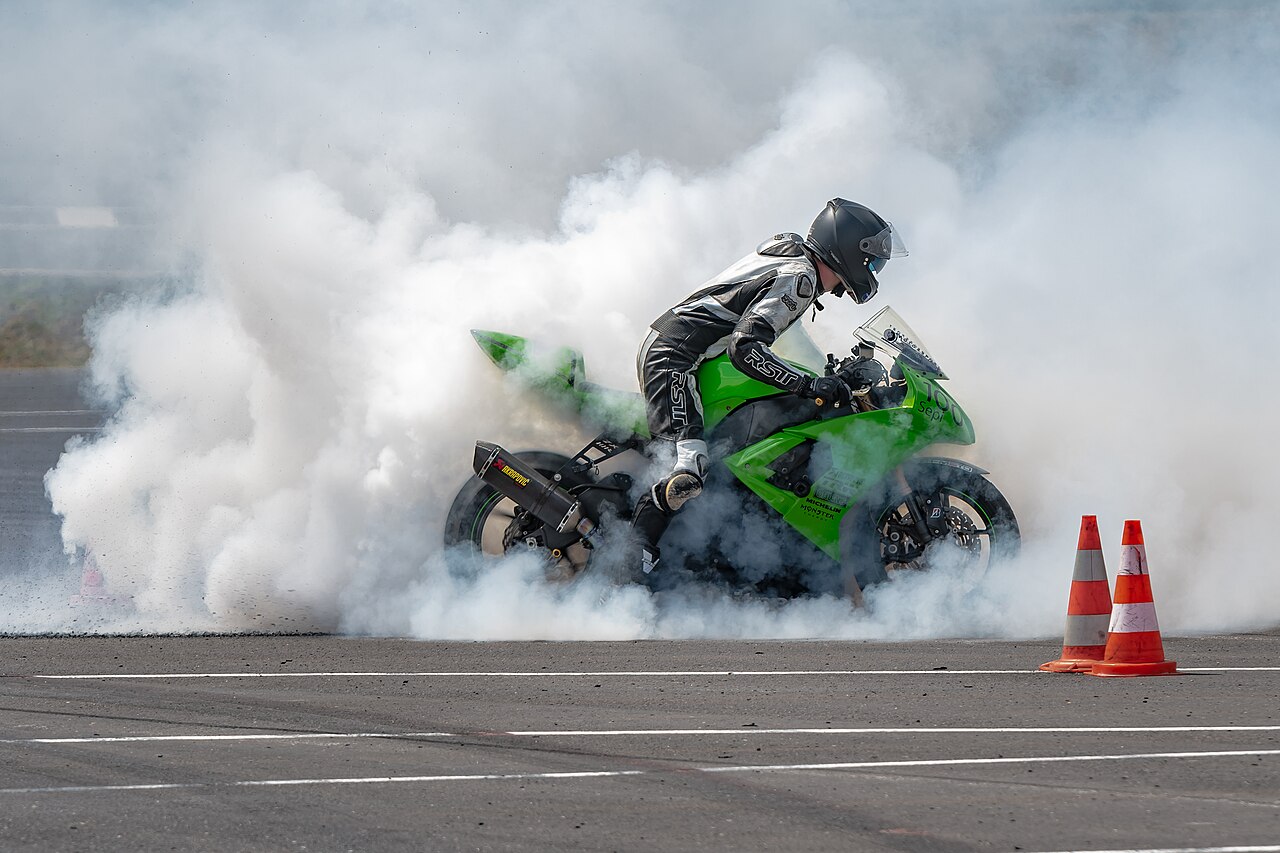
Isiwal · CC BY-SA 4.0
Burnout is a racing video game series created by Criterion Games. Acclaim Entertainment published the first two entries, while Electronic Arts handled all later releases. The games focus on fast, arcade-style racing where damage, crashes, and explosions are central to the experience.
The series began when Criterion, a division of Criterion Software Ltd. founded in 1999 to demonstrate its RenderWare engine, made a skateboarding game called TrickStyle for Acclaim. Led by Fiona Sperry and later joined by Alex Ward, the team then built a racing game using the latest RenderWare version. That game, simply titled Burnout, launched in 2001 and prioritized fun over realism, unlike simulation-focused series such as Gran Turismo.
A sequel, Burnout 2: Point of Impact, came out in 2002. It introduced Crash mode, where players steer a car into a staged pile of vehicles and objects to cause as much destruction as possible. At this stage, the games were set on rural and country roads, and crashes—while spectacular—were treated as undesirable outcomes rather than core gameplay mechanics.
In 2004, Acclaim filed for bankruptcy and sold its assets. EA bought Criterion, the Burnout rights, and RenderWare for about US$48 million. EA had previously approached Criterion in 2002 about turning TrickStyle into an open-world skateboarding game under the Skate or Die! name, inspired by Grand Theft Auto III. Criterion could not make that work, and the project was dropped; journalists later believed it evolved into EA Black Box's 2007 game Skate. The cancellation caused some tension, but in 2003 EA reached out again, wanting Criterion to make another Burnout sequel. Criterion agreed only if they kept creative control. The game was nearly finished when Acclaim collapsed, and EA completed the acquisition.
Burnout 3: Takedown shifted the series’ direction. Criterion added combative elements from the SSX series, so players were, in Ward’s words, “fighting through traffic” rather than just racing. Ramming opponents caused “Takedowns,” which temporarily knocked them out of the race and gave the player a boost, similar to weapon-based games like Mario Kart. Burnout 3 was a major success, selling over 2.3 million copies in the United States by 2006.
Criterion continued making Burnout games, culminating in Burnout Paradise in 2008.
Quick Facts
- Title
- Burnout
- Genre
- Racing
- Developer
- Criterion Games / EA UK
- Publisher
- Acclaim Entertainment / (2001–2002) · Electronic Arts / (2004–present)
- Platforms
- GameCube / iOS / Microsoft Windows / Nintendo DS / Nintendo Switch / PlayStation 2 / PlayStation 3 / PlayStation 4 / PlayStation Portable / Xbox / Xbox 360 / Xbox One
- First Release Date
- 1 November 2001
- Latest Release Version
- Burnout Paradise Remastered
- Latest Release Date
- 16 March 2018
Facts from the source article.
Lore & Background
Burnout's origins came by way of Criterion Games, a division of Criterion Software Ltd. established in 1999 to showcase the type of games that its RenderWare game engine was capable of, with Fiona Sperry in charge. Their first game was a fast-paced skateboarding game, TrickStyle, published by Acclaim Entertainment for the Dreamcast and released in 1999. As a follow-up title, Sperry's team, now with Alex Ward on board, developed a racing game that showed off the capabilities of the newest iteration of RenderWare, named Burnout, also published by Acclaim in 2001. Burnout was aimed to be an arcade-style racer, placing fun over realism as series like Gran Turismo offered. A sequel, Burnout 2: Point of Impact, was released by Acclaim in 2002, introducing the series' signature 'Crash mode', in which players would drive a car into a tableau of other cars and objects to try to do as much damage as possible. At this point in the series, the games were focused on driving on rural and country roads, and while the crashing mechanics were part of the game, these were not emphasized as gameplay elements but simply the undesirable, though often spectacular, result of a collision.
In 2004, Acclaim filed for bankruptcy and sold off its existing properties to other publishers. Electronic Arts (EA) acquired Criterion Games as well as the rights to the Burnout series and RenderWare for an estimated US$48 million that year. Burnout 3: Takedown took the series in a different route, as Criterion incorporated some of the more combative elements from the SSX series, such that players were 'fighting through traffic' rather than just 'racing through traffic', according to Ward. Players were able to ram into opponents to focus them into crashes ('Takedowns'), which not only temporarily knocked them out from racing but also benefit the player by providing some boosting effects. Burnout 3 was highly successful, with more than 2.3 million copies sold through 2006 in the United States alone. Criterion continued to develop additional Burnout games, culminating in Burnout Paradise in 2008, which was envisioned by Ward as putting the Burnout series in an open world, giving players the option of what routes to take to complete races, alongside other traditional game modes, while adding a social element to the game.
Reader's Guide
The Burnout series is significant for its evolution from a straightforward arcade racer into a franchise defined by crash spectacle and aggressive driving mechanics. The introduction of Crash mode in Burnout 2: Point of Impact became the series' hallmark, while Burnout 3: Takedown's 'takedown' system—allowing players to ram opponents into crashes for boost rewards—differentiated it from other racing games and was noted to borrow combative elements from the SSX series. The series' success led to EA's acquisition of Criterion Games and the Burnout IP in 2004 after Acclaim's bankruptcy. Burnout Paradise in 2008 shifted the series to an open-world format, allowing players to choose routes and adding social features. The series also influenced the Need for Speed franchise: after Criterion developed Need for Speed: Hot Pursuit in 2010, they became the lead studio for that series, and later Need for Speed titles such as Heat and Unbound incorporated loose Burnout elements like billboard destruction and ramps. However, in 2013, oversight of Need for Speed was transferred to Ghost Games, and Alex Ward stated that Criterion would steer away from racing, placing the future of Burnout into question. Sperry and Ward left Criterion in early 2014 to form Three Fields Entertainment, which worked on a spiritual successor to Burnout with Dangerous Driving. As of the article, the Burnout IP remains with EA.
Did You Know?
- Burnout 2: Point of Impact introduced the series' signature 'Crash mode' in 2002.
- Electronic Arts acquired Criterion Games and the Burnout rights for an estimated US$48 million in 2004 after Acclaim's bankruptcy.
- A J2ME version of Burnout for mobile phones was developed by Rovio Entertainment and released in 2007.
Origins & the RenderWare Showcase
Criterion Games was established in 1999 as a division of Criterion Software Ltd., with the explicit purpose of demonstrating what their RenderWare game engine could achieve. Fiona Sperry led the team, and their debut title was TrickStyle, a fast-paced skateboarding game published by Acclaim Entertainment for the Dreamcast. When the team moved on to their next project, Alex Ward joined Sperry's group, and together they developed a racing game designed to push the latest version of RenderWare to its limits. The result was Burnout, released in 2001 and again published by Acclaim. The design philosophy was deliberately arcade-oriented, prioritizing pure fun and exhilaration over the simulation-style accuracy that franchises like Gran Turismo pursued. This commitment to speed, spectacle, and accessibility became the foundational identity of the entire series, setting it apart from the more grounded racing titles of the era.
From Collateral Damage to Central Gameplay
In the original Burnout, crashes were primarily the unfortunate consequence of high-speed driving — spectacular, yes, but not a deliberate gameplay mechanic. The slow-motion replays showing cars deforming in real time captured public attention, and Criterion recognized the audience's appetite for destruction. Burnout 2: Point of Impact, released by Acclaim in 2002, formalized this by introducing Crash mode, where players deliberately drove into tableaux of vehicles and objects to maximize damage. By Burnout 3: Takedown, the series had shifted further toward combat, borrowing combative elements from the SSX franchise. Alex Ward described the change as moving from 'racing through traffic' to 'fighting through traffic.' Players could ram opponents into crashes, earning points and boost rewards, making aggression a core strategic element rather than a side effect.
The Acclaim Collapse and EA's Acquisition
The series' trajectory was dramatically altered in 2004 when Acclaim Entertainment filed for bankruptcy and sold its properties to other publishers. Electronic Arts acquired Criterion Games, the Burnout franchise, and RenderWare for an estimated US$48 million. The relationship between the two companies had a complicated history: EA had previously wanted Criterion to develop an open-world skateboarding title called Skate or Die! in 2002, but the project was abandoned after the team could not make the concept work. This left lingering tension. In 2003, EA reached out to resolve matters and commissioned a second Burnout sequel, but Criterion agreed only on the condition that they retain full creative control. By the time Acclaim collapsed, Burnout 3 was nearly complete. EA's acquisition ultimately allowed the series to continue under a more stable publisher, and Burnout 3 went on to sell over 2.3 million copies in the United States alone through 2006.
Legacy, Need for Speed, and the Road Ahead
After Burnout Paradise in 2008, Criterion's relationship with the racing genre evolved. Around 2008–2009, staff informally asked if they could work on a Need for Speed title, and EA granted them the opportunity. The result, 2010's Hot Pursuit, was both a critical and commercial success and established Criterion as the lead studio for the franchise. Its 2012 follow-up, Most Wanted, continued to incorporate Burnout-inspired elements. However, in 2013, EA transferred Need for Speed oversight to Ghost Games and moved 80% of Criterion's developers. Alex Ward publicly stated that Criterion would be moving away from racing, casting doubt on Burnout's future. Sperry and Ward departed in early 2014 to found Three Fields Entertainment, which spent years developing smaller projects before releasing Dangerous Driving as a spiritual successor. The Burnout IP remains with EA, and elements of the series have continued to surface in later Need for Speed titles, including Heat and Unbound.
Gallery


Frequently Asked Questions
What is the Burnout series?
Burnout is an arcade racing video game franchise created by Criterion Games, first released in 2001. The series is built around high-speed driving where crashes, vehicle damage, and explosions are the central spectacle rather than something to avoid.
Who published the Burnout games?
Acclaim Entertainment published the first two entries before going bankrupt in 2004. After that, Electronic Arts stepped in as publisher for every subsequent release in the series.
What makes Burnout different from other racing games?
The franchise flips the typical racing formula by making destruction the main draw—players are encouraged to cause massive crashes and aggressive takedowns instead of simply avoiding them. This blend of fast racing and spectacular explosion sequences became the series' signature identity.
Who created Burnout and when did it start?
The franchise was developed by Criterion Games, a team led by Fiona Sperry with Alex Ward joining to help shape the series' direction. The original Burnout shipped in 2001, growing out of Criterion's earlier work demonstrating the RenderWare engine.
Why is Burnout important to the racing genre?
Burnout proved that arcade racing could center on spectacle and destruction as the core fun loop rather than treating damage as mere punishment. Its influence on how later titles handle crashes, visual flair, and aggressive play is still felt across the genre.
More in Electronic Arts Franchises 1-24
Spotted an error? Know more?
Reader corrections go straight into our review queue. Suggest an edit · How this site is sourced