Anti-Monopoly
A board game challenging monopolies and antitrust laws.

Anti-Monopoly is a board game created by San Francisco State University Professor Ralph Anspach in response to Monopoly. The game was designed to demonstrate the harmful effects of monopolies on a free-enterprise system and how antitrust laws work to curtail them. It originated from Anspach's belief that Monopoly created the impression that monopolies were desirable.
- Creator
- Ralph Anspach
- Field
- Board game design
- Known for
- Creating Anti-Monopoly as a response to Monopoly
- First release
- 1973 (as Bust the Trust, later renamed Anti-Monopoly)
- Current publisher
- University Games
Lore & Background
Ralph Anspach, a professor at San Francisco State University, created Anti-Monopoly in part as a response to the lessons taught by the mainstream game Monopoly, which he believed created the impression that monopolies were something desirable. His intent was to demonstrate how harmful monopolies could be to a free-enterprise system, and how antitrust laws work to curtail them in the real world. The game was originally to be produced in 1973 as Bust the Trust, but the title was changed to Anti-Monopoly.
In the original Anti-Monopoly game, players act as competitors and trustbusters, working to break up monopolies and restore competition to the marketplace. In 1984, a new version appeared as Anti-Monopoly II, where players decide whether to play as a monopolist or as a competitor, with different rules for each. This version was updated and re-released in 2005 without the numerical designation.
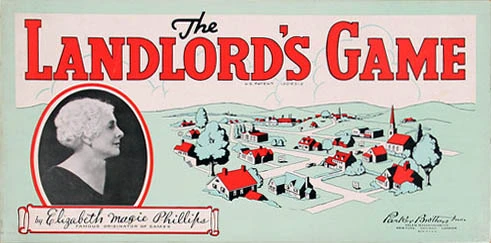
In 1974, Parker Brothers sued Anspach over the use of the 'Monopoly' name, claiming trademark infringement. While preparing his legal defense, Anspach became aware of Monopoly's history prior to Charles Darrow's sale of the game to Parker in 1935, and how it had evolved from Elizabeth Magie's original Landlord's Game. Anspach based his defense on the grounds that the game itself existed in effectively the public domain before Parker purchased it. The case dragged on for ten years, with numerous appeals and overturned judicial verdicts, until Anspach and Parker ultimately reached a settlement, permitting him to continue using the name Anti-Monopoly and distributing the game. For a time during the dispute, the game was marketed as simply 'Anti.'
Reader's Guide
Anti-Monopoly holds significance as a direct critique of the economic lessons embedded in Monopoly, one of the most popular board games in history. Created by Ralph Anspach, the game not only offered an alternative gameplay experience but also sparked a landmark trademark lawsuit that uncovered the pre-Darrow history of Monopoly, including its origins in Lizzie Magie's The Landlord's Game from 1903. The legal battle, which lasted ten years, ultimately allowed Anspach to continue using the name Anti-Monopoly and highlighted issues of trademark law and public domain. The game's legacy includes multiple revisions—Anti-Monopoly II in 1984 and a 2005 update—and continued publication by University Games worldwide. It remains a notable example of how a board game can serve as both entertainment and social commentary, challenging players to consider the real-world implications of monopolies and antitrust regulation.
Did You Know?
- Anti-Monopoly was originally to be produced in 1973 as Bust the Trust before the title was changed.
- The idea of an anti-monopoly board game dates to 1903 when Lizzie Magie created The Landlord's Game, which later inspired Monopoly.
- During the trademark dispute with Parker Brothers, the game was marketed for a time as simply 'Anti.'
- In Anti-Monopoly II, players decide at the beginning of each game whether to play as a monopolist or as a competitor, with different rules for each role.
Origins and Ideological Purpose
Ralph Anspach, a professor at San Francisco State University, conceived Anti-Monopoly as a deliberate counter-narrative to the board game that had dominated family game nights for decades. His frustration stemmed from what he saw as Monopoly's implicit message: that amassing monopolistic control over property was not merely acceptable but aspirational. Anspach wanted players to experience the opposite lesson—that concentrated corporate power corrodes a free-enterprise economy and that antitrust legislation exists precisely to dismantle such concentrations. The intellectual lineage of his project reaches further back than most players realize. In 1903, Lizzie Magie designed The Landlord's Game, a proto-board-game that would eventually be appropriated and transformed into the Monopoly we know today. Anspach's creation, initially titled Bust the Trust when first produced in 1973, was renamed Anti-Monopoly to make its ideological stance unmistakable. Rather than letting players build empires from scratch, he flipped the premise entirely, forcing them to tear down existing ones.
Gameplay and Structural Design
The original Anti-Monopoly board presents a world already captured. Where Monopoly begins with an empty grid of available properties, Anti-Monopoly opens with every business already consolidated under a single owner. These consolidated entities are termed company cartels and are divided into three tiers—Oligopolies, Trusts, and Monopolies—each demanding a different quantity of resources to break apart. Players assume the roles of federal case workers whose objective is to file indictments against these monopolised businesses, gradually restoring the board to something resembling a competitive free market. The sequel, Anti-Monopoly II, takes a fundamentally different structural approach. Rather than a uniform set of rules, each player chooses at the start of a session whether to act as a monopolist or as a competitor. Competitors enjoy the freedom to improve any property they hold at any moment and collect lower rents. Monopolists, by contrast, must first accumulate at least two properties within a group before they are permitted to build, but in return they extract substantially higher rents. This version mirrors the buy-and-sell real estate mechanics of Monopoly more closely than its predecessor does.
The Decade-Long Trademark Battle
Almost immediately after Anti-Monopoly hit shelves, Parker Brothers—Monopoly's corporate steward—filed a trademark infringement suit in 1974, arguing that Anspach's use of the word Monopoly in his title violated their intellectual property rights. While assembling his legal defense, Anspach uncovered a critical piece of history: before Charles Darrow sold the game to Parker in 1935, it had evolved organically from Elizabeth Magie's 1903 Landlord's Game and circulated widely in various forms. Anspach built his defense on the argument that the game concept had effectively entered the public domain prior to Parker's purchase, which should have nullified any exclusive trademark claim. The litigation proved extraordinarily grueling. It stretched across a full decade, cycling through multiple appeals and several judicial verdicts being overturned. During the dispute, Anspach was forced to market the game under the bare name Anti. The conflict finally resolved in a settlement that allowed him to retain the Anti-Monopoly title and continue distributing the game freely.
Enduring Legacy and Cultural Footprint
Despite the legal turbulence of its early years, Anti-Monopoly has maintained a continuous presence in the board game market since 1973, seeing multiple printings and revisions over the decades. In 1984, a second edition appeared under the title Anti-Monopoly II, introducing the dual-role gameplay system. That version was later updated and reissued in 2005, this time dropping the numerical designation entirely. Today the game remains in active print, produced and distributed worldwide by University Games, ensuring that new generations of players can encounter Anspach's antitrust lesson. The game's cultural footprint extends well beyond the tabletop. It was reviewed in the French strategy-game publication Jeux & Stratégie, issue number twenty-seven, and featured in a Wall Street Journal profile examining how a single board-game dispute consumed an economist's professional life for a decade. Most recently, the PBS documentary Ruthless: Monopoly's Secret History, which aired on February 20, 2023, devoted a segment to Anspach's story, weaving his challenge into the broader narrative of how Monopoly's origins were obscured and how one professor refused to let that story go unchallenged.
Frequently Asked Questions
Who created Anti-Monopoly?
Ralph Anspach, a professor at San Francisco State University, designed the game as a deliberate counterpoint to Monopoly. He felt Monopoly's win-condition inadvertently taught players that building a monopoly was a positive economic outcome.
What is Anti-Monopoly actually about?
Players take on the role of antitrust regulators tasked with breaking up monopolies within a free-enterprise economy. The mechanics are built to show how concentrated market power distorts competition and how regulatory intervention can restore balance.
When was Anti-Monopoly first released and under what name?
The game debuted in 1973 under the original title "Bust the Trust" before being rebranded to Anti-Monopoly. It is currently published by University Games.
Why did Ralph Anspach feel the need to make Anti-Monopoly?
Anspach argued that Monopoly reinforced the misconception that monopolies are a desirable end-state in a free market. He wanted a game that would instead help players recognize the dangers of market concentration and understand the purpose of antitrust enforcement.
What field or category does Anti-Monopoly belong to?
It sits at the intersection of board game design and economic simulation, using gameplay mechanics to model how monopolies form and how antitrust policy can dismantle them. It is widely cited as a teaching tool for illustrating the limits of unchecked free enterprise.
More in Economic simulation board games 1-24
Spotted an error? Know more?
Reader corrections go straight into our review queue. Suggest an edit · How this site is sourced