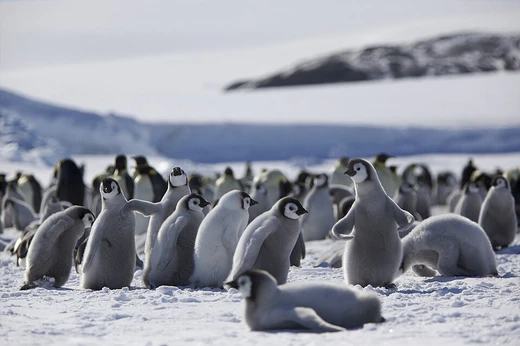
Habitat destruction
Leading cause of biodiversity loss and species extinction worldwide.
Habitat destruction occurs when a natural habitat can no longer support its native species, causing organisms to move elsewhere or die.[1] Human activities such as agriculture, mining, logging, and urbanization are primary contributors.[2]
Quick Facts
- Type
- Environmental phenomenon
- Primary cause
- Human activities (agriculture, urbanization, mining, logging, trawling)
- Leading impact
- Biodiversity loss and species extinction
- Affected ecosystems
- Tropical rainforests
- temperate forests
- dry forests
- wetlands
- coral reefs
- mangroves
- Key regions
- South and East Asia, West Africa, Central America, Amazon, Madagascar, Philippines
Facts from the source article.
Key facts and history
Geological processes, climate change, and invasive species can indirectly contribute to habitat destruction.[2] Loss of habitat is often preceded by fragmentation, which is a major research topic in ecology.[3] Habitat destruction through natural processes like volcanism and climate change is documented in the fossil record.[4] Road construction was the single largest proximate factor, appearing in 64% of cases.[5]
Globally, tropical rainforests once spanned roughly 16 million square kilometers; now, fewer than 9 million square kilometers of that original expanse remain.[6] Human activity has heavily altered about one-fifth of the world's marine coastal zones, and the same proportion of coral reefs have been destroyed.[7]
What the research sources say
Sustainable Development Goal 15 "Life on Land" and Goal 14 "Life Below Water" embody international policy commitments to address habitat destruction.[8][9] The World Wildlife Foundation notes that showing key tiger habitat in Sumatra stores carbon and retains soil can help government planning benefit people and improve habitat protection.[10] The 2021 United Nations Environment Programme report titled "Making Peace with Nature" concluded that the majority of international initiatives aimed at halting habitat destruction did not achieve their agreed-upon targets.[8][9]
References
- Wikipedia, "Habitat destruction" (CC BY-SA 4.0), which cites: Calizza, "Effect of habitat degradation on competition, carrying capacity, and species assemblage stability", Ecology and Evolution, June 17, 2017, p. 5784–5796; Sahney, "Rainforest collapse triggered Pennsylvanian tetrapod diversification in Euramerica", Geology, 1 December 2010, p. 1079–1082; Marvier, "Habitat Destruction, Fragmentation, and Disturbance Promote Invasion by Habitat Generalists in a Multispecies Metapopulation", Risk Analysis, 2004, p. 869–878 (original not read by us) en.wikipedia.org
- Wikipedia, "Habitat destruction" (CC BY-SA 4.0), which cites: Sahney, "Rainforest collapse triggered Pennsylvanian tetrapod diversification in Euramerica", Geology, 1 December 2010, p. 1079–1082 (original not read by us) en.wikipedia.org
- Wikipedia, "Habitat destruction" (CC BY-SA 4.0), which cites: WIEGAND, "Effects of Habitat Loss and Fragmentation on Population Dynamics", Conservation Biology, February 2005, p. 108–121 (original not read by us) en.wikipedia.org
- Wikipedia, "Habitat destruction" (CC BY-SA 4.0), which cites: Sahney, "Rainforest collapse triggered Pennsylvanian tetrapod diversification in Euramerica", Geology, 1 December 2010, p. 1079–1082; Sahney, "Rainforest collapse triggered Pennsylvanian tetrapod diversification in Euramerica", Geology, 1 December 2010, p. 1079–1082 (original not read by us) en.wikipedia.org
- Wikipedia, "Habitat destruction" (CC BY-SA 4.0), which cites: Geist & Lambin, 2002. (original not read by us) en.wikipedia.org
- Wikipedia, "Habitat destruction" (CC BY-SA 4.0), which cites: Primack, 2006.; Laurance, 1999. (original not read by us) en.wikipedia.org
- Wikipedia, "Habitat destruction" (CC BY-SA 4.0), which cites: "United Kingdom: Environmental Issues, Policies and Clean Technology", AZoCleantech.com, 2015-06-08; Burke et al., 2000.; Millennium Ecological Assessment, 2005.; Millennium Ecological Assessment, 2005. (original not read by us) en.wikipedia.org
- Wikipedia, "Habitat destruction" (CC BY-SA 4.0), which cites: United Nations Environment Programme (2021). Making Peace with Nature: A scientific blueprint to tackle the climate, biodiversity and pollution emergencies. Nai (we also read that source) en.wikipedia.org
- United Nations Environment Programme (2021). Making Peace with Nature: A scientific blueprint to tackle the climate, biodiversity and pollution emergencies. Nai. facts only, no text reused. unep.org
- "Valuing nature", World Wildlife Foundation. facts only, no text reused. wwf.org.uk
Each numbered sentence above was checked against the source it cites before publication. Sentences citing Wikipedia adapt text from the English Wikipedia article Habitat destruction (contributors), used under CC BY-SA 4.0; this entry is available under the same licence. Other sources were used for facts only; no text or images are copied from them.
More in Ecology And Behavior
Spotted an error? Know more?
Reader corrections go straight into our review queue. Suggest an edit · How this site is sourced