Peter Chrysologus
Doctor of Homilies and Bishop of Ravenna
Last updated
Peter Chrysologus, whose name means “Peter of the Golden Word,” lived from around 380 to about 450. He was an Italian church leader who became Bishop of Ravenna around 433 and held that office until his death. His nickname, the “Doctor of Homilies,” comes from the short yet theologically dense sermons he gave. Both the Catholic Church and the Eastern Orthodox Church honor him as a saint, and Pope Benedict XIII named him a Doctor of the Church in 1729.
Chrysologus was born in Imola. There, the local bishop, Cornelius, baptized him, educated him, and later ordained him as a deacon.
Through the influence of Emperor Valentinian III, Peter became an archdeacon. Around 433, Pope Sixtus III appointed him Bishop of Ravenna, overruling the candidate the city’s people had chosen. At that time, Ravenna served as the capital of the Western Roman Empire, and evidence suggests it already held the status of a metropolitan see.
According to a traditional story recorded in the Roman Breviary, Pope Sixtus had a vision in which Saint Peter the Apostle and Saint Apollinaris, Ravenna’s first bishop, showed him a young man who would be the next bishop. When a delegation from Ravenna arrived, including Bishop Cornelius and his archdeacon Peter, Sixtus recognized Peter as the man from his vision and consecrated him.
As a preacher, Chrysologus kept his homilies simple and brief, worried that longer talks would lose his listeners’ attention. His piety and energy won widespread admiration. After hearing his first sermon as bishop, the Roman Empress Galla Placidia is said to have given him the surname Chrysologus, meaning “golden-worded.” His sermons are historically valuable because they reveal what Christian life was like in fifth-century Ravenna. Galla Placidia, the emperor’s mother, supported many of Bishop Peter’s projects.
In the homilies that survive, Peter explained biblical texts in a short, clear style. He condemned Arianism and Monophysitism as heresies, and he taught the Apostles’ Creed, the mystery of the Incarnation, and other topics in simple language. He gave a series of sermons on John the Baptist and on Mary, the mother of Jesus.
He encouraged daily reception of the Eucharist and urged his listeners to trust in the forgiveness offered through Christ. His writings affirm traditional Catholic beliefs about Mary’s perpetual virginity, the penitential value of Lent, Christ’s presence in the Eucharist, and the primacy of Saint Peter and his successors. He enjoyed the confidence of Pope Leo I the Great, another Doctor of the Church.
In 448, a synod in Constantinople condemned Eutyches for Monophysitism. Eutyches appealed to Peter Chrysologus for support, but failed. The Acts of the Council of Chalcedon (451) preserve a letter from Peter to Eutyches, in which Peter advises him to accept the synod’s ruling and to obey the Bishop of Rome as the successor of Saint Peter.
In the early eighth century, Archbishop Felix of Ravenna collected and preserved 176 of Chrysologus’s homilies. Later editors and translators have rendered these works into many languages.
Death and veneration
Peter died around 450 while visiting Imola, his birthplace. Older sources give his death date as 2 December, but a more recent reading of the ninth-century “Liber Pontificalis Ecclesiae Ravennatis” suggests he died on 31 July. When he was declared a Doctor of the Church in 1729, his feast day—previously absent from the Tridentine calendar—was added on 4 December. In 1969, his feast was moved to 30 July, as close as possible to his probable death date, since 31 July is already the feast of Ignatius of Loyola.
A contemporary mosaic portrait of Peter Chrysologus survives in the Church of San Giovanni Evangelista in Ravenna. It shows him among members of the eastern and western imperial families, reflecting his extraordinary influence.
His feast days are observed on 30 July (main commemoration), 2 December (older tradition), 3 December (Orthodox commemoration), and 4 December (traditional Catholic commemoration).
Works
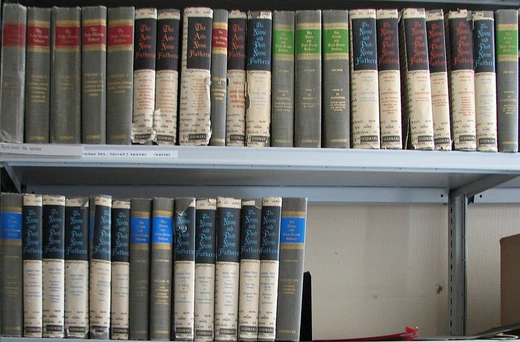
Three volumes of selected sermons appear in the “Fathers of the Church” series (volumes 17, 109, and 110), published by the Catholic University of America Press. Despite the title, these volumes contain all of his genuine sermons. A more recent 2020 volume from Routledge, translated by David Vincent Meconi Jr., also includes a number of his sermons.
Lore & Background
Peter was born in Imola, where the local bishop Cornelius baptized him, educated him, and ordained him a deacon. He was made an archdeacon through the influence of Emperor Valentinian III. Pope Sixtus III appointed Peter as Bishop of Ravenna circa 433, apparently rejecting the candidate whom the people of Ravenna elected.
The traditional account is that Sixtus had a vision of Pope Peter the Apostle and Apollinaris of Ravenna, who showed Peter as the next bishop; when a group from Ravenna arrived including Cornelius and his archdeacon Peter, Sixtus recognized him and consecrated him. People knew him for his simple, short sermons; after his first homily, Empress Galla Placidia supposedly gave him the surname Chrysologus, meaning "golden-worded." He condemned Arianism and Monophysitism, explained the Apostles' Creed, and advocated daily reception of the Eucharist. He shared the confidence of Pope Leo I. A synod in 448 condemned Eutyches; Eutyches appealed to Peter, who admonished him to accept the synod's ruling and obey the Bishop of Rome.
Archbishop Felix of Ravenna in the early eighth century collected 176 of his homilies. Peter died circa 450 during a visit to Imola. Older reference books say he died on 2 December, but a more recent interpretation of the ninth-century "Liber Pontificalis Ecclesiae Ravennatis" indicated that he died on 31 July.
Reader's Guide
When in 1729 he was declared a Doctor of the Church, his feast day was inserted in the General Roman Calendar for celebration on 4 December. In 1969 his feast was moved to 30 July, as close as possible to the day of his death, 31 July, the feast day of Ignatius of Loyola. Feast days: 30 July – main commemoration; 2 December – death anniversary (older tradition); 3 December – orthodox commemoration; 4 December – traditional catholic commemoration.
Also in the Codexery
More in Early Church & Patristics
Related in Early Church & Patristics
Links follow this subject's own source article.
Sources
Compiled from Wikipedia and the sources listed below. Text from Wikipedia is available under CC BY-SA 4.0; this entry is adapted from it.
- Wikipedia: Peter Chrysologus (CC BY-SA 4.0).
Spotted an error? Know more?
Reader corrections go straight into our review queue. Suggest an edit · How this site is sourced